 Indietro
Anatomy & Physiology Exam 1 Review
 05:04

Termini in questo insieme (28)
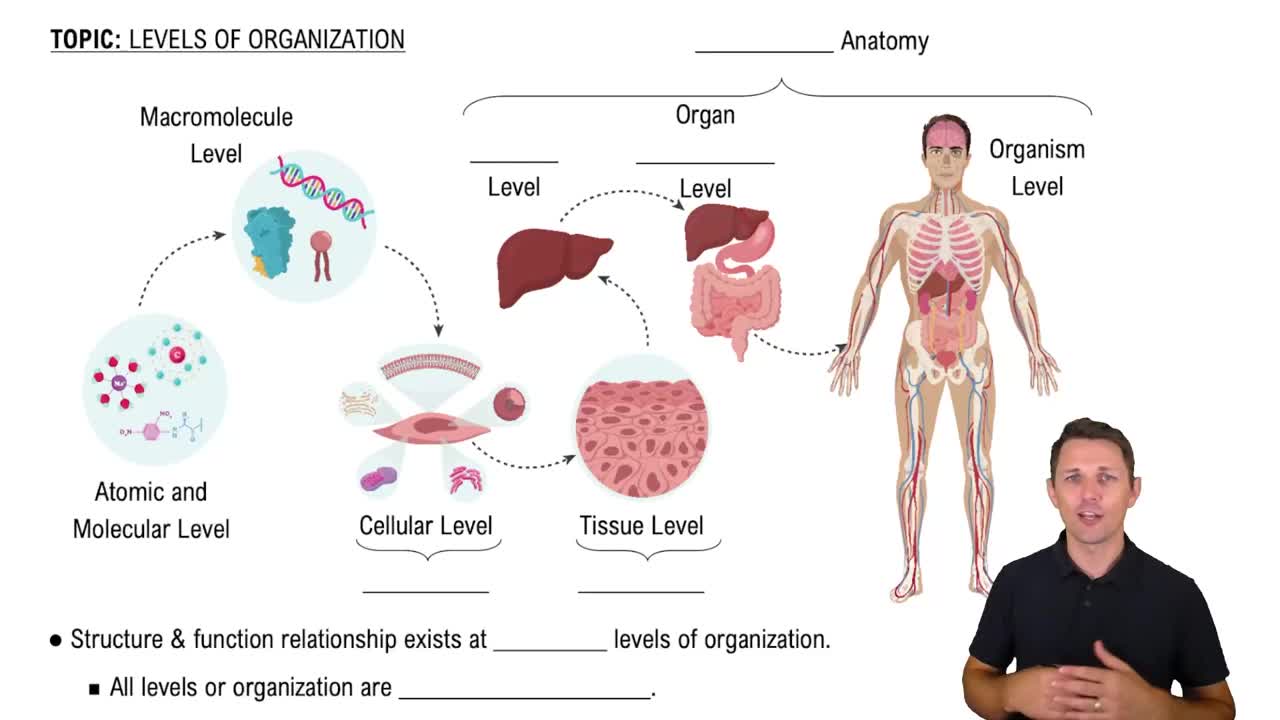
Atom > molecule > organelle > cell > tissue > organ > organ system > organism
Each organ system has a specific role, such as circulation, digestion, respiration, or protection, to maintain overall body function and homeostasis.
Maintaining boundaries, movement, responsiveness, digestion, metabolism, excretion, reproduction, and growth.
Nutrients, oxygen, water, normal body temperature, and appropriate atmospheric pressure.
Receptor: detects change; Control center: processes information; Effector: responds to restore balance.
Afferent: signals to control center; Efferent: signals from control center to effector.
Negative feedback: reverses a change to maintain homeostasis; Positive feedback: amplifies a change, usually to complete a process.
Examples include superior/inferior, anterior/posterior, medial/lateral, proximal/distal, and superficial/deep.
Dorsal cavity: includes cranial and spinal cavities; Ventral cavity: includes thoracic and abdominopelvic cavities.
Protons: positive charge; Neutrons: no charge; Electrons: negative charge.
Formed by the transfer of electrons between atoms, creating charged ions that attract each other.
Formed by sharing electrons between atoms; can be polar (unequal sharing) or nonpolar (equal sharing).
Weak attractions between a hydrogen atom in one molecule and an electronegative atom in another.
Water is polar, allowing it to dissolve many substances, participate in chemical reactions, and regulate temperature.
Water, salts, acids, and bases; these lack carbon and are essential for body functions.
High heat capacity, solvent abilities, cohesion, adhesion, and participation in hydrolysis and dehydration synthesis.
Scale ranges from 0 (acidic) to 14 (basic); normal blood pH is about 7.35–7.45.
Process of joining molecules by removing water, forming polymers from monomers.
Breaking down molecules by adding water, splitting polymers into monomers.
Monomers: monosaccharides; Polymers: disaccharides and polysaccharides.
Monomers: glycerol and fatty acids; Polymers: triglycerides, phospholipids, steroids.
Primary (sequence), secondary (alpha helix/beta sheet), tertiary (3D folding), quaternary (multiple polypeptides).
Loss of protein structure and function due to heat, pH changes, or chemicals.
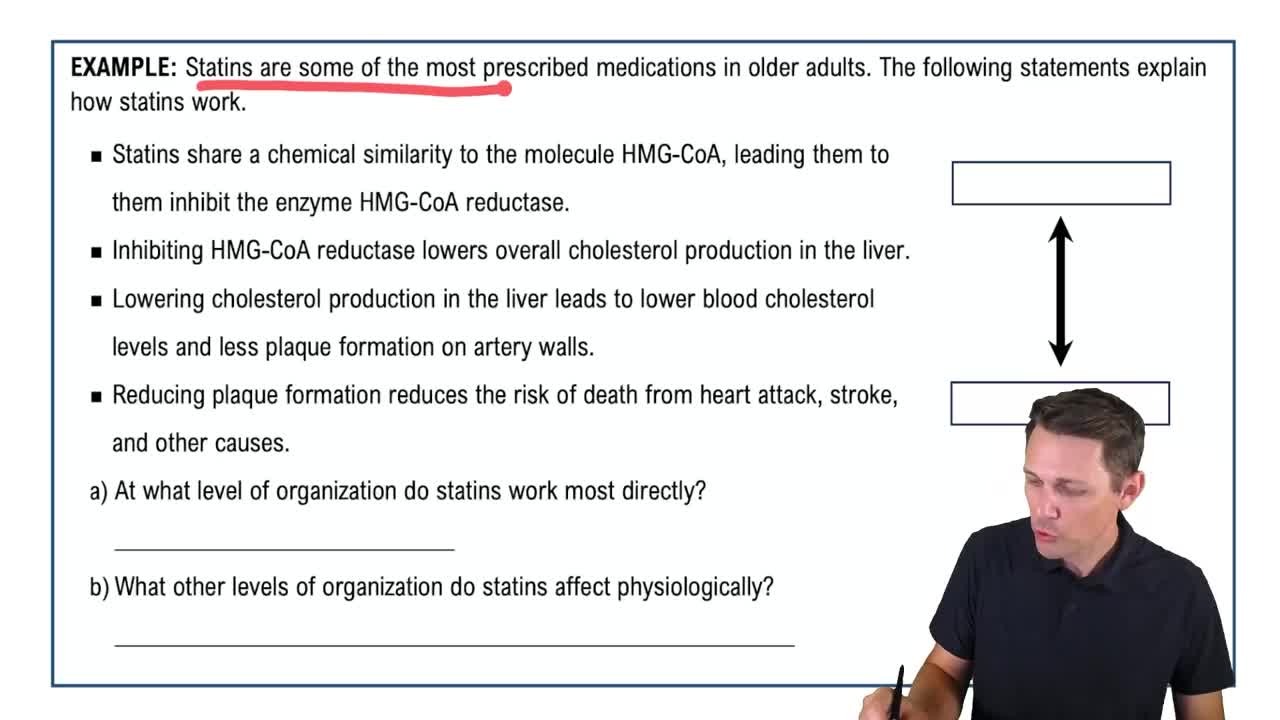
Biological catalysts that speed up chemical reactions without being consumed.
Contains genetic information to build proteins and regulate cellular activities.
Nucleotides, composed of a sugar, phosphate group, and nitrogenous base.
ATP stores energy in high-energy phosphate bonds; energy is released when bonds are broken.
Process of adding a phosphate group to a molecule, often to activate or deactivate proteins.