Skip to main content
Anatomy & Physiology
Il mio corso
Impara
Preparazione agli esami
AI Tutor
Guide di studio
Soluzioni per libri di testo
Flashcard
Esplora
Prova l'app
Il mio corso
Impara
Preparazione agli esami
AI Tutor
Guide di studio
Soluzioni per libri di testo
Flashcard
Esplora
Prova l'app
Indietro
Anatomy & Physiology: Form, Function, and Homeostasis
Puoi toccare per girare la carta.
What is the principle of complementarity of structure and function?
Puoi toccare per girare la carta.
👆
What is the principle of complementarity of structure and function?
Function always reflects structure; anatomy studies body parts' structure, while physiology studies their function.
Avanzamenti del tracciato
I pulsanti di controllo sono stati cambiati in modalità "navigazione".
1/26
Video consigliati
02:29
Introduction to Organ Systems
29861
views
756
rank
02:18
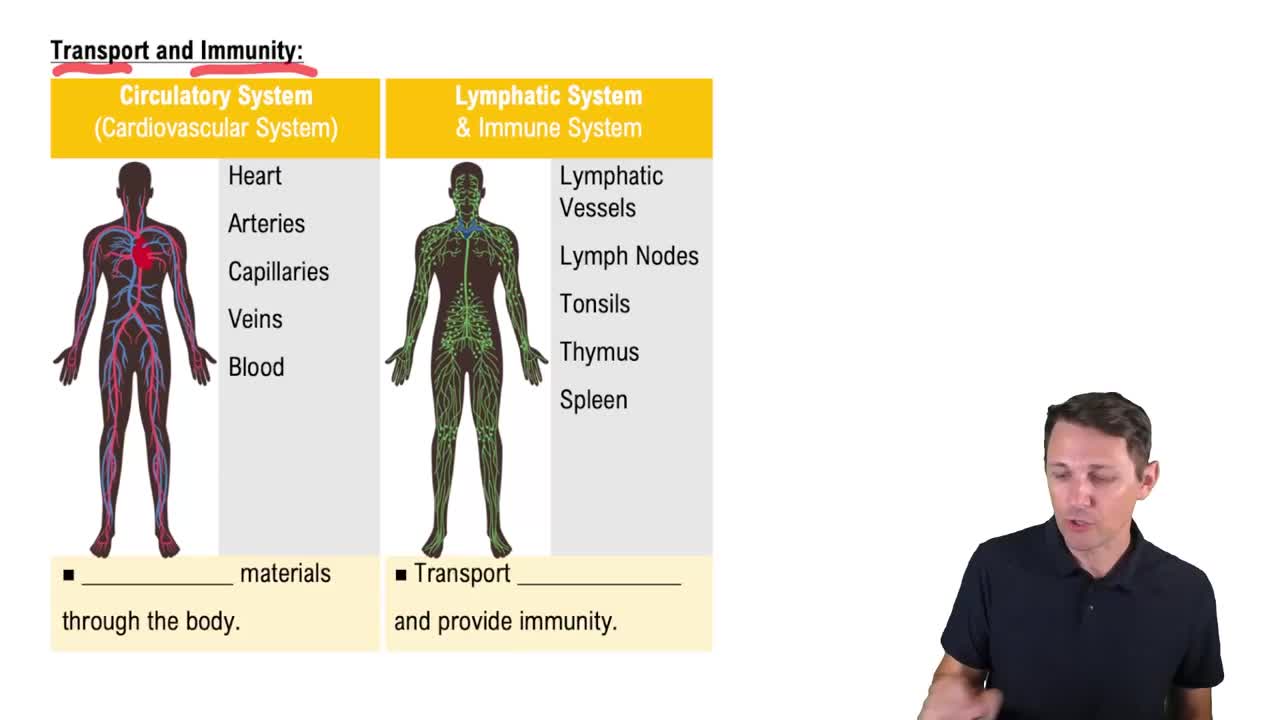
Transport and Immunity
17083
views
464
rank
1
comments
02:12
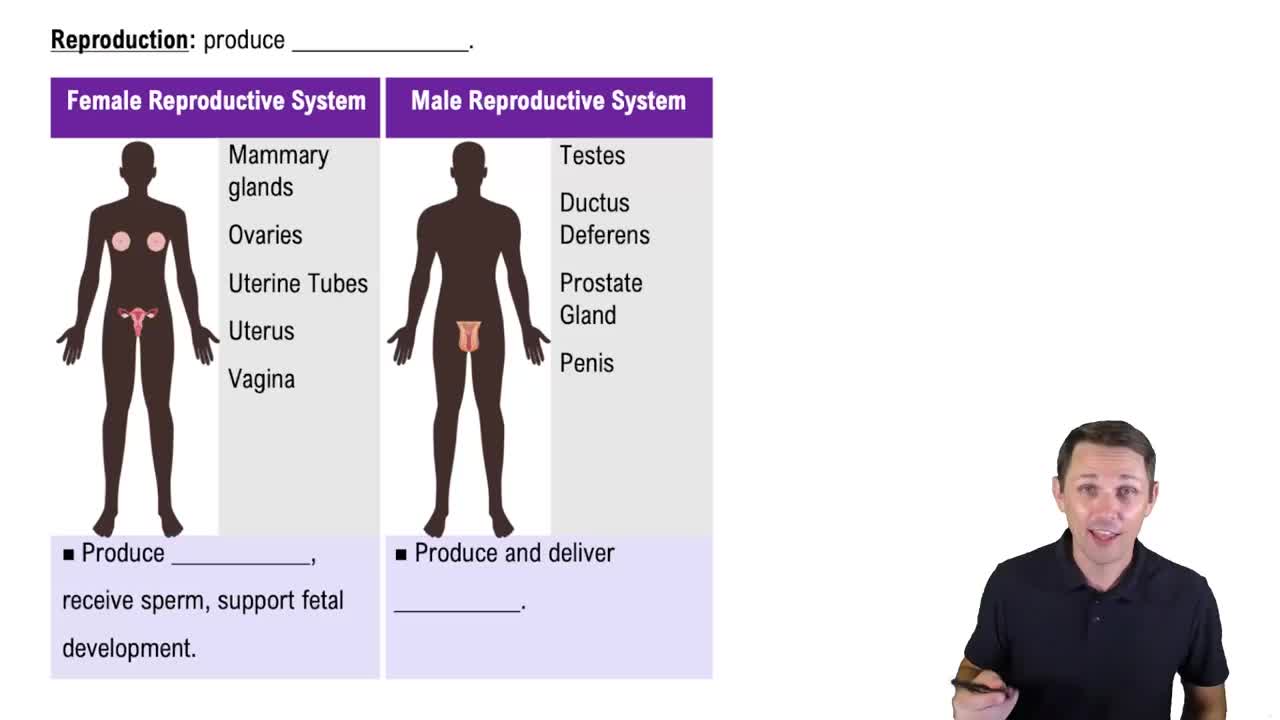
Reproduction
14305
views
384
rank
2
comments
Termini in questo insieme (26)
Nascondere definizioni
What is the principle of complementarity of structure and function?
Function always reflects structure; anatomy studies body parts' structure, while physiology studies their function.
Name the levels of structural organization in the human body from simplest to most complex.
Chemical, cellular, tissue, organ, organ system, organismal levels.
List the necessary life functions the human body must perform.
Maintaining boundaries, movement, responsiveness, digestion, metabolism, excretion, reproduction, growth.
What are the five survival needs of the human body?
Nutrients, oxygen, water, normal body temperature, appropriate atmospheric pressure.
What is the main function of the integumentary system?
Protects the body, synthesizes vitamin D, houses sensory receptors, and contains sweat and oil glands.
What roles does the skeletal system play?
Protection, support, movement, blood cell formation, and mineral storage.
What are the primary functions of the muscular system?
Movement, posture maintenance, and heat production.
Describe the nervous system's main function.
Fast-acting control system that responds to stimuli and activates muscles and glands.
What is the role of the endocrine system?
Secretes hormones that regulate growth, reproduction, and metabolism.
What does the cardiovascular system do?
Transports blood, oxygen, nutrients, and wastes; the heart pumps blood.
What is the function of the lymphatic system?
Returns fluid to blood, disposes of debris, and provides immunity.
What are the main functions of the respiratory system?
Supplies oxygen, removes carbon dioxide, and facilitates gas exchange.
What does the digestive system do?
Breaks down food for absorption and eliminates indigestible foodstuffs as feces.
What are the functions of the urinary system?
Eliminates nitrogenous wastes, regulates water, electrolyte, and acid-base balance.
Define homeostasis.
Maintenance of stable internal conditions despite external changes, achieved by dynamic equilibrium.
What are the three components of homeostatic control?
Receptor (sensor), control center, and effector.
Explain negative feedback in homeostasis.
Response reduces or shuts off original stimulus to restore balance, e.g., body temperature regulation.
What is positive feedback and give an example?
Response enhances original stimulus, causing variable to continue in same direction; e.g., labor contractions.
What is the standard anatomical position?
Body erect, feet slightly apart, palms forward, thumbs away from body.
Name the three main body planes.
Sagittal (right/left), frontal (anterior/posterior), transverse (superior/inferior).
What are the major body cavities?
Dorsal cavity (cranial, vertebral) and ventral cavity (thoracic, abdominopelvic).
What are serous membranes and their function?
Thin double-layered membranes lining body cavities and covering organs, secreting serous fluid for lubrication.
What is a hiatal hernia?
Condition where part of the stomach protrudes through the diaphragm into the thoracic cavity.
What is peritonitis?
Inflammation of serous membranes in the abdominal cavity, causing pain and complications.
Define proximal and distal in anatomical terms.
Proximal: closer to limb attachment; distal: farther from limb attachment.
What is the difference between superficial and deep?
Superficial means toward the body surface; deep means away from the surface, more internal.
 IndietroIndietro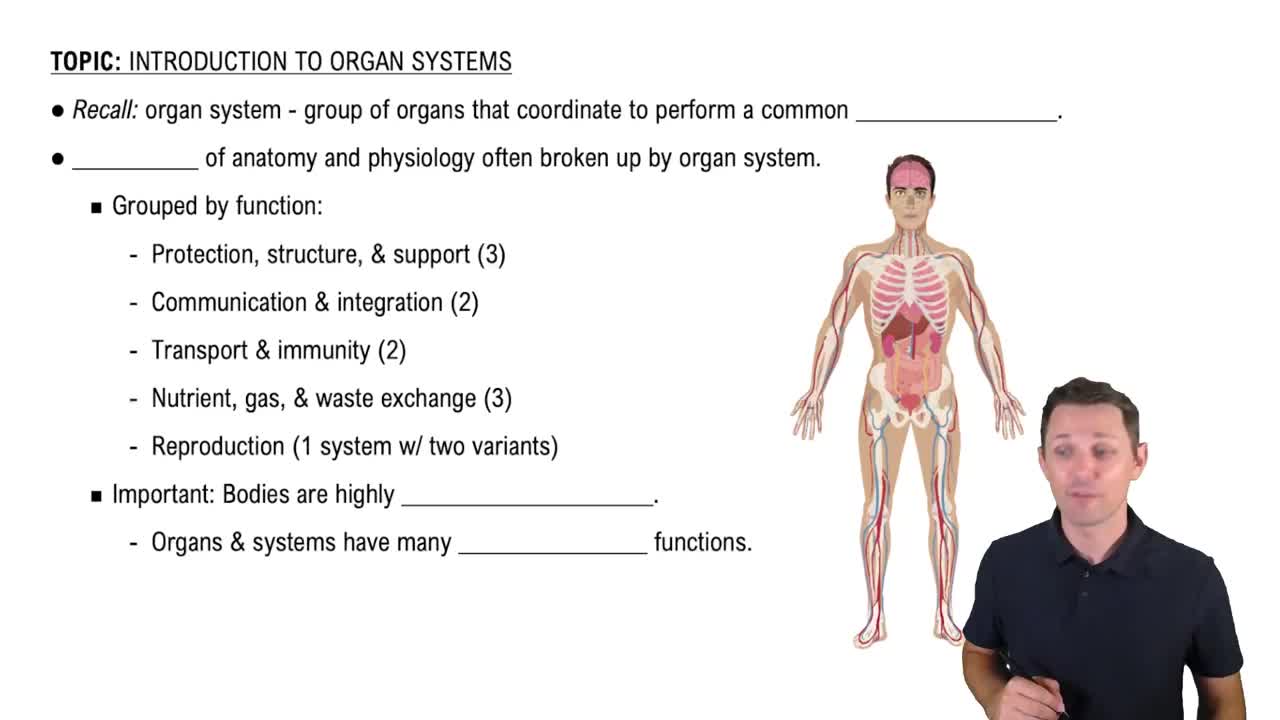
 02:29
02:29