 Indietro
Anatomy & Physiology: Histology and Tissue Types
 03:32
03:32
Termini in questo insieme (37)
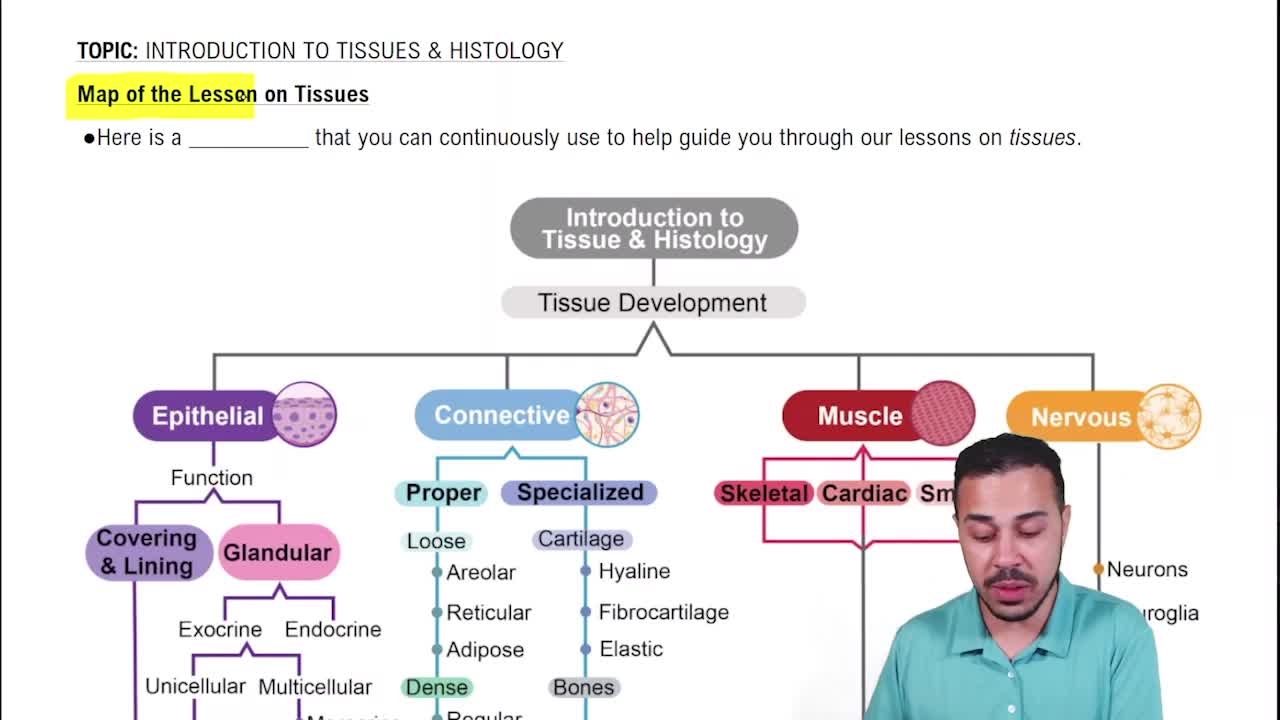
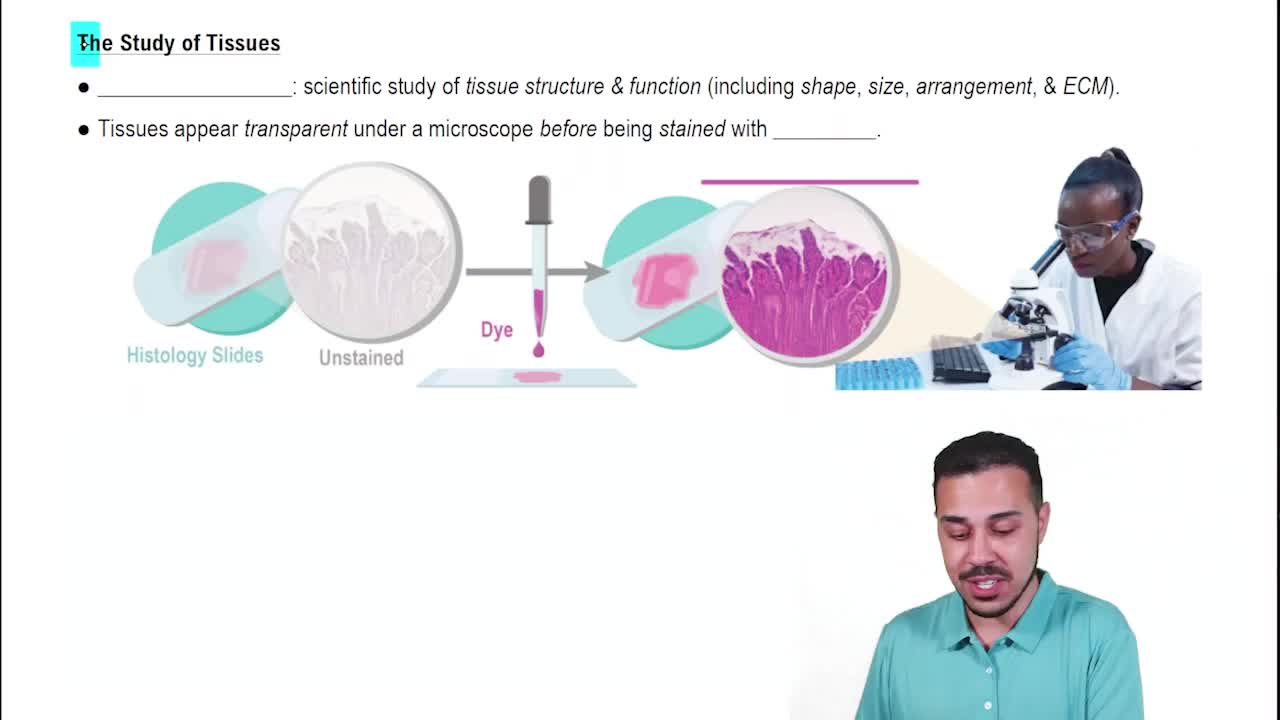
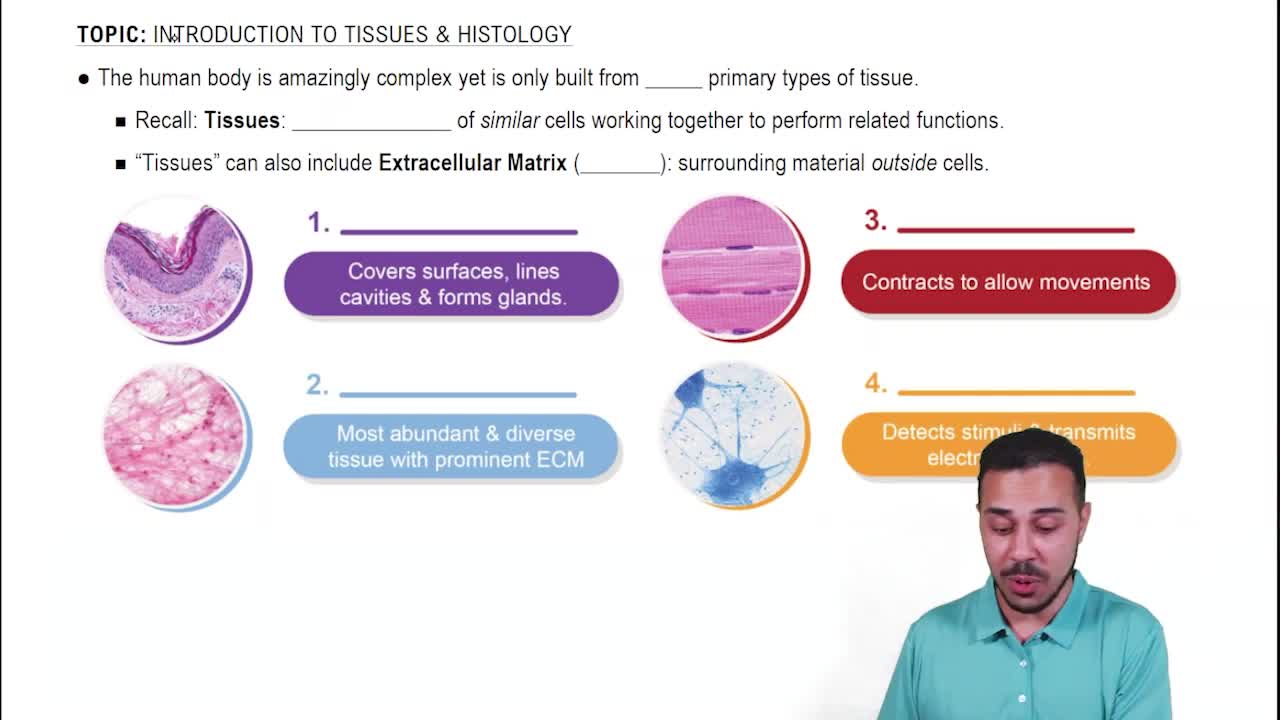
Epithelial, connective, muscle, and nervous tissue.
Cells and extracellular matrix (ECM).
Ground substance (gel-like material) and protein fibers (collagen, elastic, reticular).
Strongest and most abundant fiber type; tough yet flexible.
Allow tissue to stretch and recoil.
Short, branched collagen fibers that stabilize positions of blood vessels and nerves.
Sheets of cells covering body surfaces or cavities; functions include protection, absorption, filtration, excretion, secretion, and sensory reception.
Apical surface exposed to outside or open space; basal surface anchored to connective tissue by basal lamina.
Avascular; obtains nutrients by absorption or diffusion from underlying connective tissue.
Simple (single layer) and stratified (two or more layers).
Squamous (flat), cuboidal (cube-shaped), and columnar (tall, rectangular).
Single layer of flat cells; found in alveoli and serous membranes; functions in diffusion and filtration.
Secretion and absorption; found in kidney tubules and small gland ducts.
Single layer of tall cells; may have cilia or microvilli; goblet cells secrete mucus; found in uterine tubes and small intestine.
Single layer that appears multi-layered; often ciliated with goblet cells; found in upper respiratory tract.
Multiple layers of flat cells; protects areas of wear and tear like skin, oral cavity, vagina, and anus.
Stratified cuboidal is rare, usually two layers thick; stratified columnar has columnar apical layer and cuboidal deeper layers; both found in ducts and urethra.
Lines hollow urinary organs; designed to stretch and return to normal size to accommodate urine volume changes.
Exocrine glands secrete onto surfaces or cavities via ducts; endocrine glands secrete hormones into blood or tissue fluid without ducts.
Merocrine: exocytosis of secretions; Apocrine: release with apical cytoplasm shedding; Holocrine: entire cell ruptures releasing contents.
Binding/supporting tissues, protection, insulation, transport, and energy storage.
Blast cells are immature cells that build matrix; cyte cells are mature cells that maintain matrix.
Loose connective tissue: areolar, adipose, reticular; Dense connective tissue: dense regular, dense irregular, elastic.
Most widely distributed loose connective tissue; binds and supports other tissues; holds interstitial fluid.
White fat stores nutrients and is highly vascularized; brown fat generates heat, more common in babies.
Forms internal framework supporting white blood cells in lymph nodes, spleen, and bone marrow.
Parallel collagen fibers; withstands tension in one direction; found in tendons and ligaments; poorly vascularized.
Collagen fibers arranged irregularly; resists tension in multiple directions; found in dermis and joint capsules.
Contains many elastic fibers; found in elastic ligaments of vertebral column and large arteries; allows stretch and recoil.
ECM with collagen and elastic fibers in gel-like matrix; tough yet flexible; avascular; chondrocytes in lacunae maintain matrix.
Hyaline: most abundant, glassy appearance; Elastic: more elastic fibers, stretchy; Fibrocartilage: strong, thick collagen fibers.
Most rigid connective tissue due to mineral salts; supports body, protects organs, stores fat, forms blood cells; osteons are structural units.
Fluid matrix (plasma) with suspended formed elements (red/white blood cells, platelets); transports nutrients, wastes, gases.
Skeletal: voluntary, striated, multinucleate; Smooth: involuntary, non-striated, spindle-shaped; Cardiac: involuntary, striated, branched.
Conducts electrical impulses, senses environment, processes information; composed of neurons and neuroglial cells.
Cutaneous: skin; Mucous: line open passageways; Serous: line ventral body cavities; plus synovial membranes in joints.
Regeneration: replacement by same tissue, function restored; Fibrosis: replacement by connective tissue, function lost.