 Indietro
Anatomy & Physiology: Human Body Orientation, Tissue, and Integumentary System
 01:59

Termini in questo insieme (28)
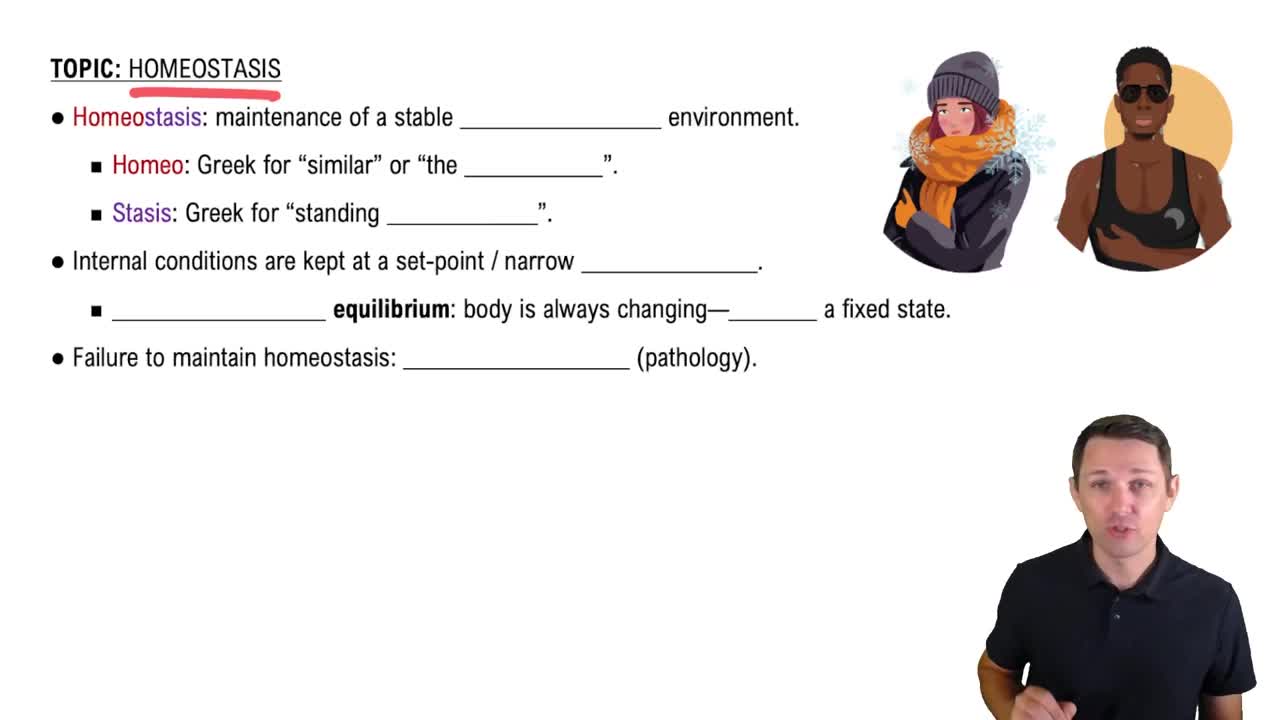
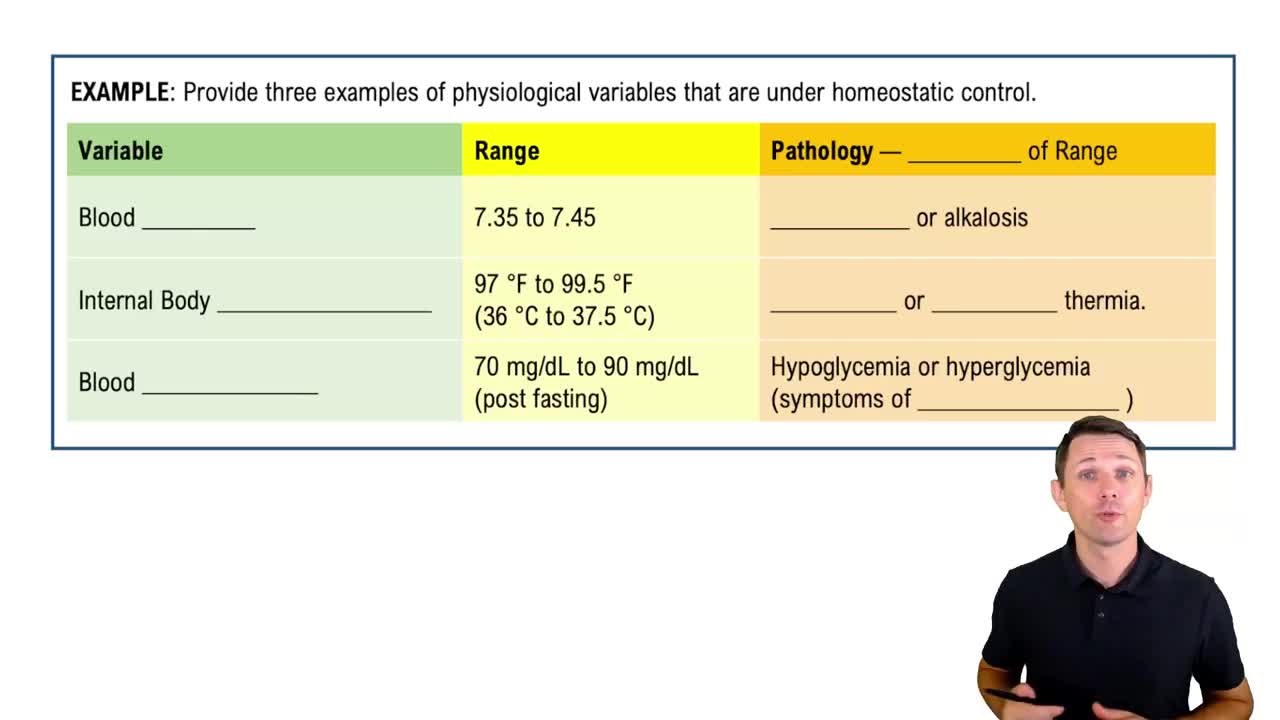
Homeostasis is the body's ability to maintain a stable internal environment. It is important because it ensures optimal conditions for cellular function and overall health.
Negative feedback reverses a change to maintain homeostasis. Example: body temperature regulation where sweating cools the body when it is too hot.
Positive feedback amplifies a change. Example: blood clotting where platelets release chemicals to attract more platelets.
Receptor detects change, control center processes information, and effector produces a response to restore balance.
Homeostatic imbalance is a disturbance in homeostasis caused by disease, aging, or environmental factors, leading to illness or dysfunction.
Maintaining boundaries, movement, responsiveness, digestion, metabolism, excretion, reproduction, and growth.
Anatomy studies body structure; physiology studies body function.
Epithelial tissue covers body surfaces, lines cavities, and forms glands.
Polarity, specialized contacts, supported by connective tissue, avascular but innervated, and high regeneration capacity.
Goblet cells are mucus-secreting unicellular glands found in epithelial linings of respiratory and digestive tracts.
Cells separated by abundant extracellular matrix, varying vascularity, and functions including support, protection, and binding.
The non-cellular component of connective tissue composed of ground substance and fibers that provide structural support.
Collagen fibers provide strength, elastic fibers allow stretch, reticular fibers form supportive networks.
Fibroblasts produce fibers, macrophages engulf debris, mast cells mediate inflammation, and adipocytes store fat.
Muscle tissue produces movement, maintains posture, and generates heat.
Located attached to bones, voluntary control, striated, multinucleated cells.
Found in heart walls, involuntary control, striated, single nucleus, intercalated discs.
Located in walls of hollow organs, involuntary control, non-striated, single nucleus.
Transmit electrical signals to coordinate body functions.
Granulation tissue is new connective tissue and microscopic blood vessels that form during healing to replace damaged tissue.
Epidermis is made of stratified squamous epithelial tissue that protects against environmental damage.
Keratocytes produce keratin, melanocytes produce pigment, Langerhans cells provide immune defense, Merkel cells detect touch.
From deep to superficial: stratum basale, stratum spinosum, stratum granulosum, stratum lucidum (only in thick skin), stratum corneum.
Keratin is a tough fibrous protein that protects skin and waterproofs it.
Thick skin has five epidermal layers and is found on palms and soles; thin skin has four layers and covers the rest of the body.
Supports epidermis, provides nutrients, contains blood vessels, nerves, glands, and hair follicles.
Papillary layer (areolar connective tissue) and reticular layer (dense irregular connective tissue).
Natural patterns of collagen fiber orientation in the dermis important for surgical incisions to heal with less scarring.