Skip to main content
Anatomy & Physiology
Il mio corso
Impara
Preparazione agli esami
AI Tutor
Guide di studio
Soluzioni per libri di testo
Flashcard
Esplora
Prova l'app
Il mio corso
Impara
Preparazione agli esami
AI Tutor
Guide di studio
Soluzioni per libri di testo
Flashcard
Esplora
Prova l'app
Indietro
Anatomy & Physiology I - Introduction Flashcards
Puoi toccare per girare la carta.
What are the main subdivisions of Anatomy?
Puoi toccare per girare la carta.
👆
What are the main subdivisions of Anatomy?
Gross (Macroscopic), Microscopic, Developmental, Pathological, Radiographic Anatomy, and Molecular Biology
.
Avanzamenti del tracciato
I pulsanti di controllo sono stati cambiati in modalità "navigazione".
1/20
Video consigliati
VideoThumbView.guidedCourse
05:04
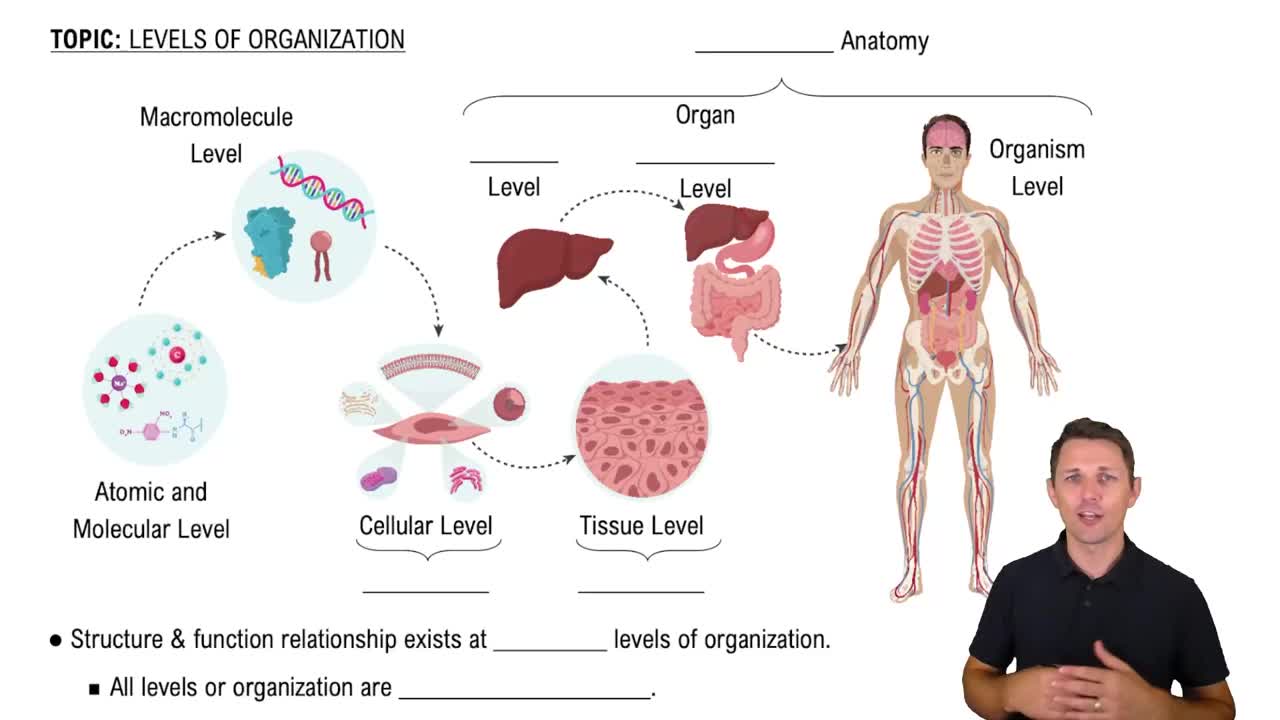
The Levels of Organization
49279
views
1463
rank
5
comments
VideoThumbView.guidedCourse
02:22
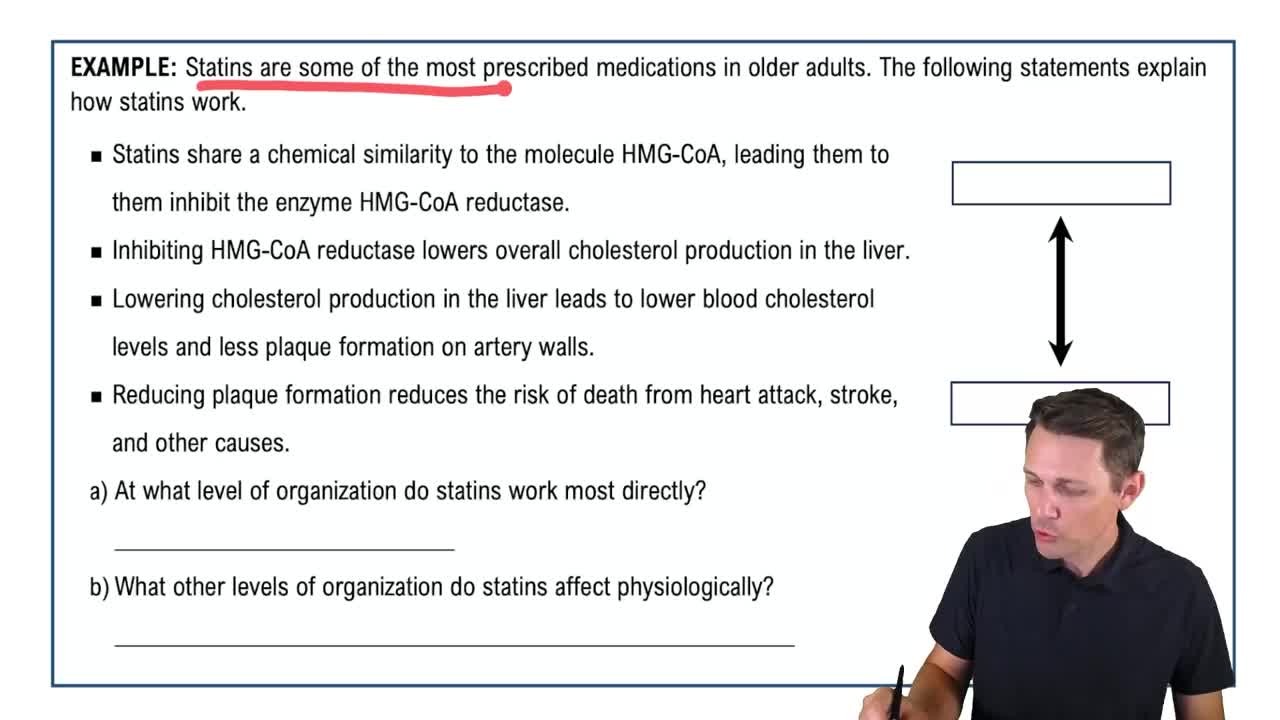
Levels of Organization Example 1
27744
views
594
rank
2
comments
Termini in questo insieme (20)
Nascondere definizioni
What are the main subdivisions of Anatomy?
Gross (Macroscopic), Microscopic, Developmental, Pathological, Radiographic Anatomy, and Molecular Biology
.
What are some key subdivisions of Physiology?
Renal Physiology, Neurophysiology, and Cardiac Physiology
.
What are the two main subdivisions of metabolism?
Catabolism
(breaking down molecules) and
Anabolism
(building molecules).
List the processes involved in metabolism.
Ingestion, Digestion, Absorption, Respiration, Assimilation, Secretion, and Excretion
.
Name the seven life processes described in Anatomy & Physiology.
Metabolism, Excitability, Conductivity, Contractility, Growth, Differentiation, and Reproduction
.
What are the levels of structural organization in the human body?
Chemical, Cellular, Tissue, Organ, System, and Organismic levels
.
Differentiate between Intracellular and Extracellular fluid.
Intracellular fluid
is inside cells;
Extracellular fluid
is outside cells, including interstitial fluid.
What is homeostasis?
The body's ability to maintain stable internal conditions such as
concentration, pressure, and temperature
.
Name two major systems involved in feedback mechanisms.
Nervous system
and
Endocrine system
.
What is the anatomical position?
Body standing upright, facing forward, arms at sides with palms facing forward.
List some cephalic (head) anatomical terms.
Cranial, Facial, Frontal, Orbital (Ocular), Otic, Buccal, Nasal, Oral, and Mental
.
What are the directional terms for body orientation?
Superior & Inferior, Anterior & Posterior, Cranial & Caudal, Dorsal & Ventral, Proximal & Distal, Medial & Lateral, Superficial & Deep
.
Define the sagittal plane and its types.
A vertical plane dividing the body into left and right; includes
midsagittal (median)
and
parasagittal
planes.
What is the frontal (coronal) plane?
A vertical plane dividing the body into anterior (front) and posterior (back) parts.
What is the horizontal (transverse) plane?
A horizontal plane dividing the body into superior (upper) and inferior (lower) parts.
Name the two main body cavities.
Dorsal body cavity
(cranial and vertebral) and
Ventral body cavity
(thoracic and abdominopelvic).
What are the subdivisions of the thoracic cavity?
Includes the
pleural cavities
(lungs) and the
mediastinum
containing the heart and other structures.
What are the abdominopelvic cavity subdivisions?
Abdominal cavity
and
Pelvic cavity
.
What are the nine abdominopelvic regions?
Umbilical, Left & Right Lumbar, Epigastric, Left & Right Hypochondriac, Pubic, Left & Right Iliac (Inguinal)
.
Name the four abdominopelvic quadrants.
Right Upper (RUQ), Left Upper (LUQ), Right Lower (RLQ), Left Lower (LLQ)
.
 IndietroIndietro
 05:04