Skip to main content
Anatomy & Physiology
Il mio corso
Impara
Preparazione agli esami
AI Tutor
Guide di studio
Soluzioni per libri di testo
Flashcard
Esplora
Prova l'app
Il mio corso
Impara
Preparazione agli esami
AI Tutor
Guide di studio
Soluzioni per libri di testo
Flashcard
Esplora
Prova l'app
Indietro
Anatomy & Physiology II Final Lab Practical Terms
Puoi toccare per girare la carta.
Nasal cavity
Puoi toccare per girare la carta.
👆
Nasal cavity
The hollow space behind the nose that filters, warms, and moistens air before it reaches the lungs.
Avanzamenti del tracciato
I pulsanti di controllo sono stati cambiati in modalità "navigazione".
1/30
Video consigliati
5:05
Special Senses
10007
views
260
rank
2
comments
3:08
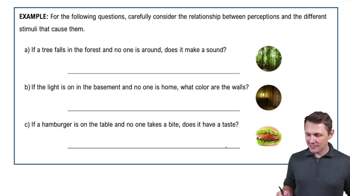
Introduction to Special Senses Example 1
6530
views
145
rank
Termini in questo insieme (30)
Nascondere definizioni
Nasal cavity
The hollow space behind the nose that filters, warms, and moistens air before it reaches the lungs.
Nasal septum
The cartilage and bone structure that divides the nasal cavity into left and right halves.
Conchae (superior, middle, inferior)
Curved bony ridges inside the nasal cavity that increase surface area to warm and humidify inhaled air.
Pharynx
A muscular tube that connects the nasal and oral cavities to the larynx and esophagus; divided into nasopharynx, oropharynx, and laryngopharynx.
Larynx
The voice box containing the vocal folds; responsible for sound production and protecting the airway during swallowing.
Thyroid cartilage
The largest cartilage of the larynx, commonly known as the Adam's apple.
Epiglottis
A flap of cartilage that covers the trachea during swallowing to prevent food from entering the airway.
Trachea
The windpipe; a tube reinforced with cartilage rings that conducts air to the bronchi.
Primary bronchi (right and left)
The two main branches of the trachea that lead air into each lung.
Lungs (apex and base)
The apex is the top pointed part of the lung; the base is the broad bottom resting on the diaphragm.
Visceral pleura
The membrane that directly covers the surface of the lungs.
Parietal pleura
The membrane lining the thoracic cavity and diaphragm.
Right lung lobes
The right lung has three lobes: superior, middle, and inferior, separated by horizontal and oblique fissures.
Left lung lobes
The left lung has two lobes: superior and inferior, separated by an oblique fissure.
Kidney renal cortex
The outer region of the kidney containing nephrons responsible for filtering blood.
Renal medulla
The inner region of the kidney composed of renal pyramids that concentrate urine.
Renal pelvis
The funnel-shaped structure that collects urine from the calyces and channels it into the ureter.
Ureter
A muscular tube that transports urine from the kidney to the urinary bladder.
Urinary bladder
A hollow muscular organ that stores urine before it is excreted.
Oral cavity
The mouth area containing teeth, tongue, and salivary glands; beginning of the digestive tract.
Teeth types
Incisors cut, cuspids (canines) tear, bicuspids (premolars) crush, and molars grind food.
Stomach with rugae
A muscular organ with folds (rugae) that allow expansion and aid mechanical digestion.
Liver lobes
The liver has a large right lobe and a smaller left lobe, involved in metabolism and bile production.
Gall bladder
A small organ that stores and concentrates bile produced by the liver.
Pancreas
An organ that produces digestive enzymes and hormones like insulin.
Small intestine parts
Divided into duodenum, jejunum, and ileum; responsible for nutrient absorption.
Large intestine sections
Includes cecum, ascending, transverse, descending, sigmoid colon, rectum, and anus; absorbs water and forms feces.
Testis
Male reproductive organ that produces sperm and testosterone.
Ovaries
Female reproductive organs that produce eggs and hormones like estrogen and progesterone.
Uterus
A muscular organ where a fertilized egg implants and develops during pregnancy.
 IndietroIndietro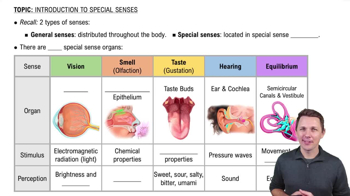
 5:05
5:05