Skip to main content
Anatomy & Physiology
Il mio corso
Impara
Preparazione agli esami
AI Tutor
Guide di studio
Soluzioni per libri di testo
Flashcard
Esplora
Prova l'app
Il mio corso
Impara
Preparazione agli esami
AI Tutor
Guide di studio
Soluzioni per libri di testo
Flashcard
Esplora
Prova l'app
Indietro
Anatomy & Physiology: Integumentary System
Puoi toccare per girare la carta.
What type of epithelium composes the epidermis?
Puoi toccare per girare la carta.
👆
What type of epithelium composes the epidermis?
The epidermis is made of
stratified squamous epithelium
that is keratinized.
Avanzamenti del tracciato
I pulsanti di controllo sono stati cambiati in modalità "navigazione".
1/20
Video consigliati
VideoThumbView.guidedCourse
06:54
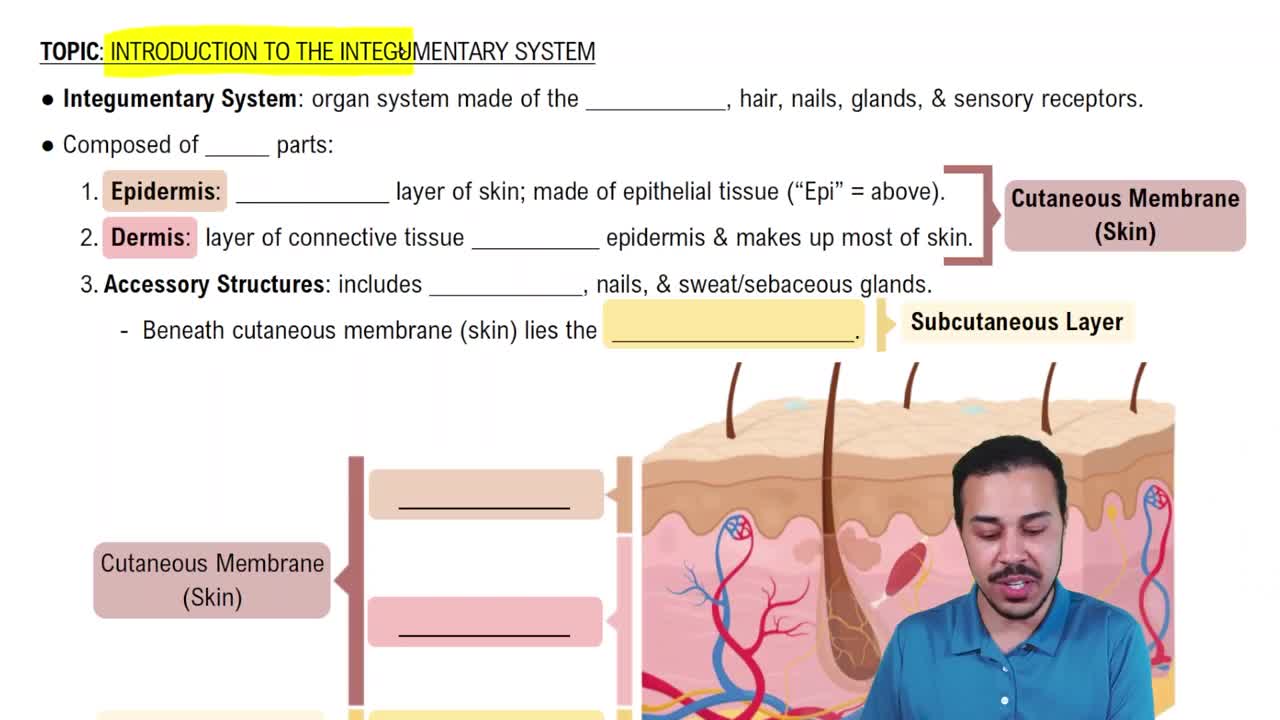
Introduction to the Integumentary System
23948
views
819
rank
3
comments
VideoThumbView.guidedCourse
03:40
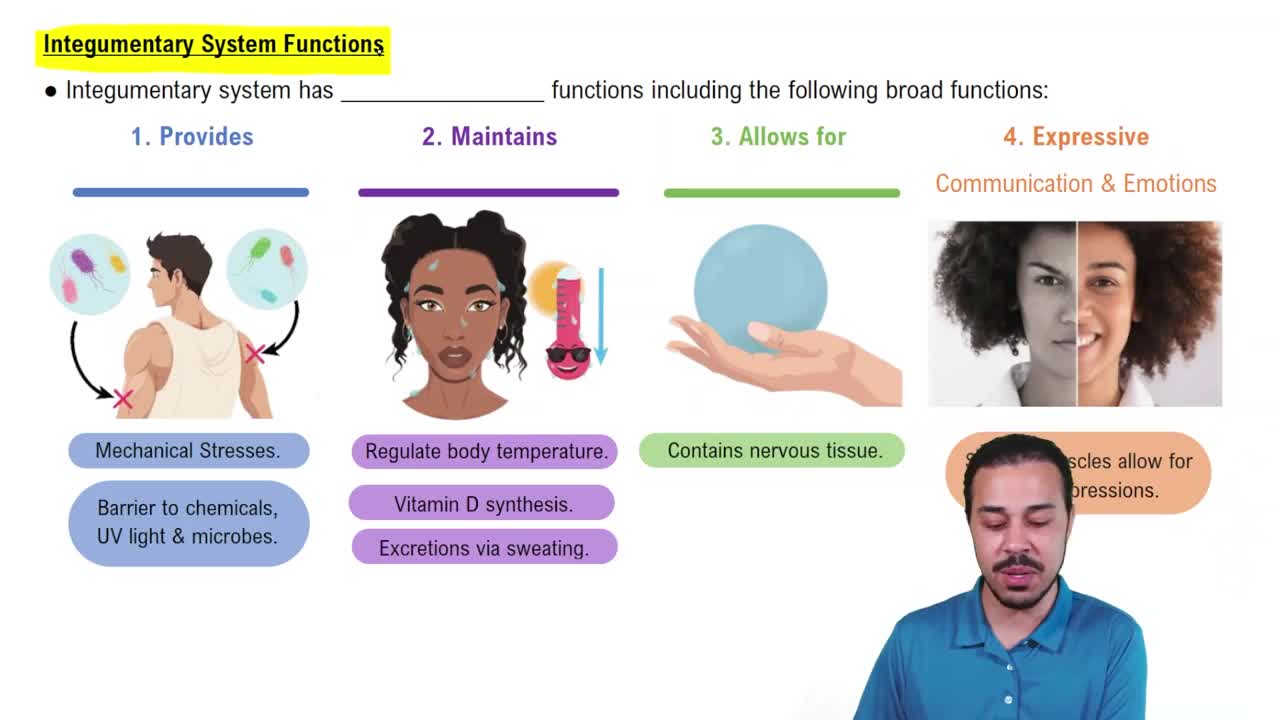
Integumentary System Functions
15573
views
393
rank
1
comments
VideoThumbView.guidedCourse
02:47
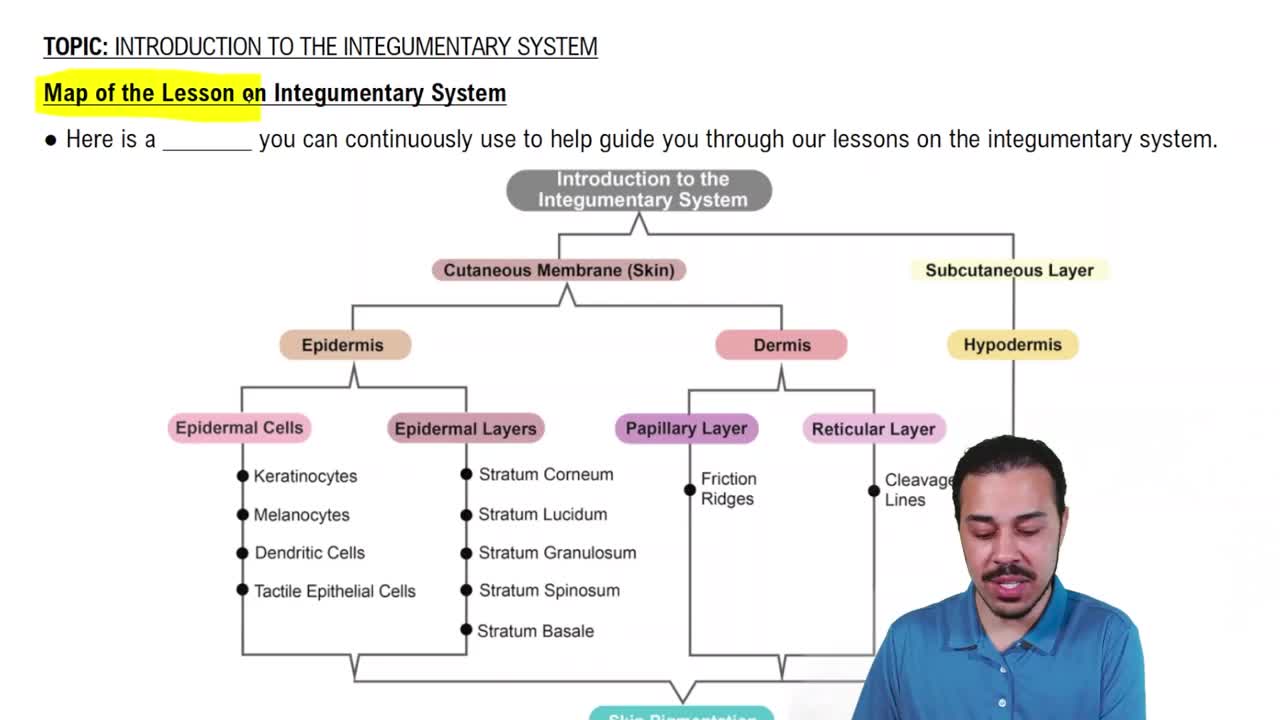
Map of the Lesson on Integumentary System
13712
views
648
rank
6
comments
Termini in questo insieme (20)
Nascondere definizioni
What type of epithelium composes the epidermis?
The epidermis is made of
stratified squamous epithelium
that is keratinized.
Name the layers of the epidermis from outermost to innermost.
Stratum Corneum, Stratum Lucidum (only in thick skin), Stratum Granulosum, Stratum Spinosum, Stratum Basale.
Which epidermal layer contains epidermal ridges in thick skin?
The
Stratum Corneum
contains epidermal ridges in thick skin.
In which layer of the epidermis is the Stratum Lucidum found?
The
Stratum Lucidum
is found only in thick skin.
What cells are found in the Stratum Spinosum?
The
Stratum Spinosum
contains Langerhans (epidermal dendritic) cells.
Which cells are located in the Stratum Basale?
The
Stratum Basale
contains melanocytes and keratinocytes.
What is the function of melanocytes in the epidermis?
Melanocytes produce
melanin
, which protects against UV radiation.
What type of tissue composes the dermis?
The dermis is made of
connective tissue
and has two layers: papillary and reticular.
Describe the papillary layer of the dermis.
The papillary layer is made of
loose areolar connective tissue
and contains dermal papillae.
What characterizes the reticular layer of the dermis?
The reticular layer is composed of
dense irregular connective tissue
.
What is the hypodermis composed of?
The hypodermis consists mainly of
adipose connective tissue
.
Name three sensory receptors found in the skin.
Meissner’s corpuscle, Pacinian corpuscle, and Merkel (tactile) cells.
What is the role of Meissner’s corpuscles?
Meissner’s corpuscles detect
light touch
sensations.
What do Pacinian corpuscles detect?
Pacinian corpuscles detect
deep pressure and vibration
.
What type of gland is the sebaceous gland?
The sebaceous gland is an
oil gland
that lubricates skin and hair.
What is the function of eccrine sweat glands?
Eccrine glands produce sweat for
thermoregulation
.
List the main parts of a hair follicle.
Hair follicle, shaft, root, hair papilla, and arrector pili muscle.
What is the function of the arrector pili muscle?
The arrector pili muscle causes hair to stand up, producing 'goosebumps'.
Name the parts of a nail.
Root, bed, matrix, lunula, and eponychium (cuticle).
What is the lunula of the nail?
The lunula is the visible, crescent-shaped white area at the nail base.
 IndietroIndietro
 06:54