Skip to main content
Anatomy & Physiology
Il mio corso
Impara
Preparazione agli esami
AI Tutor
Guide di studio
Soluzioni per libri di testo
Flashcard
Esplora
Prova l'app
Il mio corso
Impara
Preparazione agli esami
AI Tutor
Guide di studio
Soluzioni per libri di testo
Flashcard
Esplora
Prova l'app
Indietro
Anatomy & Physiology: Muscles and Bones
Puoi toccare per girare la carta.
Adductor muscles
Puoi toccare per girare la carta.
👆
Adductor muscles
Group of muscles including
adductor brevis
,
adductor longus
, and
adductor magnus
that function to move the thigh toward the body's midline.
Avanzamenti del tracciato
I pulsanti di controllo sono stati cambiati in modalità "navigazione".
1/29
Video consigliati
VideoThumbView.guidedCourse
6:31
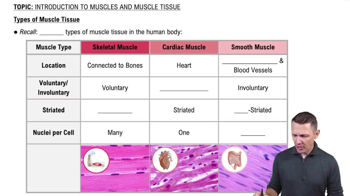
Types of Muscle Tissue
18882
views
499
rank
1
comments
VideoThumbView.guidedCourse
2:00
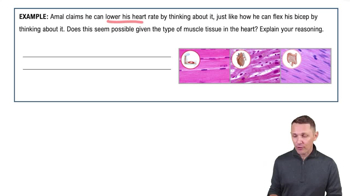
Introduction to Muscles and Muscle Tissue Example 1
16841
views
328
rank
VideoThumbView.guidedCourse
4:36
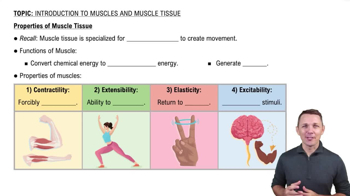
Properties of Muscle Tissue
25844
views
747
rank
2
comments
Termini in questo insieme (29)
Nascondere definizioni
Adductor muscles
Group of muscles including
adductor brevis
,
adductor longus
, and
adductor magnus
that function to move the thigh toward the body's midline.
Biceps brachii
A muscle of the upper arm that flexes the elbow and supinates the forearm.
Deltoid muscle
A large, triangular shoulder muscle responsible for arm abduction.
Diaphragm
Primary muscle of respiration that contracts to allow lung expansion during inhalation.
External intercostal muscles
Muscles located between ribs that elevate the ribs during inhalation.
Gluteus maximus
The largest gluteal muscle responsible for hip extension and outward rotation.
Latissimus dorsi
A broad back muscle that extends, adducts, and medially rotates the arm.
Masseter muscle
A facial muscle that elevates the mandible to close the jaw.
Orbicularis oculi
Muscle surrounding the eye that allows blinking and closing of the eyelids.
Pectoralis major
A thick, fan-shaped chest muscle that flexes, adducts, and medially rotates the arm.
Rectus abdominis
A paired muscle running vertically on the anterior abdominal wall, responsible for trunk flexion.
Sartorius muscle
The longest muscle in the body, running across the thigh, involved in hip and knee flexion.
Sternocleidomastoid
A neck muscle that rotates and flexes the head.
Trapezius muscle
A large triangular muscle of the upper back that moves the scapula and supports the arm.
Triceps brachii
The muscle on the back of the upper arm responsible for elbow extension.
Frontal bone
The bone forming the forehead and the upper part of the eye sockets.
Parietal bones
Paired bones forming the sides and roof of the cranial cavity.
Temporal bone
Bone located at the sides and base of the skull, housing structures of the ear.
Occipital bone
Bone forming the back and base of the skull, containing the foramen magnum.
Mandible
The lower jawbone, the largest and strongest bone of the face.
Clavicle
Also called the collarbone, it connects the arm to the body, articulating with the sternum and scapula.
Scapula
The shoulder blade, a flat triangular bone that connects the humerus with the clavicle.
Sternum
The breastbone located in the center of the chest, connecting the ribs via cartilage.
Humerus
The long bone of the upper arm extending from shoulder to elbow.
Radius and Ulna
The two long bones of the forearm; radius is lateral, ulna is medial when in anatomical position.
Femur
The thigh bone, the longest and strongest bone in the body.
Patella
The kneecap, a small bone that protects the knee joint.
Tibia and Fibula
The two bones of the lower leg; tibia is the larger, weight-bearing bone, fibula is thinner and lateral.
Tarsals and Metatarsals
Bones of the foot; tarsals form the ankle, metatarsals form the midfoot.
 IndietroIndietro
 6:31