 Indietro
Anatomy & Physiology: Skeletal and Muscle System Review
 3:56

Termini in questo insieme (29)
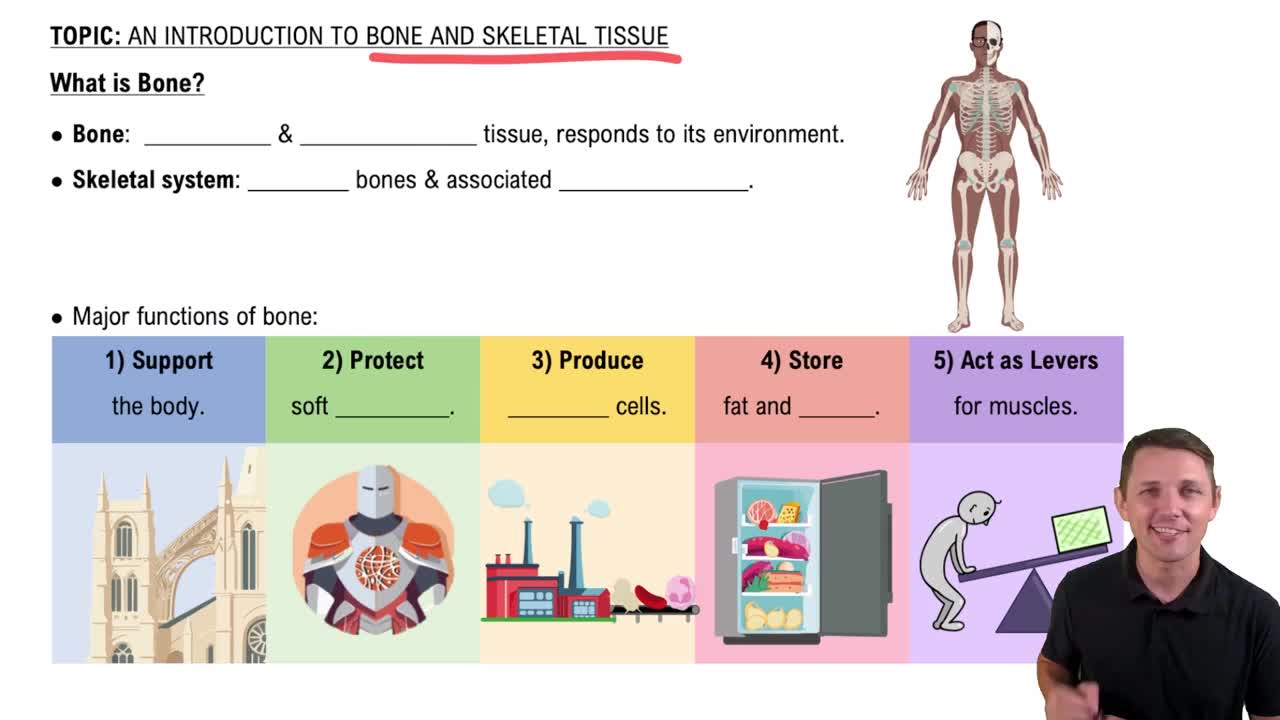
Support, protection, movement, mineral storage, blood cell production, and energy storage.
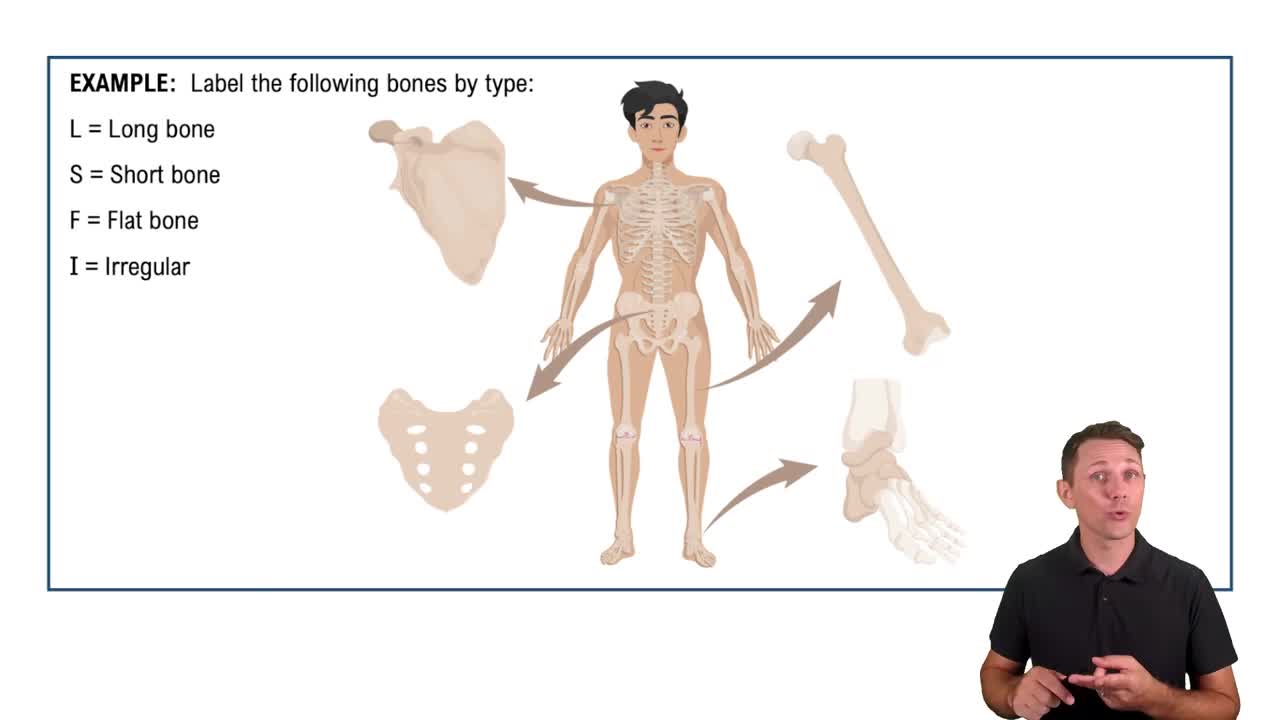
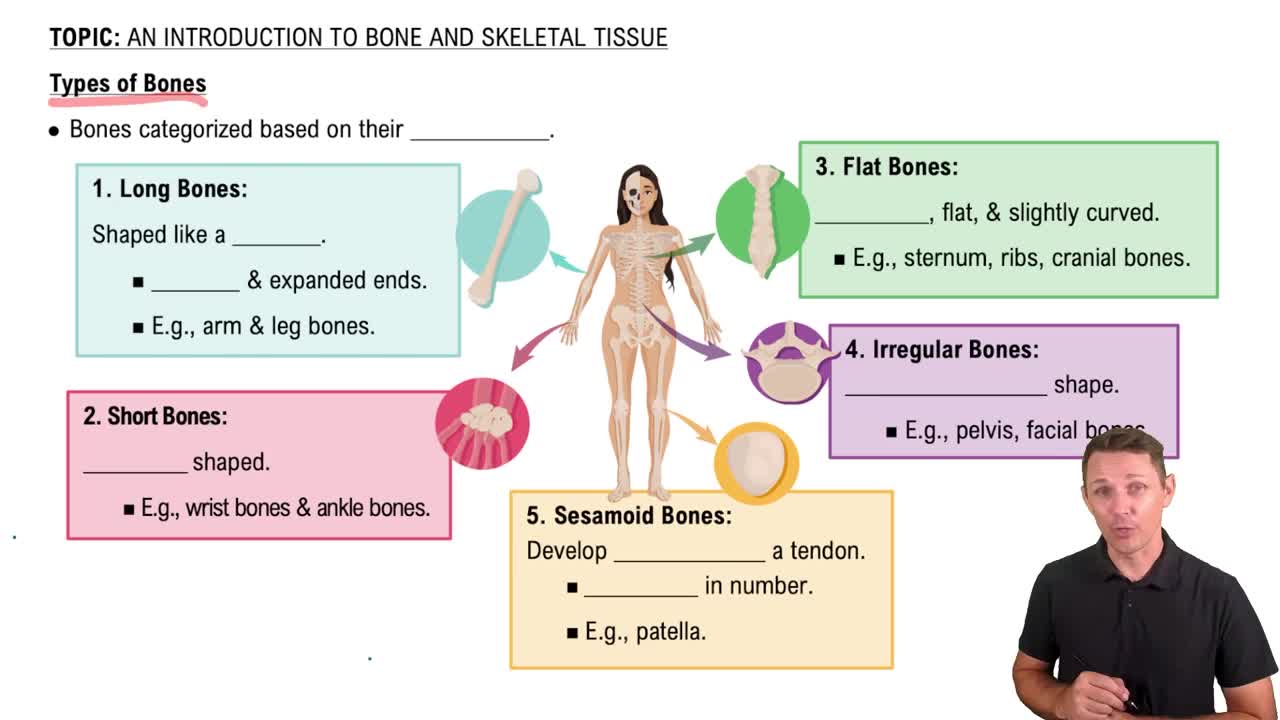
Long, short, flat, and irregular bones.
Diaphysis (shaft), epiphysis (ends), metaphysis (growth plate area), medullary cavity, and periosteum.
Central canal, lamellae, lacunae, osteocytes, and canaliculi.
Skull, vertebral column, and thoracic cage.
Cervical, thoracic, lumbar, sacral, and coccygeal vertebrae.
Sternum, ribs, and thoracic vertebrae.
Allow skull flexibility during birth and brain growth after birth.
Pectoral girdle, upper limbs, pelvic girdle, and lower limbs.
Female pelvis is wider, shallower, and has a larger pelvic inlet for childbirth; male pelvis is narrower and taller.
Hyaline cartilage that allows bone lengthening during growth.
Simple (closed), compound (open), greenstick, comminuted, and spiral fractures.
A single, brief contraction and relaxation cycle of a muscle fiber in response to a stimulus.
Latent period, contraction phase, and relaxation phase.
Calcium binds to troponin, causing tropomyosin to move and expose binding sites on actin for myosin.
A single motor neuron and all the muscle fibers it innervates.
The minimum stimulus intensity required to generate a muscle contraction.
Increasing the number of active motor units to increase muscle tension.
Successive stimuli increase muscle tension by adding contractions before full relaxation.
Partial relaxation between stimuli resulting in sustained but wavering muscle contraction.
Continuous, smooth muscle contraction with no relaxation between stimuli.
The greatest tension a muscle can produce during fused tetanus.
Os coxae (ilium, ischium, pubis), sacrum, and coccyx.
Head, neck, greater and lesser trochanters, linea aspera, and medial and lateral condyles.
Tarsals (including calcaneus and talus), metatarsals, and phalanges.
Clavicle and scapula.
Spine, acromion, coracoid process, glenoid cavity, and fossae (supraspinous, infraspinous, subscapular).
Head, greater and lesser tubercles, deltoid tuberosity, trochlea, and capitulum.
Radius and ulna.