Skip to main content
Anatomy & Physiology
Il mio corso
Impara
Preparazione agli esami
AI Tutor
Guide di studio
Soluzioni per libri di testo
Flashcard
Esplora
Prova l'app
Il mio corso
Impara
Preparazione agli esami
AI Tutor
Guide di studio
Soluzioni per libri di testo
Flashcard
Esplora
Prova l'app
Indietro
Anatomy & Physiology: Skeletal and Muscular System Review
Puoi toccare per girare la carta.
What are the two main types of bone tissue?
Puoi toccare per girare la carta.
👆
What are the two main types of bone tissue?
Compact bone
is dense and forms the outer layer of bones, while
spongy bone
is porous and found inside bones.
Avanzamenti del tracciato
I pulsanti di controllo sono stati cambiati in modalità "navigazione".
1/21
Video consigliati
VideoThumbView.guidedCourse
04:19
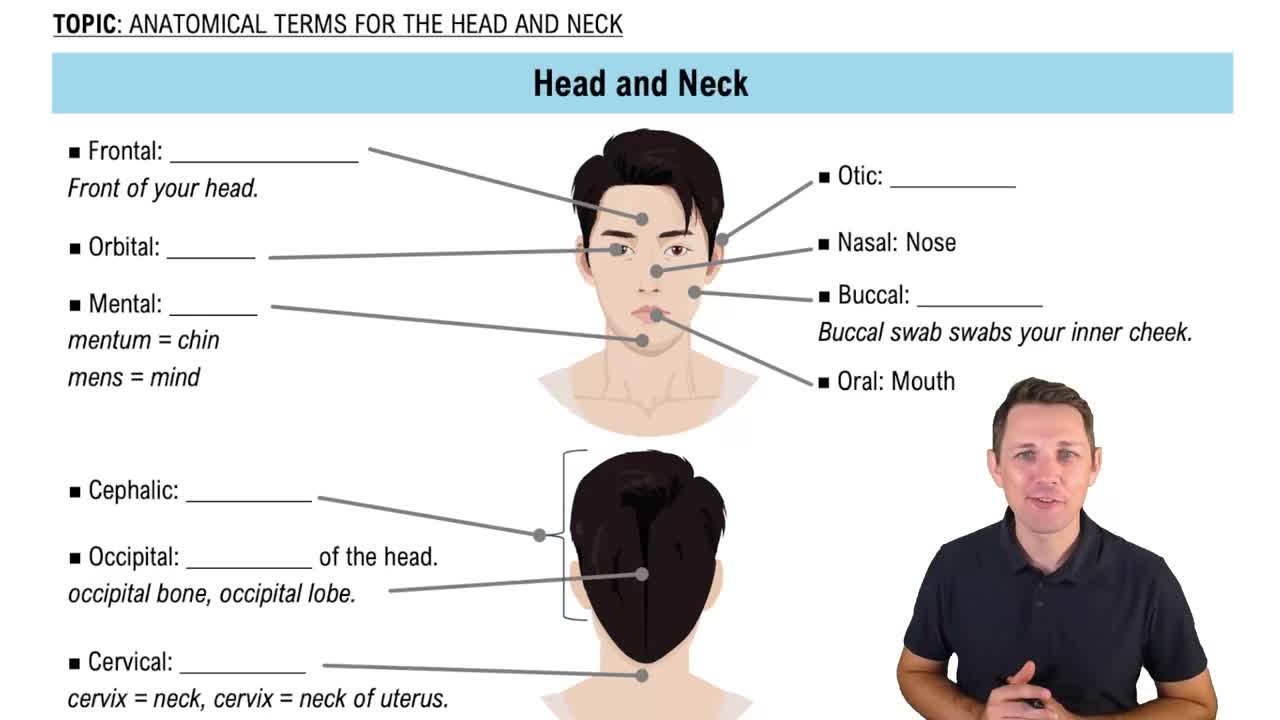
The Head and Neck
13547
views
318
rank
3
comments
VideoThumbView.guidedCourse
01:18
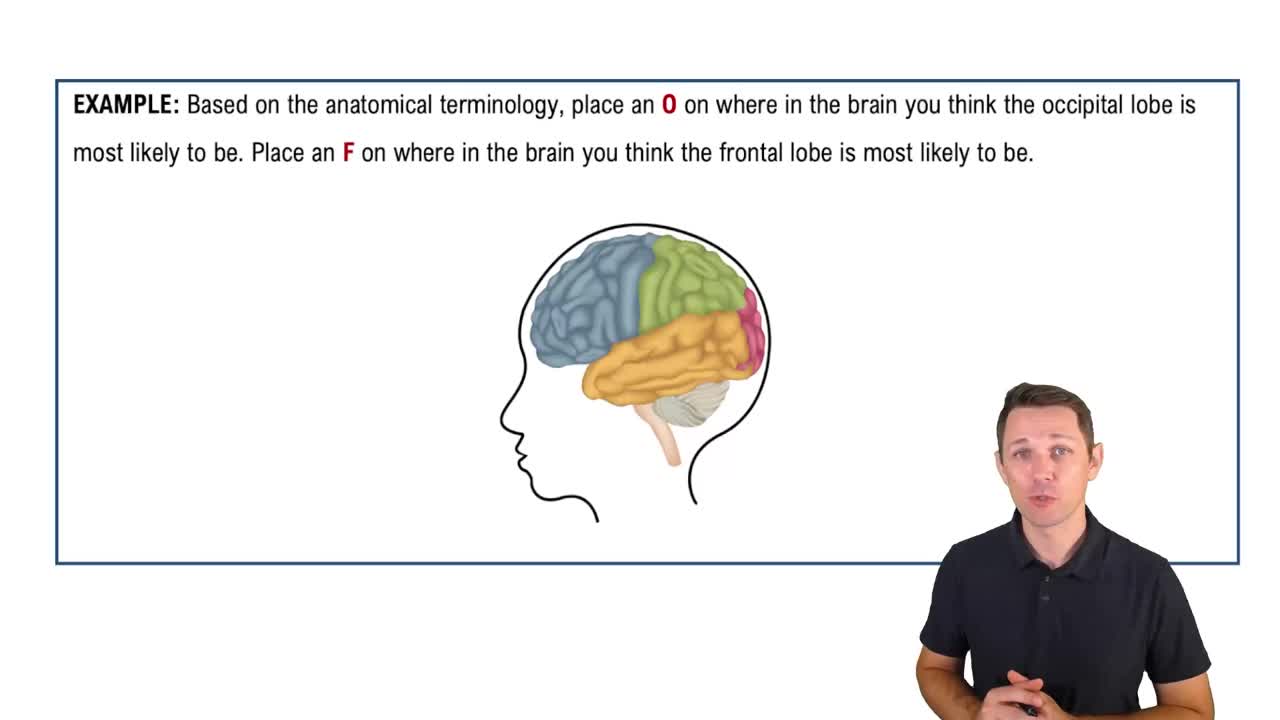
Anatomical Terms for the Head and Neck Example 1
9024
views
158
rank
Termini in questo insieme (21)
Nascondere definizioni
What are the two main types of bone tissue?
Compact bone
is dense and forms the outer layer of bones, while
spongy bone
is porous and found inside bones.
What connective tissues cover bones externally and internally?
The
periosteum
covers the outer surface of bones, and the
endosteum
lines the inner surfaces.
Name the major sutures of the skull.
Coronal, sagittal, squamosal,
and
lambdoid sutures
connect the bones of the skull.
Which bones belong to the axial skeleton?
The axial skeleton includes the
skull bones, hyoid bone, vertebrae, ribs,
and
sternum
.
Which bones belong to the appendicular skeleton?
The appendicular skeleton includes the
clavicle, scapula, humerus, radius, ulna, pelvic girdle, femur, tibia, fibula,
and bones of the hands and feet.
What are the natural spinal curves and their abnormal curvatures?
Natural curves:
cervical, thoracic, lumbar
. Abnormal curvatures:
kyphosis, lordosis, scoliosis
.
How are joints classified by structure and function?
Structurally:
fibrous, cartilaginous, synovial
. Functionally:
synarthrosis (immovable), amphiarthrosis (slightly movable), diarthrosis (freely movable)
.
Name types of synovial joints and an example of each.
Hinge
(knee),
ball-and-socket
(shoulder),
pivot
(atlantoaxial),
gliding
(carpals),
saddle
(thumb),
condyloid
(wrist).
What are common movements around synovial joints?
Movements include
flexion, extension, abduction, adduction, circumduction, pronation, supination, dorsiflexion, plantar flexion, elevation, depression, protraction, retraction, rotation, inversion, eversion, opposition
.
What are the main muscle tissue types and their locations?
Skeletal muscle
attaches to bones,
cardiac muscle
is in the heart, and
smooth muscle
is in walls of hollow organs.
What is the basic contractile unit of skeletal muscle?
The
sarcomere
is the functional unit, defined by Z disks and containing actin and myosin filaments.
Name the connective tissue layers surrounding muscle from smallest to largest.
Endomysium
surrounds muscle fibers,
perimysium
surrounds fascicles, and
epimysium
surrounds the entire muscle.
How does stimulus voltage affect muscle tension?
Increasing voltage recruits more muscle fibers, increasing
tension
until maximal contraction.
What is the effect of stimulus frequency on muscle contraction?
Higher frequency causes
summation
and can lead to
tetanus
, a sustained contraction.
How does muscle length affect tension generation?
Optimal muscle length allows maximal
cross-bridge
formation for greatest tension; too stretched or too contracted reduces tension.
Define origin and insertion of a muscle.
The
origin
is the fixed attachment point; the
insertion
is the movable attachment point.
What are common muscle shapes and examples?
Circular
(orbicularis oris),
pennate
(rectus femoris),
fusiform
(biceps brachii),
parallel
(sartorius).
What is an aponeurosis?
An
aponeurosis
is a broad, flat tendon connecting muscles to bones or other muscles.
What is the function of the mental foramen?
The
mental foramen
allows passage of nerves and blood vessels to the chin and lower lip.
Name the bones forming the pelvic girdle.
The pelvic girdle consists of the
ilium, ischium, pubis, sacrum,
and
coccyx
.
What bones make up the hand skeleton?
The hand includes
carpals (wrist bones), metacarpals (palm bones),
and
phalanges (finger bones)
.
 IndietroIndietro
 04:19