 Indietro
Anatomy & Physiology: The Cell and Cellular Processes
 03:45

Termini in questo insieme (30)
Plasma membrane, cytoplasm (including cytosol, organelles, cytoskeleton), and nucleus.
Physically isolates the cell, provides structural support, communicates with other cells, regulates transport, and identifies the cell.
Watery gel inside the cell containing proteins, solutes, and RNA; site of many critical cellular processes.
Composed of polar hydrophilic phosphate heads facing water and nonpolar hydrophobic fatty acid tails facing inward, forming a barrier between extracellular fluid and cytosol.
The plasma membrane is a dynamic mosaic of phospholipids, proteins, lipids, and carbohydrates that move laterally, providing fluidity and diverse functions.
Integral proteins span the membrane; peripheral proteins are found on one side of the membrane.
Channels, carriers, receptors, enzymes, structural support proteins, and linker proteins.
ACE2 is an integral membrane protein that SARS-CoV-2 spike protein binds to, allowing viral entry into cells.
Movement of substances without energy: includes simple diffusion, facilitated diffusion, and osmosis.
Movement of water across a selectively permeable membrane from lower to higher solute concentration, via aquaporins or between phospholipids.
Comparison of solute concentrations between two solutions affecting cell volume: isotonic (no change), hypertonic (cell shrinks), hypotonic (cell swells).
Active transport requires ATP to move solutes against their concentration gradient, unlike passive transport which requires no energy.
Moves 3 sodium ions out and 2 potassium ions into the cell against their gradients using ATP, maintaining essential ion gradients.
Uses energy from a primary active transport-created gradient to move another substance against its gradient, often coupled with passive transport.
Transport of large particles or fluids via vesicles: endocytosis (phagocytosis, pinocytosis, receptor-mediated) and exocytosis.
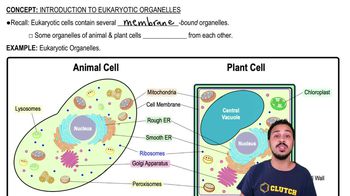
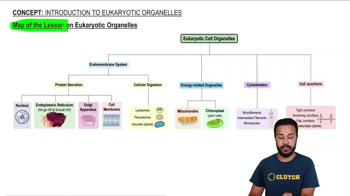
Produce most of the cell's ATP through oxidative catabolism; contain their own DNA and enzymes.
Oxidize toxic substances, break down fatty acids, and synthesize certain phospholipids.
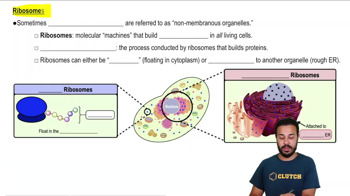
Sites of protein synthesis; composed of rRNA and proteins; can be free or bound to membranes.
Rough ER folds and modifies proteins; smooth ER stores calcium, detoxifies substances, and synthesizes lipids.
Modifies, sorts, and packages proteins and lipids from the ER for transport or secretion.
Membrane-bound sacs with digestive enzymes that degrade macromolecules, worn organelles, and pathogens.
Actin filaments (support and movement), intermediate filaments (mechanical strength), microtubules (organelle transport and cell shape).
Microvilli increase surface area; cilia move substances across cell surfaces; flagella propel whole cells.
Controls cell activities; contains DNA, nuclear envelope, nucleoplasm, and nucleolus for ribosome assembly.
DNA coils around histones forming chromatin; condenses into chromosomes during cell division.
Transcription (DNA to mRNA), translation (mRNA to polypeptide), and posttranslational modification (folding and processing).
Ordered events of cell growth and division: interphase (G1, S, G2) and M phase (mitosis and cytokinesis).
Chromosomes condense, align, separate, and the cell divides into two identical daughter cells.
Checkpoints monitor division; apoptosis is programmed cell death to remove damaged or unneeded cells.
Benign tumors remain localized; malignant tumors invade tissues and can metastasize.