 Indietro
Anatomy & Physiology: Tissue Types Overview
 07:25

Termini in questo insieme (20)
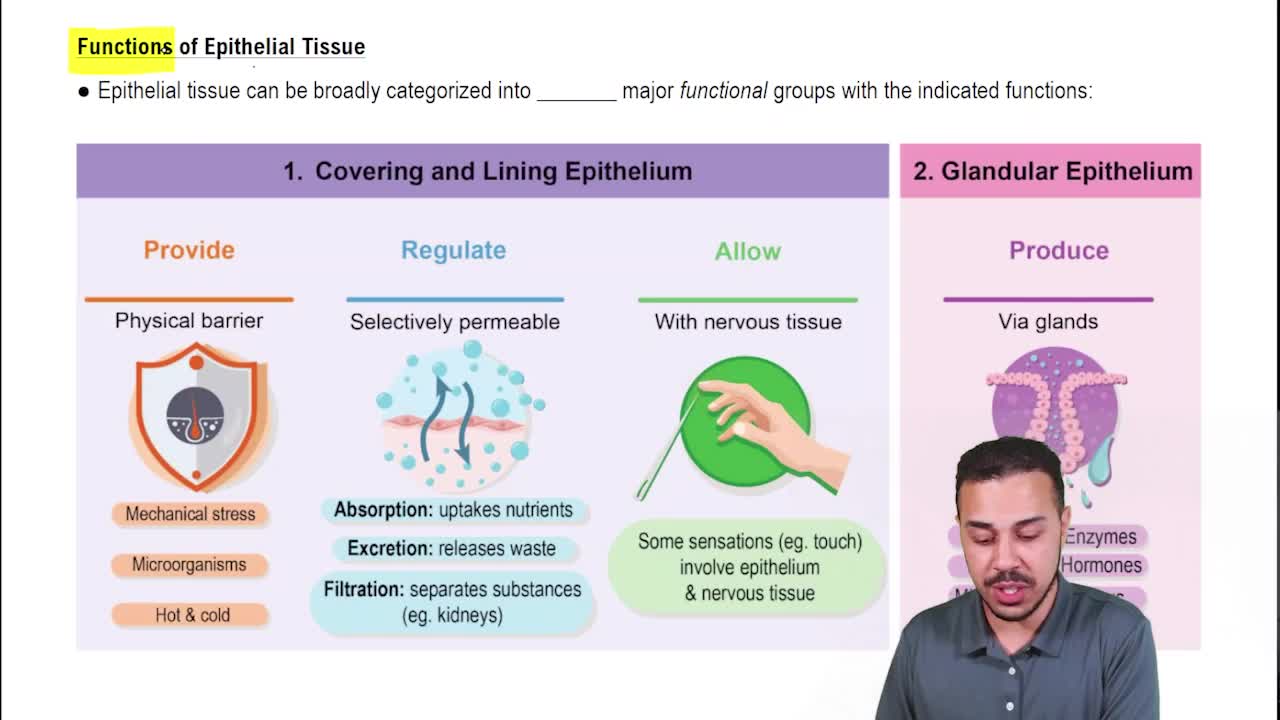
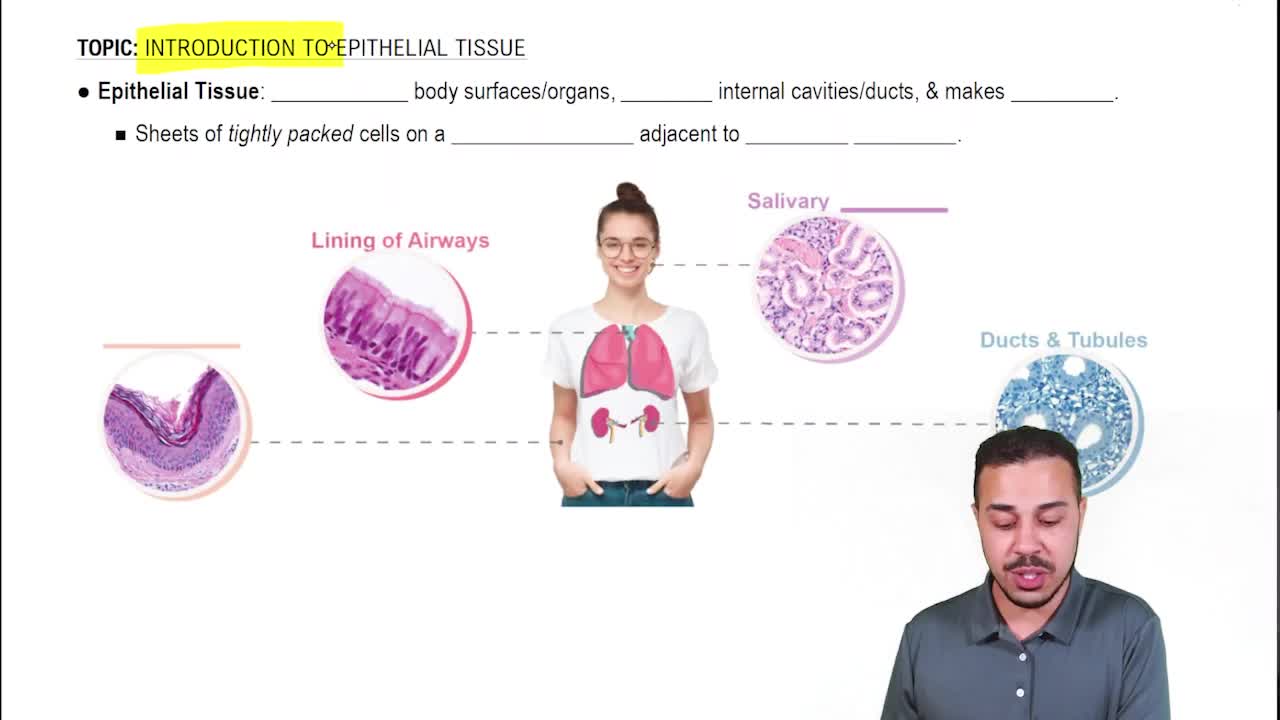
Epithelial tissue consists of tightly joined cells with little extracellular matrix, is avascular, rests on a basement membrane, and has distinct apical and basal surfaces.
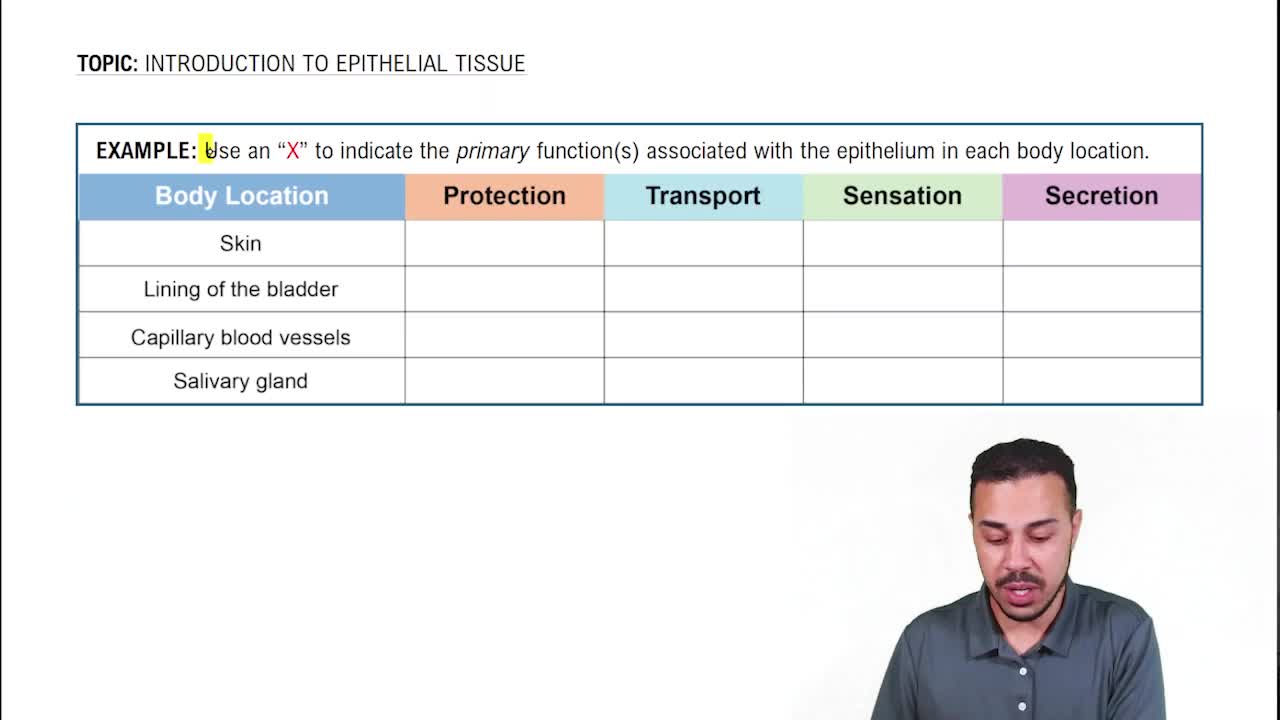
The two functional types are covering & lining and glandular epithelial tissue.
Simple squamous, simple columnar, simple cuboidal, stratified squamous, pseudostratified ciliated columnar, and transitional.
Connective tissue proper contains cells (mainly fibroblasts) and an extracellular matrix (ECM) composed of ground substance and fibers.
Loose areolar, dense regular, and dense irregular connective tissue.
Adipose tissue is a specialized form of connective tissue proper that stores fat.
Cardiac muscle tissue, smooth muscle tissue, and skeletal muscle tissue.
Neurons, which transmit signals, and neuroglia, which support neurons.
Avascular means epithelial tissue lacks blood vessels and receives nutrients via diffusion from underlying connective tissue.
The basement membrane anchors epithelial tissue to underlying connective tissue and acts as a selective barrier.
The apical surface faces the body surface or lumen, while the basal surface attaches to the basement membrane.
Fibroblasts are cells that produce fibers and ground substance of the extracellular matrix.
Dense regular has parallel collagen fibers for strength in one direction; dense irregular has fibers in multiple directions for multidirectional strength.
Loose areolar connective tissue is a flexible, loosely arranged tissue that cushions organs and holds fluids.
Cardiac muscle tissue contracts to pump blood throughout the body and is involuntary and striated.
Smooth muscle is involuntary, non-striated, and found in walls of organs; skeletal muscle is voluntary and striated, attached to bones.
Neurons transmit electrical signals to communicate information throughout the body.
Neuroglia support, protect, and nourish neurons.
Simple squamous epithelium is thin and flat, ideal for diffusion and filtration.
Pseudostratified ciliated columnar epithelium lines the respiratory tract and uses cilia to move mucus.