 Indietro
Anatomy & Physiology Unit 1 Exam Study Guide
 2:36

Termini in questo insieme (28)
Transport of gases, nutrients, wastes; regulation of pH, temperature, and water content; protection against blood loss and infection.
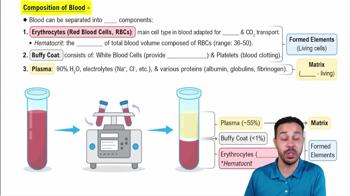
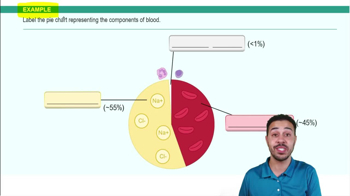
About 45% formed elements (cells) and 55% plasma (liquid). Changes in plasma volume or cell production alter these percentages.
Percentage of blood volume occupied by red blood cells (RBCs). In dehydration, hematocrit increases; with RBC overproduction, hematocrit also increases.
Approximately 5 liters total; about 2.25 L formed elements (45%) and 2.75 L plasma (55%).
About 5 million RBCs per µl of blood. RBC count directly relates to oxygen-carrying capacity because RBCs contain hemoglobin.
Condition caused by deficiency of RBCs or hemoglobin, leading to reduced oxygen delivery to tissues.
RBC lifespan is about 120 days. Iron is recycled; porphyrin is converted to bilirubin and excreted.
WBCs: 5,000-10,000 per µl; platelets: 150,000-400,000 per µl. Leukopoiesis is the production of WBCs.
'-cytosis' means increased cell count; '-penia' means decreased cell count.
Leukopenia: deficiency of leukocytes; leukocytosis: excessive leukocytes.
Four protein chains, four heme groups, and four iron atoms. The iron atoms bind oxygen.
Serum: plasma without clotting factors; thrombus: blood clot in vessel; embolus: thrombus that has detached and travels in blood.
Granulocytes have visible granules (neutrophils, eosinophils, basophils); agranulocytes lack granules (lymphocytes, monocytes).
Neutrophils: phagocytosis; eosinophils: combat parasites; basophils: release histamine; lymphocytes: immune response; monocytes: become macrophages.
Neutrophils (~60-70%) and lymphocytes (~20-30%) make up most leukocytes.
Process of WBCs leaving the bloodstream and migrating into tissues.
Albumin: maintains osmotic pressure; Globulins: immune functions; Fibrinogen: clotting; Regulatory proteins: enzymes and hormones.
Hemostasis is stopping bleeding. Phases: vascular spasm, platelet phase, coagulation phase.
Extrinsic cascade triggered by tissue damage; intrinsic by blood contact with collagen; clotting occurs in the common pathway.
Platelets secrete chemicals causing vasoconstriction and release calcium ions vital for clotting.
Production of RBCs triggered by low oxygen; occurs in red bone marrow; regulated by erythropoietin from kidneys.
Multipotent stem cell in bone marrow that gives rise to all blood cells.
Thrombocytopenia: low platelet count; thromboembolism: clot blocking vessel; hemophilia: genetic clotting disorder.
Right atrium → tricuspid valve → right ventricle → pulmonary valve → lungs → left atrium → mitral valve → left ventricle → aortic valve → body.
Tricuspid and mitral (atrioventricular) valves depend on papillary muscles and chordae tendineae.
"Lub" = AV valves closing; "Dub" = semilunar valves closing.
SA node, AV node, AV bundle (Bundle of His), bundle branches, Purkinje fibers.
SA node; called pacemaker because it initiates heartbeat; fires at 60-100 impulses per minute.