Skip to main content
Anatomy & Physiology
Il mio corso
Impara
Preparazione agli esami
AI Tutor
Guide di studio
Soluzioni per libri di testo
Flashcard
Esplora
Prova l'app
Il mio corso
Impara
Preparazione agli esami
AI Tutor
Guide di studio
Soluzioni per libri di testo
Flashcard
Esplora
Prova l'app
Indietro
Anatomy & Physiology Unit 1 Practice Exam Flashcards
Puoi toccare per girare la carta.
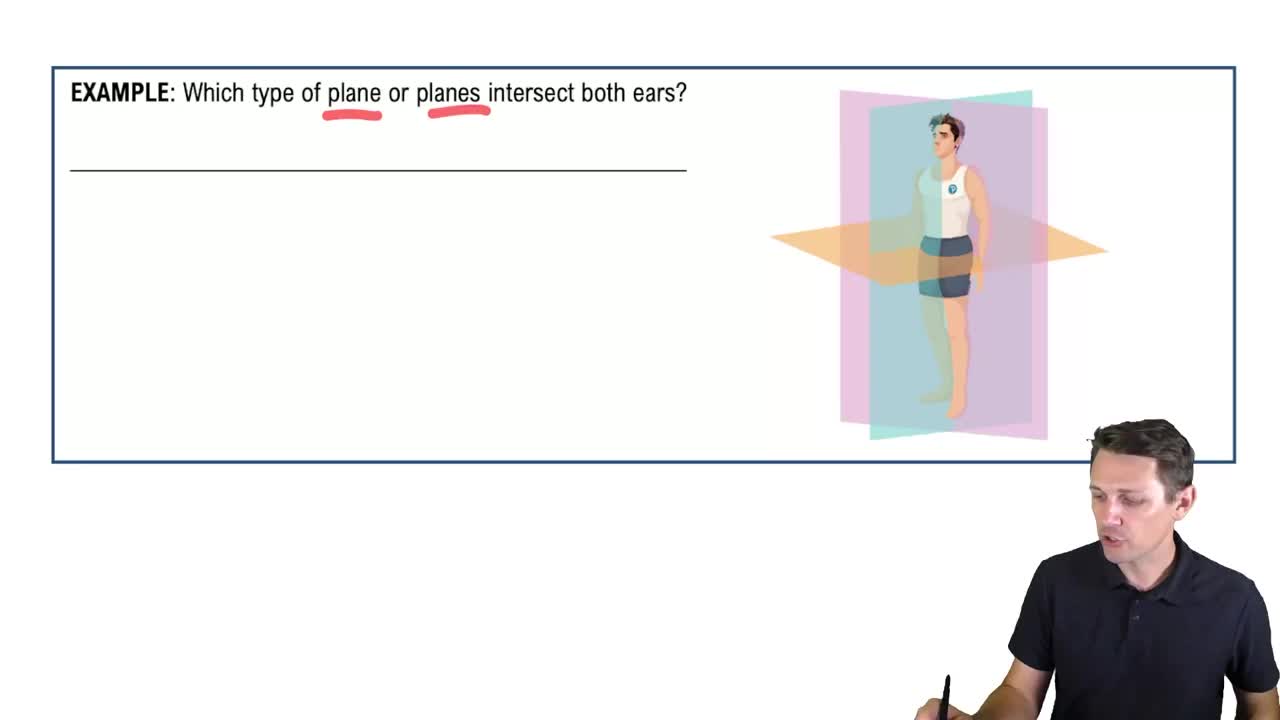
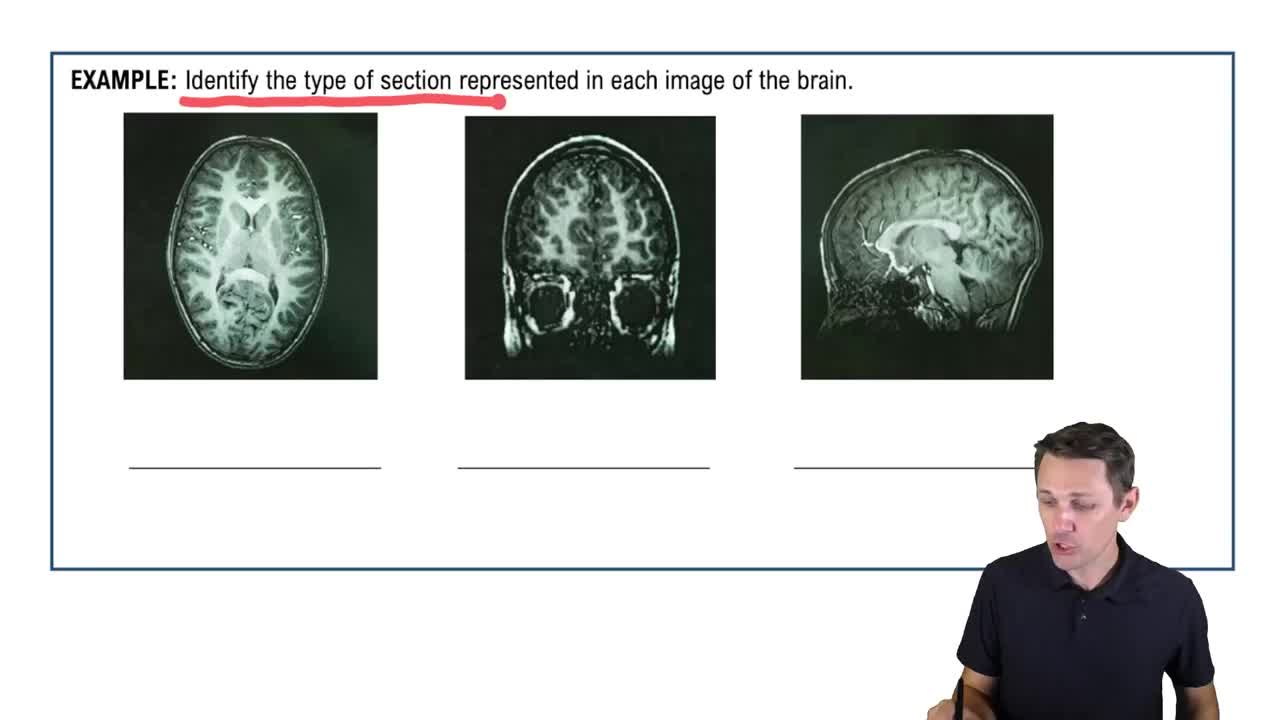
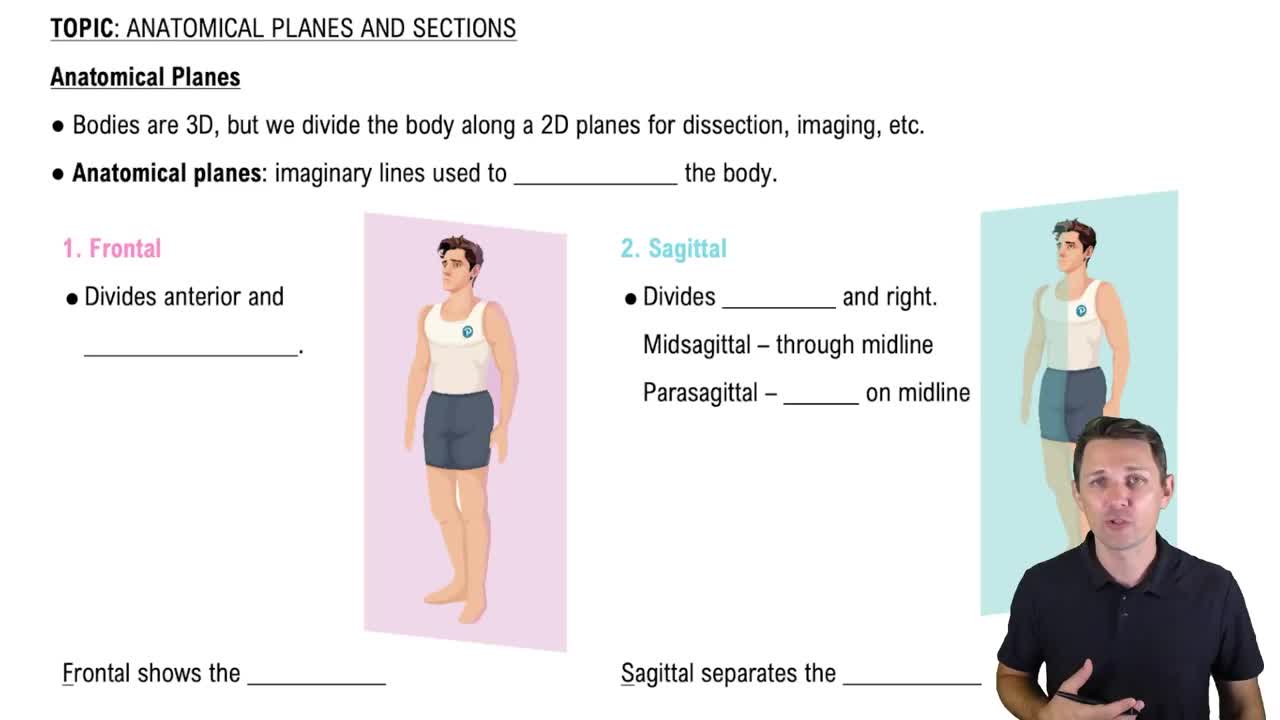
Section plane dividing an object into symmetrical right and left halves
Puoi toccare per girare la carta.
👆
Section plane dividing an object into symmetrical right and left halves
Mid-sagittal/median
plane
Avanzamenti del tracciato
I pulsanti di controllo sono stati cambiati in modalità "navigazione".
1/61
Video consigliati
04:01
Anatomical Planes
11295
views
202
rank
02:06
Anatomical Planes & Sections Example 1
7890
views
143
rank
01:57
Anatomical Planes & Sections Example 2
6985
views
110
rank
1
comments
Termini in questo insieme (61)
Nascondere definizioni
Section plane dividing an object into symmetrical right and left halves
Mid-sagittal/median
plane
Section dividing an object into anterior and posterior portions
Coronal/frontal
plane
Physical barrier between the two major ventral body cavities
Diaphragm
Serous membrane covering viscera within the abdominopelvic cavity
Peritoneum
Double layer of serous membrane holding organs in place in the abdominopelvic cavity
Mesentery
Membrane enclosing the dorsal body cavity
Meninges
Body cavities we have two of inside us
Pleural
cavities
The cavity located in the middle of the thoracic cavity
Mediastinum
Single ventral body cavity containing 4 other cavities
Thoracic
cavity
Superior body cavity
Cranial
cavity
Cavity that contains the heart
Pericardium
Cavity that contains the lungs
Pleural
cavity
Cranial + vertebral cavities form the _____ body cavity
Dorsal
body cavity
Inferior body cavity
Pelvic
cavity
The back side of the body is called the
Dorsal/posterior
side
The nose is located _____ to the mouth
Superior
The elbow is located _____ to the wrist
Proximal
Fancy word for the middle line or location on the body
Axial/medial/median
The cephalic end of the body is
Superior
Portion of the peritoneum adhering directly to internal organs
Visceral
peritoneum
The front or chest side of the body is called the
Anterior/ventral
side
Skin is located _____ to skeletal muscles
Superficial
The anatomical term for the hand
Manus
Breast areas and glands of the same name
Mammary
Groin regions
Inguinal
Heel of the foot
Calcaneal
Gut or tummy region
Abdomen
Thigh area
Femoral
Underside or sole of the foot
Plantar
Ankle region
Tarsus
Knee cap
Patella
Portion of the arm between the elbow and wrist
Antebrachium
Shoulder region, lateral aspect
Acromial
Lower back area
Lumbar
Hips
Coxal
Fingers and toes are called
Phalanges or digits
Chest or region of the rib cage
Thoracic
Wrist area with 8 bones
Carpal
Foot
Pes/pedal/ped
Ear region
Otic
Arm pit area
Axillary
Anatomy is the study of structure, physiology is the study of function
False
(Anatomy = structure, Physiology = function)
Non-invasive methods for studying anatomy include
MRI, X-rays, CT scans, and A.D.A.M.
Not a sub-specialty within anatomy
Nutritional
Four categories of adult tissues
Epithelia, connective, muscle, and nervous
Histology is the study of
Tissues
Adult tissue always located on a surface as a covering
Epithelium
Epithelium best suited to protect underlying tissue
Stratified squamous
Adult tissue category with collagen and elastin fibers, fibroblasts, mast cells, and macrophages
Connective tissue
Adult tissue category ranging from liquid to hard rock-like matrix
Connective tissue
Adult tissue containing osteocytes
Bone
Adult tissue designed to contract and relax
Muscle
Integumentary system includes
Hair, nails, and skin
Adult tissue made of cells with many branches for communication
Nervous tissue
Term out of place compared to hypodermis, integument, cutaneous membrane, largest organ of the body
Peritoneum
Not a function of skin
Hemopoiesis
Not associated with skin functions
Micturition
Types of sweat glands
Eccrine and apocrine
Another name for hypodermis
Subcutaneous
Oil glands in the skin
Sebaceous glands
Skin layer containing melanocytes
Epidermis
 IndietroIndietro
 04:01