 Indietro
Anatomy & Physiology Unit 2: Integumentary, Bone, Skeletal System & Articulations
 06:54



Termini in questo insieme (21)
Keratinocytes, melanocytes, Merkel cells, and Langerhans cells are the primary cell types in the epidermis.
Stratum corneum, stratum lucidum (only in thick skin), stratum granulosum, stratum spinosum, and stratum basale.
The dermis is primarily composed of dense irregular connective tissue with collagen and elastin fibers.
The papillary layer (superficial, loose connective tissue) and the reticular layer (deeper, dense irregular connective tissue).
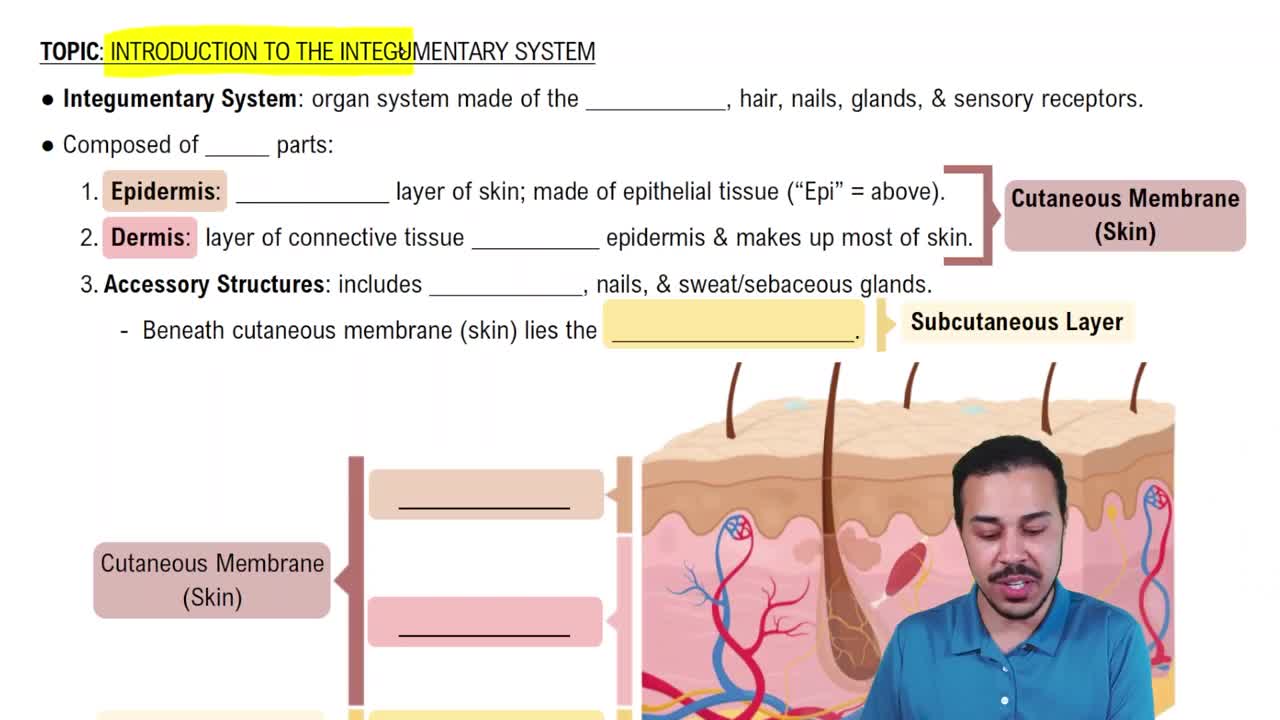
Hair follicles, nails, sweat glands, and sebaceous (oil) glands.
To produce keratin, a protein that strengthens and waterproofs the skin.
Bone tissue is a connective tissue with a mineralized matrix providing support, protection, and leverage for movement.
Long, short, flat, and irregular bones.
Intramembranous ossification forms bone directly from mesenchyme; endochondral ossification forms bone by replacing hyaline cartilage.
Bone deposition by osteoblasts and bone resorption by osteoclasts maintain bone homeostasis.
Through the actions of parathyroid hormone, calcitonin, and vitamin D regulating bone, kidney, and intestinal calcium levels.
Hematoma formation, fibrocartilaginous callus formation, bony callus formation, and bone remodeling.
Axial skeleton (skull, vertebral column, rib cage) and appendicular skeleton (limbs and girdles).
A prominent or distinctive feature on a bone used for identification or muscle attachment, such as a process, foramen, or fossa.
As fibrous, cartilaginous, or synovial joints based on the type of connective tissue binding the bones.
As synarthrosis (immovable), amphiarthrosis (slightly movable), or diarthrosis (freely movable).
Contains a joint cavity filled with synovial fluid, surrounded by an articular capsule and reinforced by ligaments.
Osteoarthritis, rheumatoid arthritis, and gout are common joint diseases.
It is the deepest layer where stem cells divide to produce new keratinocytes.
Fibroblasts, macrophages, and mast cells are common dermal cells.
To produce melanin, the pigment that protects against UV radiation.