 Indietro
Basic Chemistry Concepts in Anatomy & Physiology
 02:13


Termini in questo insieme (13)
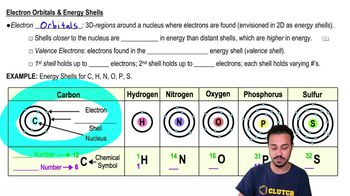
An atom consists of a nucleus containing protons and neutrons, surrounded by electrons in orbitals.
Key elements include oxygen, carbon, hydrogen, nitrogen, calcium, and phosphorus.
A chemical bond formed by the transfer of electrons from one atom to another, creating charged ions.
A chemical bond where atoms share one or more pairs of electrons.
They help form salts and contribute to the structure and function of molecules like proteins.
They form the backbone of organic molecules such as carbohydrates, lipids, proteins, and nucleic acids.
Water molecules have a partial positive and negative charge, making them polar.
Water's polarity allows it to dissolve many substances, facilitating chemical reactions and transport in the body.
Water regulates temperature and maintains fluid balance in cells and tissues.
A measure of hydrogen ion concentration, ranging from 0 (acidic) to 14 (basic), with 7 as neutral.
Maintaining proper pH is crucial for enzyme function and metabolic processes.
Substances that resist changes in pH by neutralizing added acids or bases.
Buffers help maintain stable pH levels in blood and tissues, supporting normal physiological function.