 Indietro
Basic Tissue Types in Anatomy & Physiology
 07:25

Termini in questo insieme (25)
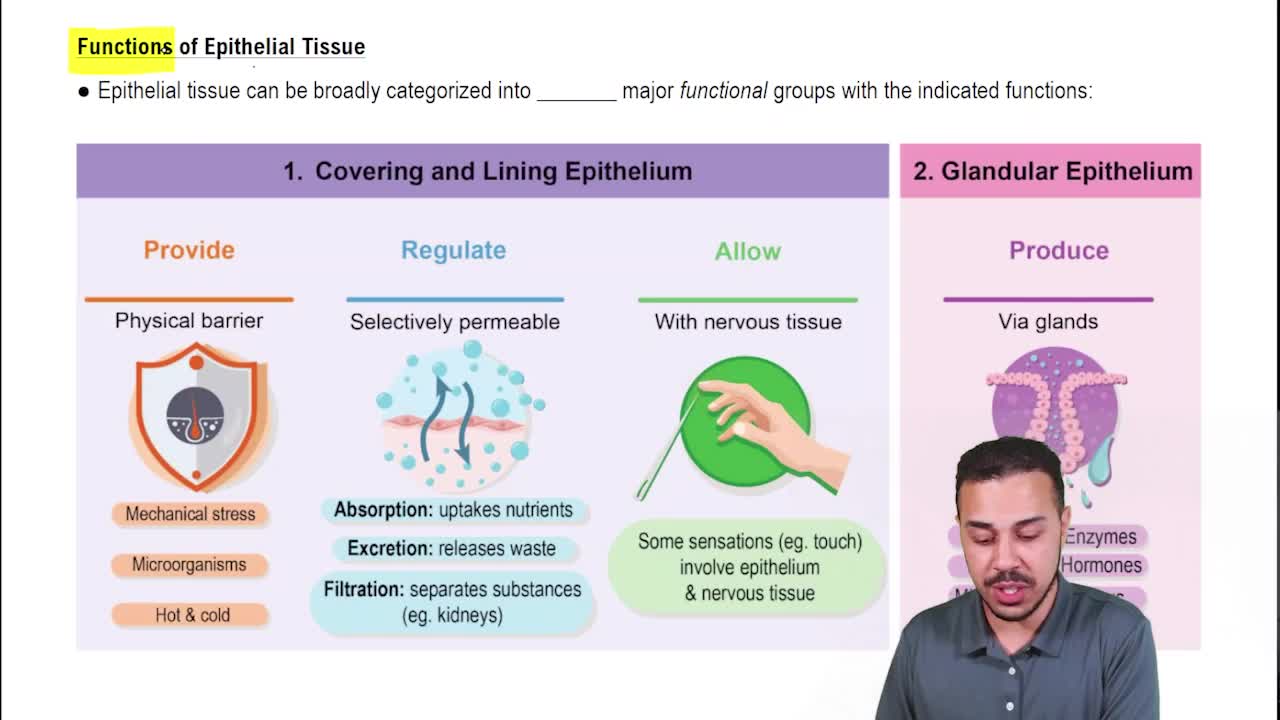
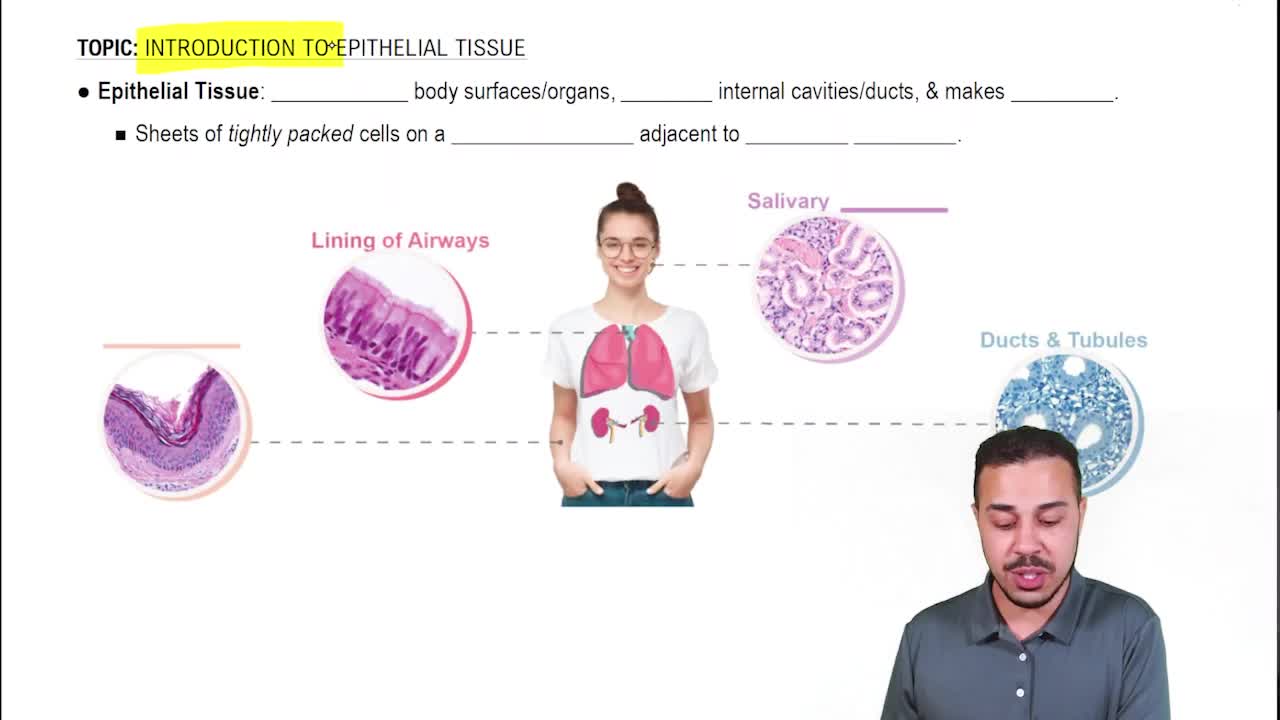
Single layer of flat cells allowing diffusion and filtration.
Single layer of cube-shaped cells involved in secretion and absorption.
Single layer of tall cells specialized for absorption and secretion, often with microvilli.
Appears layered but is a single layer with nuclei at different levels; often has cilia to move mucus.
Specialized epithelial cell that secretes mucus to lubricate and protect surfaces.
Multiple layers of flat cells providing protection against abrasion.
Layered epithelium that can stretch, found in the urinary bladder.
Loose connective tissue with fibers and cells that cushions and supports organs.
Connective tissue specialized for fat storage and insulation.
Network of reticular fibers supporting lymphoid organs.
Collagen fibers aligned in parallel for strong tensile strength, found in tendons and ligaments.
Collagen fibers arranged irregularly to resist tension from multiple directions.
Contains elastic fibers allowing tissues to stretch and recoil.
Most common cartilage with a glassy matrix, providing support and flexibility.
Cartilage with dense collagen fibers for strong support and shock absorption.
Cartilage rich in elastic fibers providing flexibility.
Dense bone tissue forming the outer layer of bones, providing strength and support.
Connective tissue with a liquid matrix (plasma) transporting cells and nutrients.
Voluntary muscle with striated fibers attached to bones for movement.
Involuntary, striated muscle found only in the heart with intercalated discs.
Involuntary muscle with non-striated fibers found in walls of hollow organs.
Tissue composed of neurons and neuroglia for transmitting electrical signals.
The skin, composed of epidermis and dermis, protecting the body.
Membrane lining body cavities open to the exterior, secreting mucus for protection.
Membrane lining closed body cavities, producing serous fluid to reduce friction.