Transport of oxygen, nutrients, wastes, and hormones; Regulation of body temperature, pH, and fluid volume; Protection against blood loss and infection.
Major Components of Blood
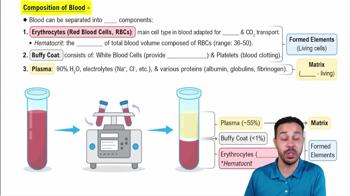
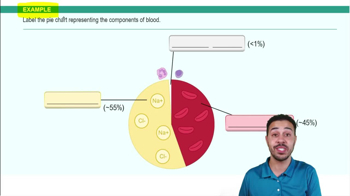
Blood consists of plasma (55%) and formed elements including erythrocytes (RBCs), leukocytes (WBCs), and platelets.
Physical Characteristics of Blood
Viscous, opaque fluid with metallic taste; pH 7.35–7.45; volume ~5-6 L in males, 4-5 L in females; color varies with oxygen content.
Composition of Plasma
About 90% water with dissolved solutes including electrolytes, plasma proteins (albumin, globulins, fibrinogen), nutrients, gases, hormones, and wastes.
Erythrocyte Structure
Biconcave, anucleate cells ~7.5 μm diameter; filled with hemoglobin for oxygen and carbon dioxide transport.
Hemoglobin Structure
Protein globin with four subunits (2 alpha, 2 beta) each bound to a heme group containing iron that binds oxygen.
Erythropoiesis
Process of RBC production in red bone marrow from hematopoietic stem cells, regulated by erythropoietin (EPO).
Regulation of Erythropoiesis
EPO released by kidneys in response to hypoxia; stimulates RBC production; testosterone enhances EPO production.
Dietary Requirements for Erythropoiesis
Needs amino acids, lipids, carbohydrates, vitamin B12, folic acid, and iron for hemoglobin synthesis and DNA replication.
Life Span and Fate of RBCs
Live 100-120 days; old RBCs broken down by spleen macrophages; iron recycled; heme degraded to bilirubin.
Anemia
Condition with low oxygen-carrying capacity due to blood loss, decreased RBC production, or increased RBC destruction.
Sickle-Cell Anemia
Genetic disorder with abnormal hemoglobin S causing RBCs to sickle, leading to vessel blockage and poor oxygen delivery.
Leukocytes (WBCs)
Complete cells with nuclei; defend against infection; classified as granulocytes (neutrophils, eosinophils, basophils) and agranulocytes (lymphocytes, monocytes).
Neutrophils
Most abundant WBCs; multilobed nucleus; phagocytize bacteria; granules contain enzymes and defensins.
Eosinophils
Bilobed nucleus; red cytoplasmic granules; destroy parasitic worms; involved in allergy and asthma.
Basophils
Rarest WBCs; U- or S-shaped nucleus; granules contain histamine and heparin; promote inflammation.
Lymphocytes
Large nucleus with thin cytoplasm rim; key in immunity; T cells attack infected cells; B cells produce antibodies.
Monocytes
Largest WBCs; kidney-shaped nucleus; differentiate into macrophages; phagocytize pathogens and activate lymphocytes.
Platelets
Cell fragments from megakaryocytes; contain granules with clotting chemicals; form platelet plugs to stop bleeding.
Intrinsic pathway triggered by blood contact with collagen; extrinsic pathway triggered by tissue factor; both activate factor X leading to thrombin formation.
Role of Thrombin
Converts fibrinogen to fibrin; activates factor XIII to stabilize fibrin mesh; essential for clot formation.
Clot Retraction and Fibrinolysis
Platelets contract to shrink clot; plasmin enzyme dissolves clot after repair is complete.
Factors Limiting Clot Growth
Removal/dilution of clotting factors; anticoagulants like antithrombin III and heparin inhibit clotting to prevent excessive clot formation.
Blood Groups ABO
Based on presence of A and/or B antigens on RBCs; antibodies in plasma react against absent antigens; type O is universal donor, AB universal recipient.
Rh Blood Group
Presence (+) or absence (-) of D antigen; Rh- individuals form antibodies if exposed to Rh+ blood; important in transfusions and pregnancy.
Transfusion Reactions
Agglutination and hemolysis of mismatched RBCs causing reduced oxygen delivery, vessel blockage, and kidney damage.
Leukemias
Cancerous overproduction of abnormal WBCs; acute affects children, chronic affects adults; disrupt normal blood cell production.
 Indietro
 2:36