 Indietro
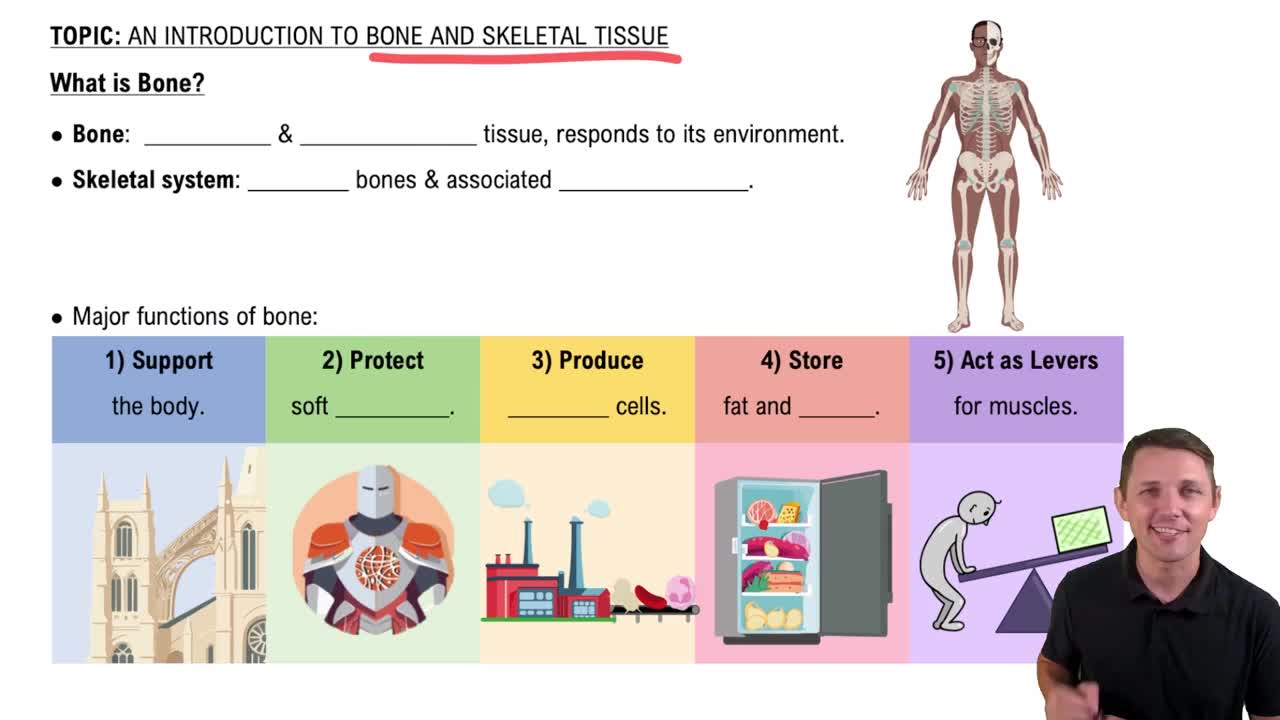
Bones and Their Classification
 3:56

Termini in questo insieme (20)
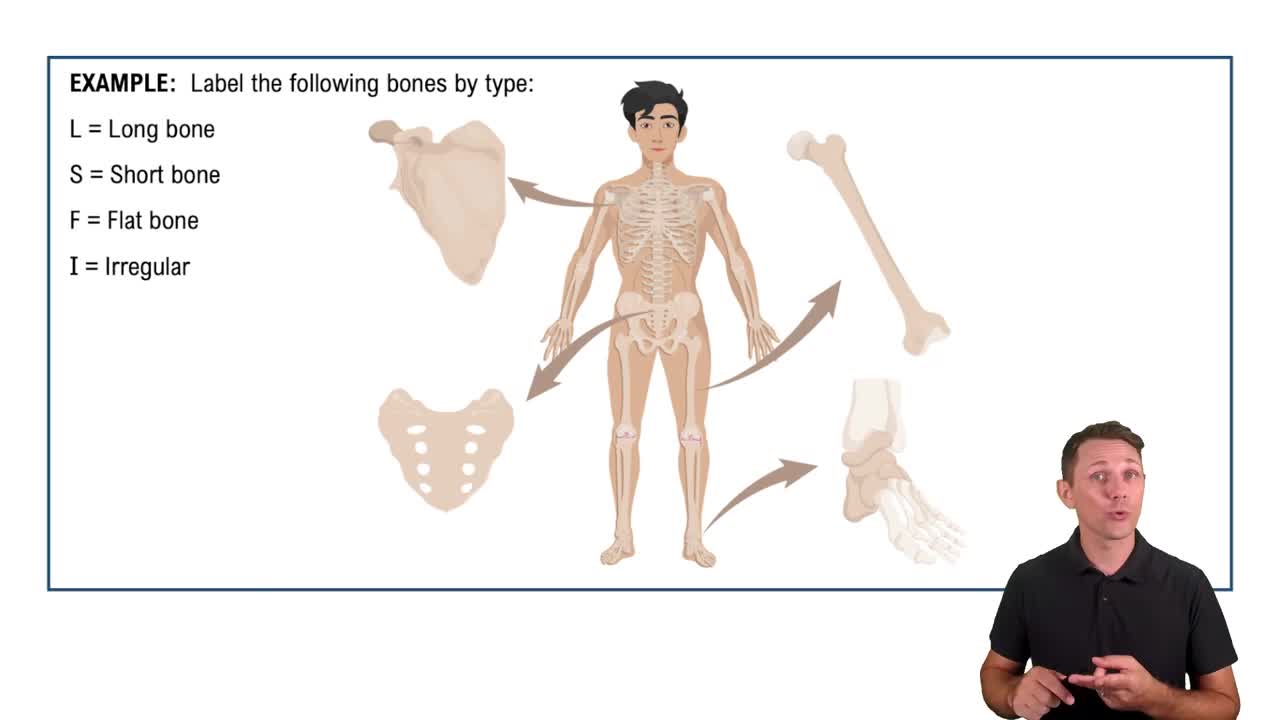
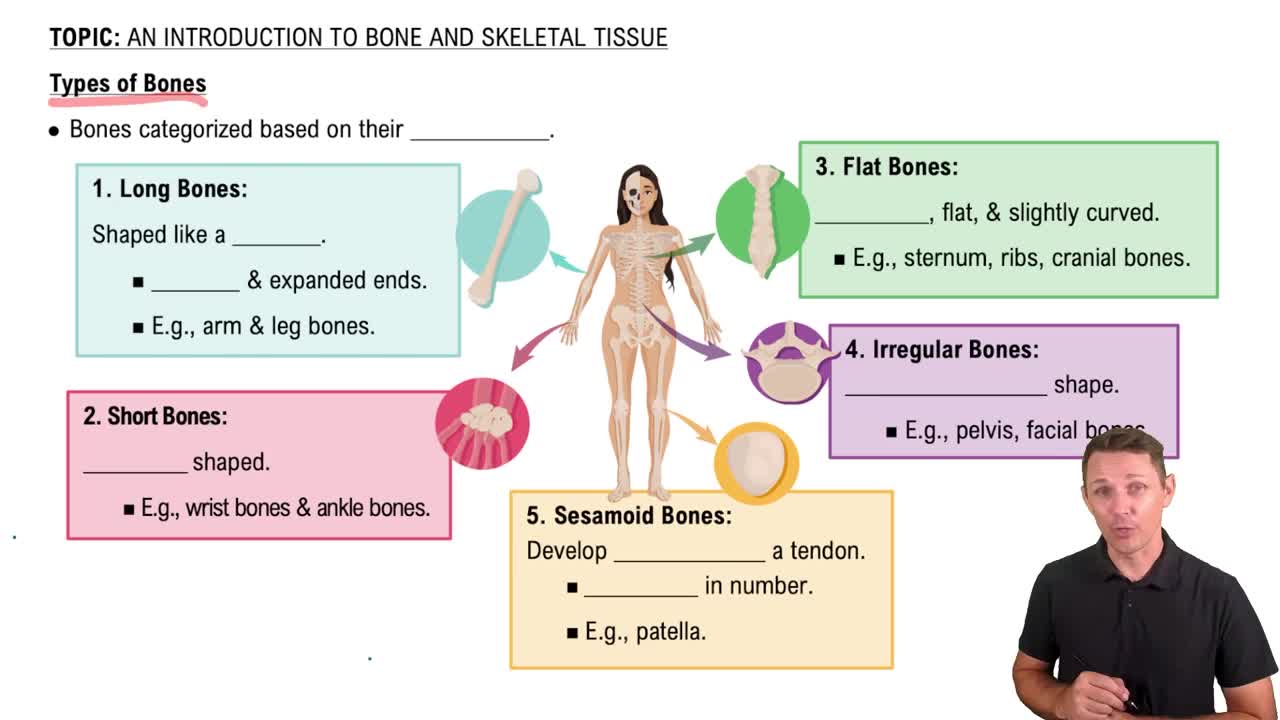
Long, short, flat, and irregular bones are the four main types based on shape.
Long bones are longer than they are wide and primarily function as levers. Example: femur.
Short bones are roughly cube-shaped and provide stability with little movement. Example: carpals.
Flat bones are thin, flattened, and usually curved; they protect internal organs. Example: sternum.
Irregular bones have complex shapes that do not fit other categories. Example: vertebrae.
Long bones primarily support weight and facilitate movement.
Flat bones mainly protect internal organs like the skull and ribs.
Short bones provide stability and some movement, especially in the wrist and ankle.
Irregular bones provide support and protection with specialized functions, such as muscle attachment.
The scapula (shoulder blade) is an example of a flat bone.
The patella is a sesamoid bone, a subtype of short bones embedded in tendons.
Long bones have a central shaft called the diaphysis and two ends called epiphyses.
The diaphysis provides strong support and contains the medullary cavity for marrow.
Flat bones consist mostly of compact bone surrounding a layer of spongy bone.
Their complex shapes allow for protection, support, and multiple muscle attachments.
Sesamoid bones protect tendons from stress and wear by altering the direction of muscle forces.
The vertebra is irregular and protects the spinal cord while supporting body weight.
Compact bone is dense and strong; spongy bone is porous and lightweight.
Spongy bone contains red marrow, the site of blood cell production.
Classification helps predict bone function, location, and role in movement and protection.