 Indietro
Brain Anatomy and Functions
 0:50
0:50
Termini in questo insieme (20)
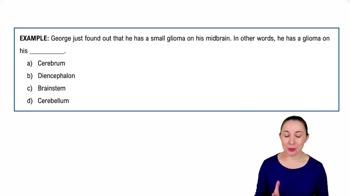
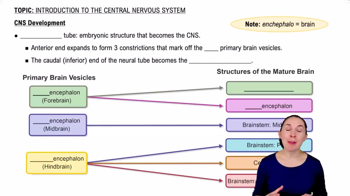
The cerebrum, cerebellum, brainstem, and diencephalon.
The cerebrum controls voluntary movements, sensory perception, reasoning, and memory.
The cerebellum coordinates balance, posture, and fine motor control.
The brainstem controls vital functions like breathing, heart rate, and arousal.
The diencephalon includes the thalamus and hypothalamus, regulating sensory relay and homeostasis.
The frontal, parietal, temporal, and occipital lobes.
The frontal lobe manages voluntary movement, decision making, and speech production.
The parietal lobe processes sensory information like touch, temperature, and pain.
The temporal lobe is involved in auditory processing and memory formation.
The occipital lobe is responsible for visual processing.
The limbic system is a group of brain structures involved in emotion, memory, and motivation.
Includes the hippocampus, amygdala, and hypothalamus.
The hippocampus is critical for forming new memories.
The amygdala processes emotions such as fear and pleasure.
The blood-brain barrier is a selective barrier that protects the brain from harmful substances in the blood.
It allows essential nutrients to pass while blocking toxins and pathogens.
Endothelial cells with tight junctions form the blood-brain barrier.
The hypothalamus regulates body temperature, hunger, thirst, and hormone release.
The brainstem connects the brain to the spinal cord.
The thalamus acts as a relay station for sensory information to the cerebral cortex.