 Indietro
Cardiovascular System: Blood - Anatomy & Physiology
 2:36

Termini in questo insieme (22)
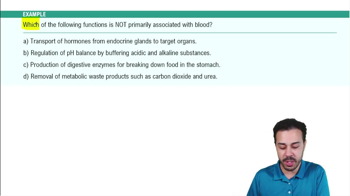
Transport of gases, nutrients, and wastes; regulation of pH, temperature, and water content; protection through clotting and immune responses.
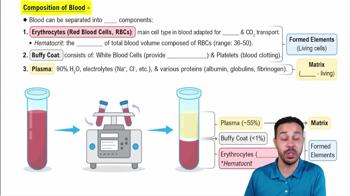
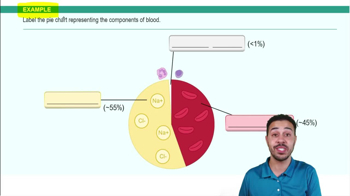
Plasma (fluid portion) and formed elements (erythrocytes, leukocytes, platelets).
Viscous, slightly alkaline fluid with a temperature around 38°C and a pH of 7.35-7.45.
About 90% water, with dissolved proteins (albumins, globulins, fibrinogen), electrolytes, nutrients, gases, and waste products.
Albumin maintains osmotic pressure and transports substances.
Biconcave, anucleate cells rich in hemoglobin, optimized for gas transport.
Transport oxygen from lungs to tissues and carbon dioxide from tissues to lungs.
Produced in red bone marrow through erythropoiesis, stimulated by erythropoietin.
Protein with four polypeptide chains, each containing a heme group with an iron ion that binds oxygen.
Bind and transport oxygen and assist in carbon dioxide transport.
Complete cells with nucleus and organelles, larger than erythrocytes, involved in immune defense.
Divided into granulocytes (neutrophils, eosinophils, basophils) and agranulocytes (lymphocytes, monocytes).
Phagocytize bacteria and fungi; first responders in inflammation.
Combat parasitic infections and modulate allergic responses.
Release histamine and heparin to promote inflammation and prevent clotting.
Mediate specific immune responses; include B cells, T cells, and natural killer cells.
Differentiate into macrophages and dendritic cells to phagocytize pathogens and present antigens.
Small, anucleate cell fragments derived from megakaryocytes, involved in clotting.
Sequence of vascular spasm, platelet plug formation, and coagulation to stop bleeding.
Universal plasma recipient; has both A and B antigens on erythrocytes and no anti-A or anti-B antibodies.
Presence (+) or absence (-) of Rh antigen affects compatibility in transfusions and pregnancy.
Condition with reduced oxygen-carrying capacity due to low erythrocyte count or hemoglobin abnormalities.