Skip to main content
Anatomy & Physiology
Il mio corso
Impara
Preparazione agli esami
AI Tutor
Guide di studio
Soluzioni per libri di testo
Flashcard
Esplora
Prova l'app
Il mio corso
Impara
Preparazione agli esami
AI Tutor
Guide di studio
Soluzioni per libri di testo
Flashcard
Esplora
Prova l'app
Indietro
Cells and Tissues - Anatomy & Physiology
Puoi toccare per girare la carta.
What is the basic structural and functional unit of living organisms?
Puoi toccare per girare la carta.
👆
What is the basic structural and functional unit of living organisms?
A
cell
is the basic structural and functional unit of living organisms.
Avanzamenti del tracciato
I pulsanti di controllo sono stati cambiati in modalità "navigazione".
1/20
Video consigliati
VideoThumbView.guidedCourse
04:26
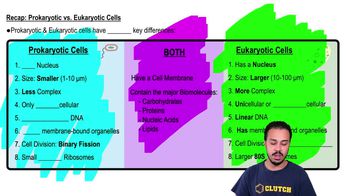
Recap: Prokaryotic vs. Eukaryotic Cells
24343
views
419
rank
VideoThumbView.guidedCourse
05:54
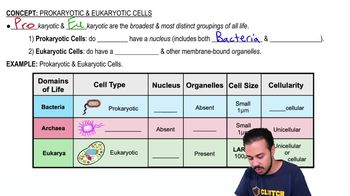
Prokaryotic & Eukaryotic Cells
40535
views
892
rank
2
comments
VideoThumbView.guidedCourse
03:54
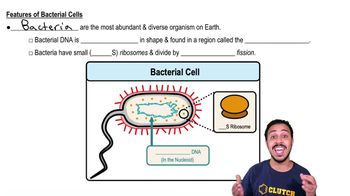
Features of Bacterial Cells
29526
views
524
rank
Termini in questo insieme (20)
Nascondere definizioni
What is the basic structural and functional unit of living organisms?
A
cell
is the basic structural and functional unit of living organisms.
What principle explains that the biochemical activities of cells are dictated by their structure?
The principle of
complementarity
states that cell structure (anatomy) determines function (physiology).
What are the four main elements most cells are composed of?
Cells are mostly composed of
carbon, hydrogen, oxygen, and nitrogen
.
What percentage of a cell is water?
Cells are about
60% water
.
How many different cell types are found in the human body?
The human body contains over
200 different cell types
.
What are the three main regions of a generalized cell?
A generalized cell has three main parts:
nucleus, cytoplasm, and plasma membrane
.
What is the function of the nucleus in a cell?
The nucleus is the
control center
of the cell, containing DNA needed for protein synthesis and cell reproduction.
What are the three regions of the nucleus?
The nucleus has three regions:
nuclear envelope, nucleolus, and chromatin
.
Describe the plasma membrane structure.
The plasma membrane is a
fluid mosaic
of two phospholipid layers with cholesterol, proteins, and glycolipids.
What is the cytoplasm and what does it include?
The cytoplasm is the cellular material outside the nucleus and inside the plasma membrane, including
cytosol, inclusions, and organelles
.
What are inclusions in the cytoplasm?
Inclusions are
chemical substances
like stored nutrients or cell products floating in the cytosol.
What are organelles and their significance?
Organelles are the
metabolic machinery
of the cell, many membrane-bound, performing specific functions.
What is the function of fibroblast cells?
Fibroblasts
connect body parts
by secreting cable-like fibers.
What is the primary function of erythrocytes?
Erythrocytes (red blood cells)
carry oxygen
in the bloodstream.
How do epithelial cells function in the body?
Epithelial cells
cover and line body organs
, packing together in sheets with intermediate fibers resisting tearing.
What allows skeletal and smooth muscle cells to move organs and body parts?
Contractile filaments in muscle cells allow them to
shorten forcefully
for movement.
What is the role of fat cells?
Fat cells store nutrients as
lipid droplets
in the cytoplasm.
How do macrophages fight disease?
Macrophages are phagocytic white blood cells that
digest infectious microorganisms
.
What is the function of nerve cells (neurons)?
Nerve cells
receive and transmit messages
to control body functions.
Describe the two types of reproductive cells and their functions.
Oocytes are the
largest cells
that divide to form embryos; sperm cells are
motile
with flagella to swim to the egg.
 IndietroIndietro
 04:26