 Indietro
CH 5 Integumentary System
 06:54

Termini in questo insieme (30)
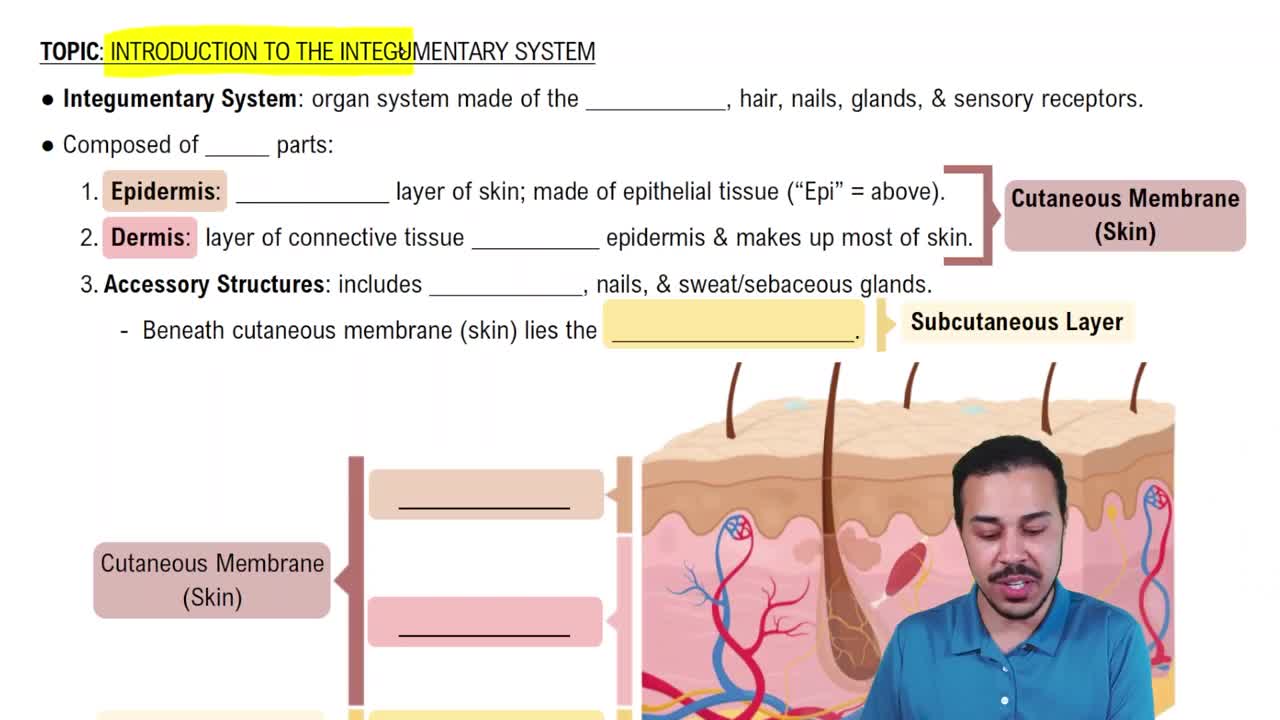
skin, hair, nails, glands, and sensory receptors.
Because it consists of multiple tissue types working together to perform specific functions.
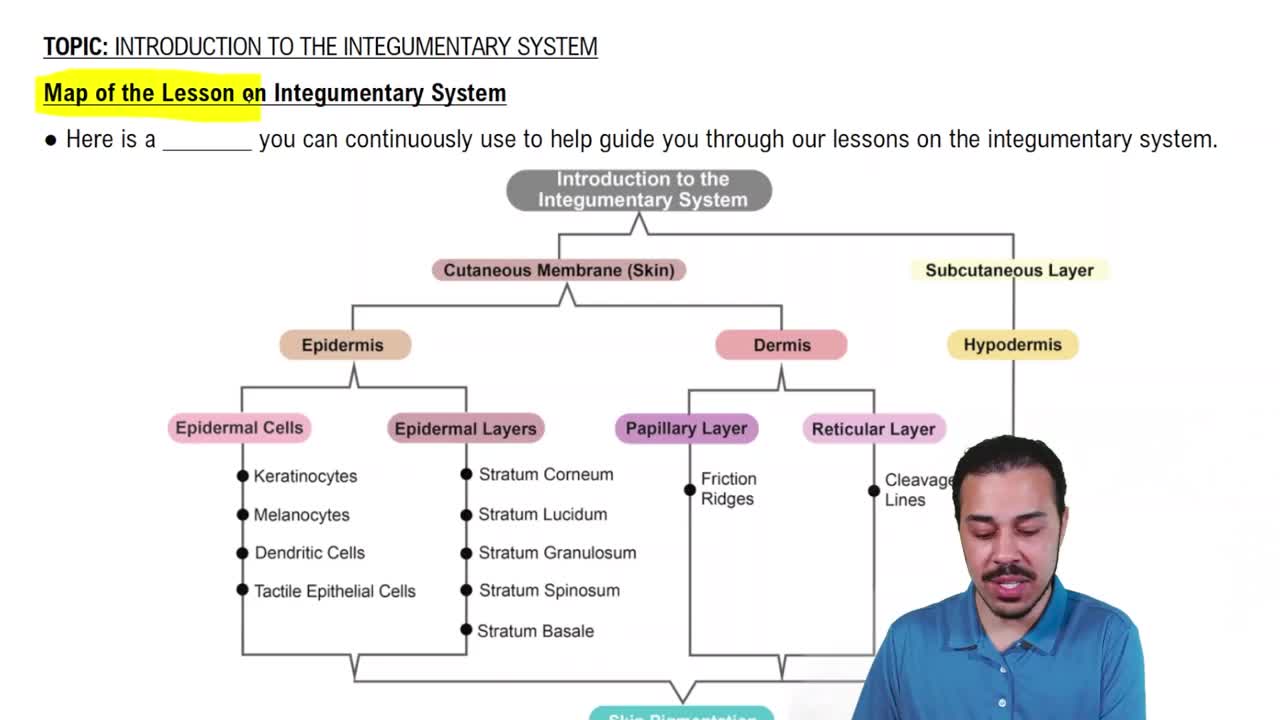
The epidermis (outer layer) and the dermis (inner layer).
Hypodermis or superficial fascia; it anchors skin to underlying tissues and stores fat.
Keratinocytes, melanocytes, Langerhans cells, and Merkel cells.
Stratum corneum
Stratum lucidum (absent in thin skin)
Stratum granulosum
Stratum spinosum
Stratum basale
Thick skin is on palms and soles; thin skin covers the rest of the body.
No; it is avascular and receives nutrients by diffusion from the dermis.
Protection, waterproofing, and barrier against pathogens; achieved by keratinized cells.
Contains collagen and elastic fibers; cells include fibroblasts, macrophages, and mast cells.
Papillary layer: loose connective tissue
Reticular layer: dense irregular connective tissue.
Capillaries and sensory receptors; they increase surface area for nutrient exchange.
Dermal ridges are projections of the dermis; epidermal ridges are the overlying epidermal projections that form fingerprints.
Increase grip and enhance tactile sensitivity.
Contains blood vessels, sweat glands, sebaceous glands, hair follicles, and pressure receptors.
Natural orientation of collagen fibers in the dermis; important for surgical incisions to heal better.
Skin creases near joints where the dermis is tightly secured to underlying structures.
Melanin (amount and type), carotene (yellow-orange pigment), and hemoglobin (red from blood).
Hair shaft, root, follicle, and arrector pili muscle; hair protects, senses, and aids thermoregulation.
Nail body, root, lunule, eponychium; nails protect fingertips and aid in grasping.
Eccrine (sweat), apocrine (scent), ceruminous (earwax), mammary (milk), sebaceous (oil).
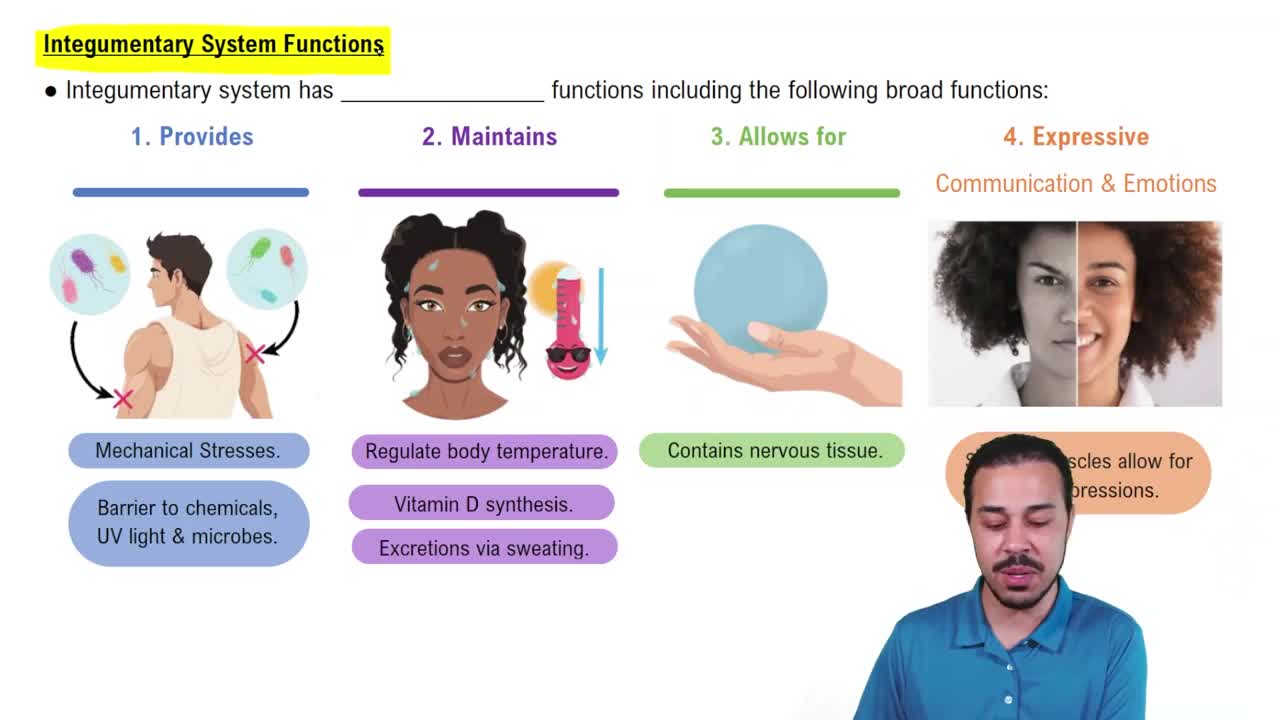
Protection, sensation, thermoregulation, vitamin D synthesis, excretion, and immunity.
Physical barrier (keratin), chemical barrier (acid mantle), and biological barrier (immune cells).
By sweating to cool and constricting blood vessels to conserve heat.
Free nerve endings (pain, temperature), Meissner's corpuscles (touch), Pacinian corpuscles (pressure).
Originates in stratum basale; least serious and most common skin cancer.
Arises from keratinocytes in stratum spinosum; can metastasize if untreated.
Originates from melanocytes; most dangerous due to high metastasis risk.
First: epidermis damage, pain; Second: epidermis and dermis, blistering; Third: full thickness, no pain due to nerve damage.
Fluid loss, infection risk, and impaired thermoregulation.