What are the main functions of the integumentary system?
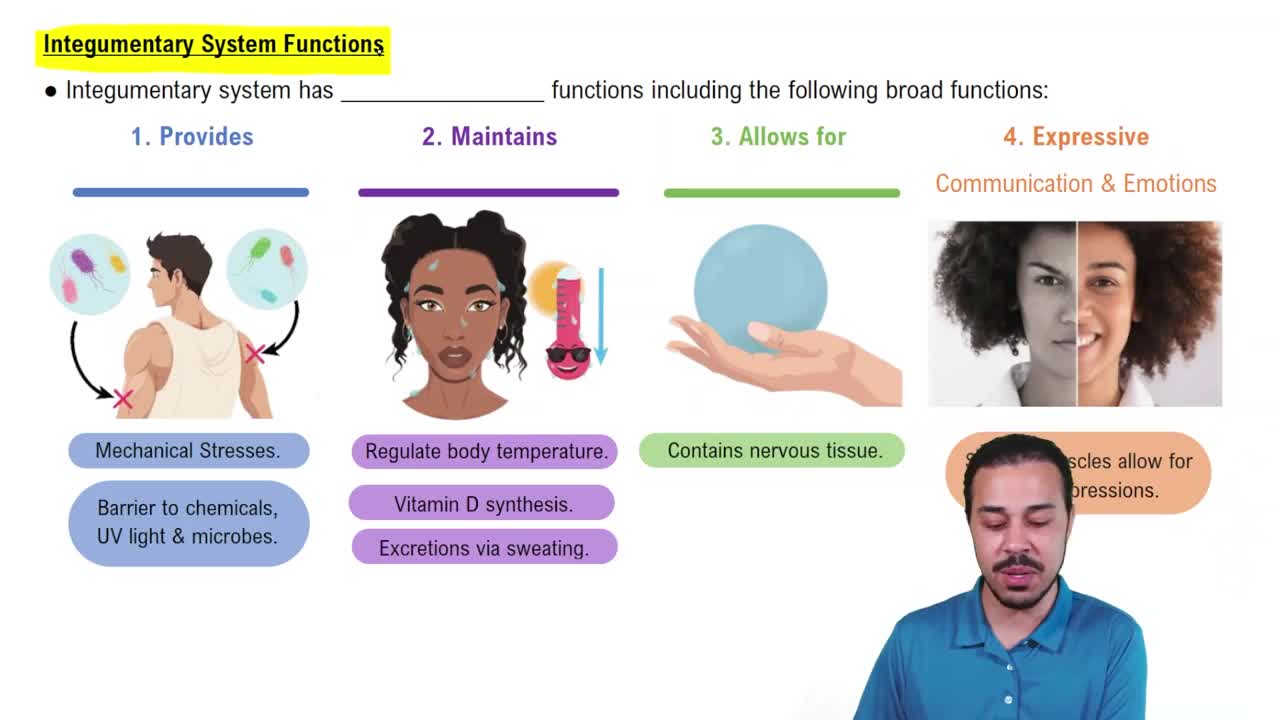
Protection, thermoregulation, sensory perception, blood reservoir, metabolic synthesis of vitamin D, and emotional expression.
What chemical barriers protect the skin?
Skin secretions like sebum and sweat, and melanin which prevents bacterial colonization, drying, kills microbes, and shields from UV damage.
How does the skin act as a physical barrier?
Through keratin protecting against microbes, abrasion, heat, and chemicals, and lipids preventing water evaporation and entry.
What biological barriers are present in the skin?
Dendritic cells in the epidermis signal immune response; macrophages in the dermis degrade bacteria and viruses.
What substances can pass through the skin's protective barriers?
Lipid-soluble substances like gases and steroids, plant resins (poison ivy), organic solvents (acetone), heavy metals (lead, mercury), and some drugs (nicotine).
How does the skin regulate body temperature during heat stress?
By increasing sweat rate and dilating blood vessels in the skin to increase heat loss.
How does the skin respond to cold stress?
By decreasing sweat rate and constricting blood vessels in the dermis to reduce heat loss.
What sensory perceptions does the skin provide?
Touch, pressure, vibration, tickling, thermal sensations, and pain via sensory receptors like free nerve endings and tactile corpuscles.
What is the role of vitamin D synthesis in the skin?
UV rays stimulate vitamin D production, which is converted in liver and kidney to calcitriol aiding calcium absorption.
What are the three major layers of the skin?
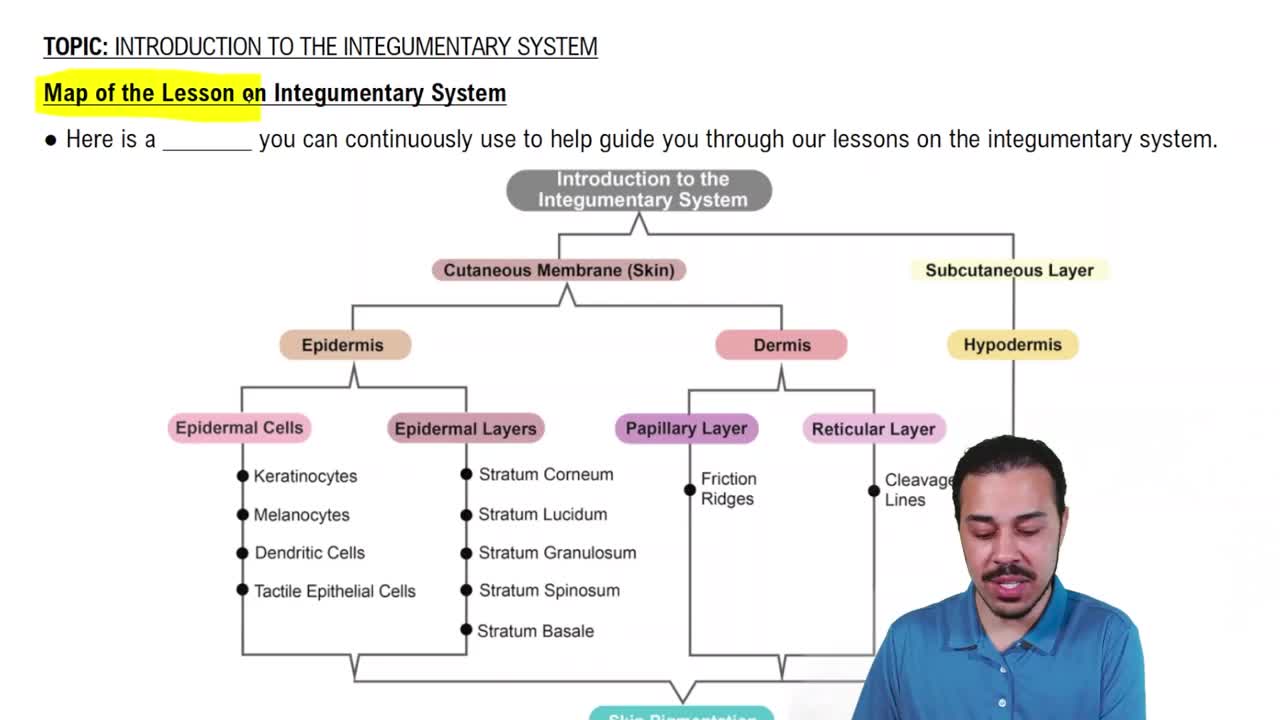
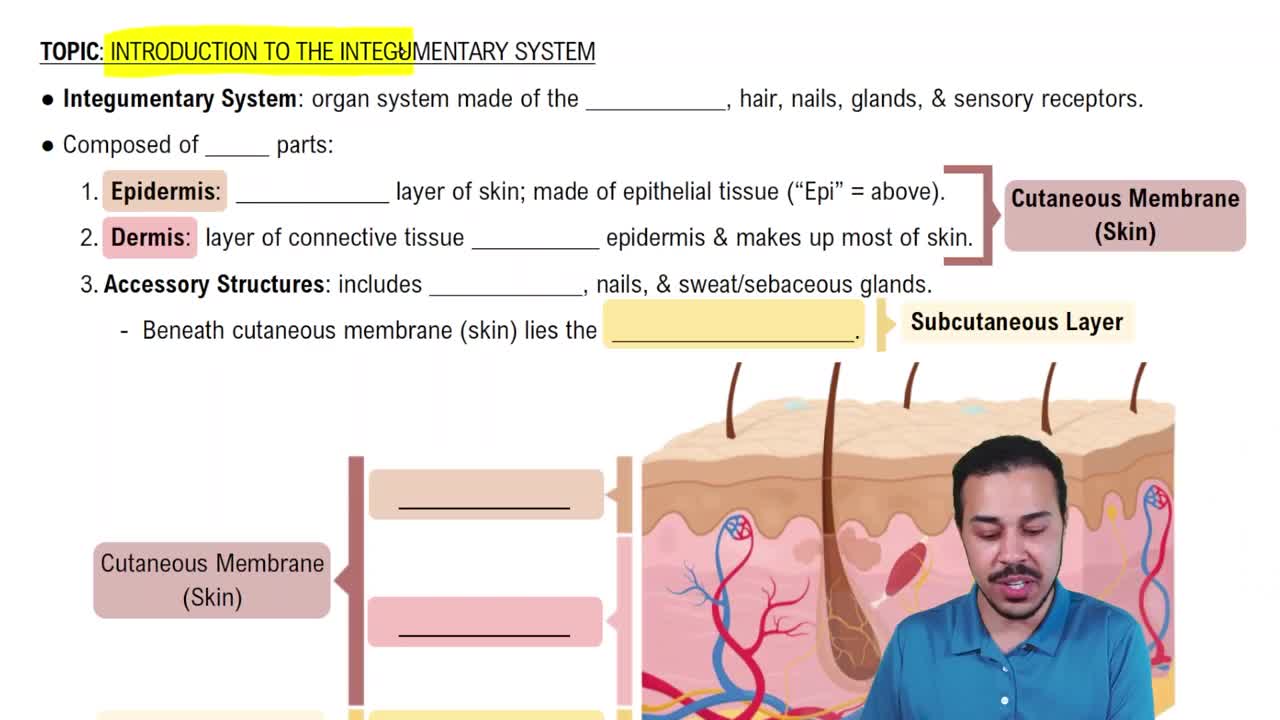
Epidermis (outer, epithelial, avascular), dermis (inner, connective tissue, vascular), and subcutaneous layer (hypodermis, fat storage, not part of skin).
What type of epithelium makes up the epidermis?
Keratinized stratified squamous epithelium.
Name the five layers (strata) of the epidermis.
Stratum basale, stratum spinosum, stratum granulosum, stratum lucidum (only in thick skin), and stratum corneum.
What is the function of the stratum basale?
Deepest layer with mitotic stem cells producing new keratinocytes; contains melanocytes (10-25%).
What happens in the stratum granulosum?
Cells flatten, nuclei disintegrate, keratinization begins, and lamellar granules accumulate to slow water loss.
What is unique about the stratum lucidum?
It is a thin, translucent layer of dead keratinocytes found only in thick skin like palms and soles.
What are keratinocytes and their role?
Make up 85% of epidermal cells; produce keratin, a tough protein protecting skin from abrasion, heat, microbes, and chemicals.
What causes psoriasis?
Rapid keratinocyte division and movement to the surface, leading to flaky, silvery scales due to abnormal keratinization.
What are melanocytes and their function?
8% of epidermal cells; produce melanin pigment that absorbs UV light and protects keratinocyte nuclei.
What is albinism?
A congenital disorder with partial or complete absence of pigment due to dysfunctional tyrosinase enzyme.
What causes vitiligo?
Gradual loss of melanocytes in specific areas causing depigmentation, possibly autoimmune or genetic.
What pigments contribute to skin color?
Melanin (yellow-red or black-brown), hemoglobin (red from blood), and carotene (yellow-orange from diet).
What are the characteristics of the dermis?
Dense irregular connective tissue with collagen and elastin, thicker than epidermis, contains fibroblasts, macrophages, blood vessels, and glands.
What is the function of dermal papillae?
Increase grip by raising epidermal ridges, forming fingerprints and footprints.
What are the two regions of the dermis?
Papillary region (areolar CT with capillaries and sensory receptors) and reticular region (dense irregular CT with glands, hair follicles, and adipose).
What are the types of sweat glands and their functions?
Eccrine glands secrete watery sweat for cooling; apocrine glands secrete viscous sweat in stress areas, active after puberty.
What is the role of sebaceous glands?
Secrete sebum to prevent dehydration of hair and skin and inhibit bacterial growth; absent on palms and soles.
What is the subcutaneous layer composed of and its function?
Areolar and adipose connective tissue; stores fat, insulates, anchors skin to underlying tissues.
 Indietro
 06:54