 Indietro
Chemical Reactions, Enzymes, and Nucleic Acids in Anatomy & Physiology
 01:56

Termini in questo insieme (21)
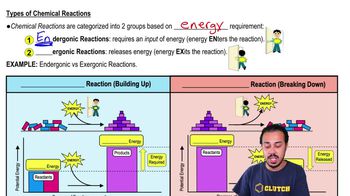
An exergonic reaction releases energy and its products contain less energy than the reactants.
An endergonic reaction gains energy and its products contain more energy than the reactants.
Activation energy is the energy input needed to start a chemical reaction by destabilizing chemical bonds.
Enzymes act as biological catalysts that lower activation energy, increasing reaction rates.
Enzymes are globular proteins that act as biological catalysts by increasing collisions, lowering activation energy, and orienting reactants.
An enzyme consists of an apoenzyme (protein) plus a cofactor (inorganic) or coenzyme (organic), forming a holoenzyme.
Enzymes are unchanged by reactions, specific, catalyze reactions in both directions, lower activation energy, and cannot catalyze impossible reactions.
The substrate binds to the enzyme's active site via the lock and key or induced fit hypothesis.
Enzyme names are formed by adding "ase" to the substrate root, e.g., maltase breaks down maltose.
Reaction rate is affected by temperature, pH, concentration, inhibitors, and thermodynamics.
A competitive inhibitor competes with the substrate for the enzyme's active site, blocking substrate binding.
A non-competitive inhibitor binds to the enzyme outside the active site, changing its shape so the substrate cannot bind.
Cells regulate enzymes by binding signal molecules to the allosteric site, which alters enzyme shape; repressors inhibit and activators activate enzymes.
Feedback inhibition occurs when the product of a reaction acts as a repressor to inhibit an earlier enzyme in the pathway.
In exergonic reactions, energy is released and reaction slows; in endergonic reactions, energy is absorbed and reaction speeds up.
The two main types of nucleic acids are DNA and RNA.
DNA forms the genetic code and is located in the nucleus.
RNA uses the genetic code to make proteins and has three types: ribosomal, messenger, and transfer RNA.
Ribosomal RNA (rRNA) is the structural component of ribosomes.
Messenger RNA (mRNA) carries genetic code instructions to ribosomes for protein synthesis.
Transfer RNA (tRNA) brings amino acids to ribosomes during protein synthesis.