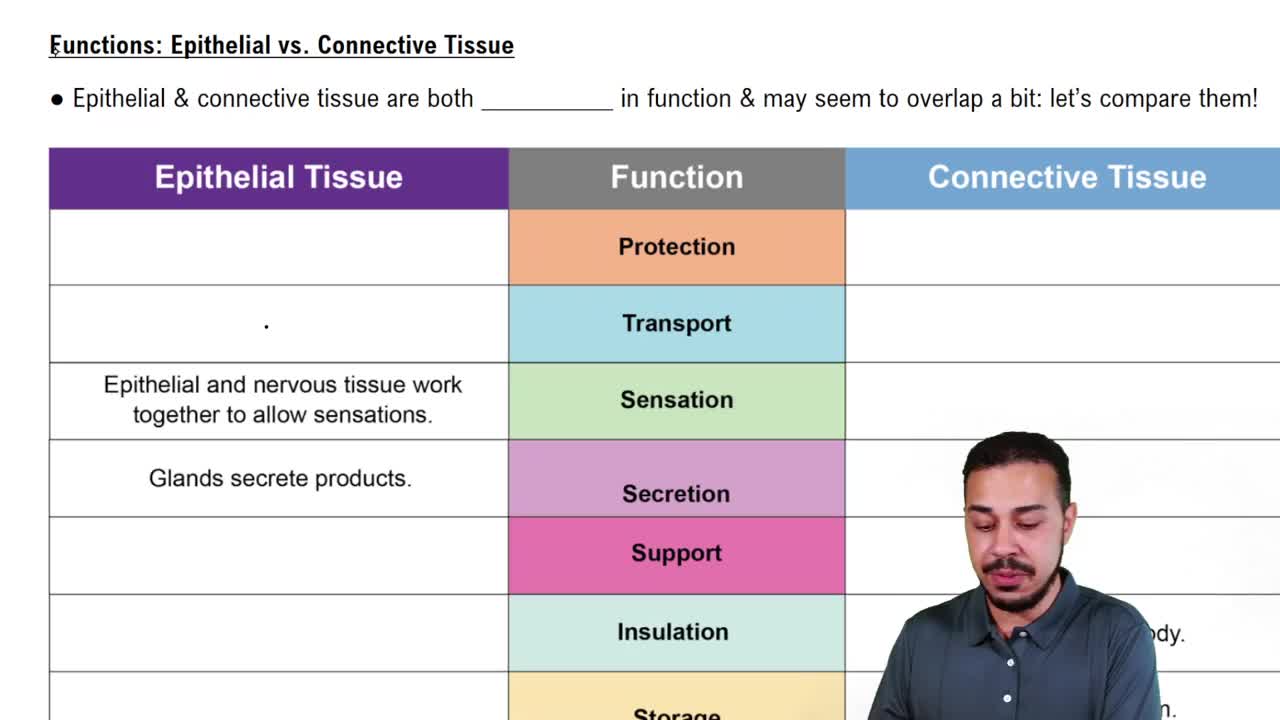
Contains more ground substance and fewer, loosely arranged fibers; provides flexible support and cushioning.
Describe dense regular connective tissue.
Contains parallel collagen fibers; resists tension in one direction; found in tendons and ligaments.
What is the function of adipose tissue?
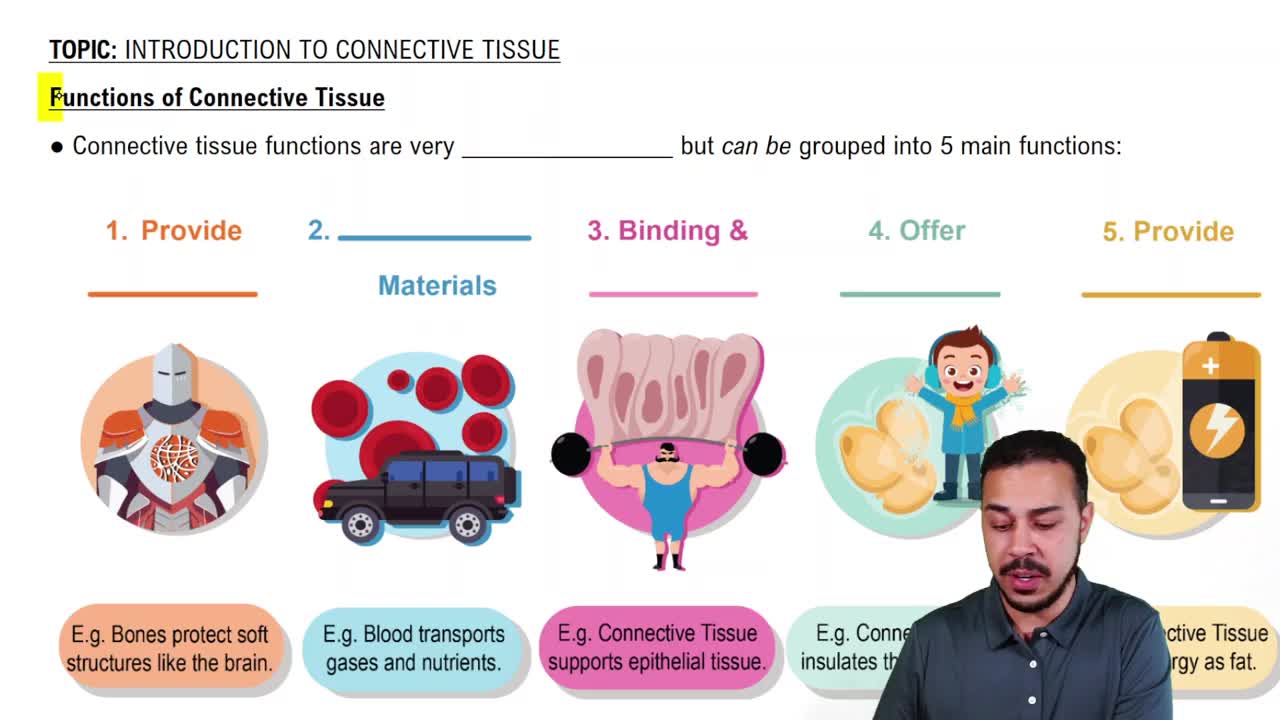
Stores energy as fat, provides insulation and cushioning.
What is unique about blood as a connective tissue?
Contains blood cells suspended in watery ECM called plasma; transports gases, nutrients, hormones, wastes, and immune cells.
What cells produce and maintain cartilage ECM?
Chondroblasts produce the matrix; mature into chondrocytes to maintain it.
What are the main functions of bone tissue?
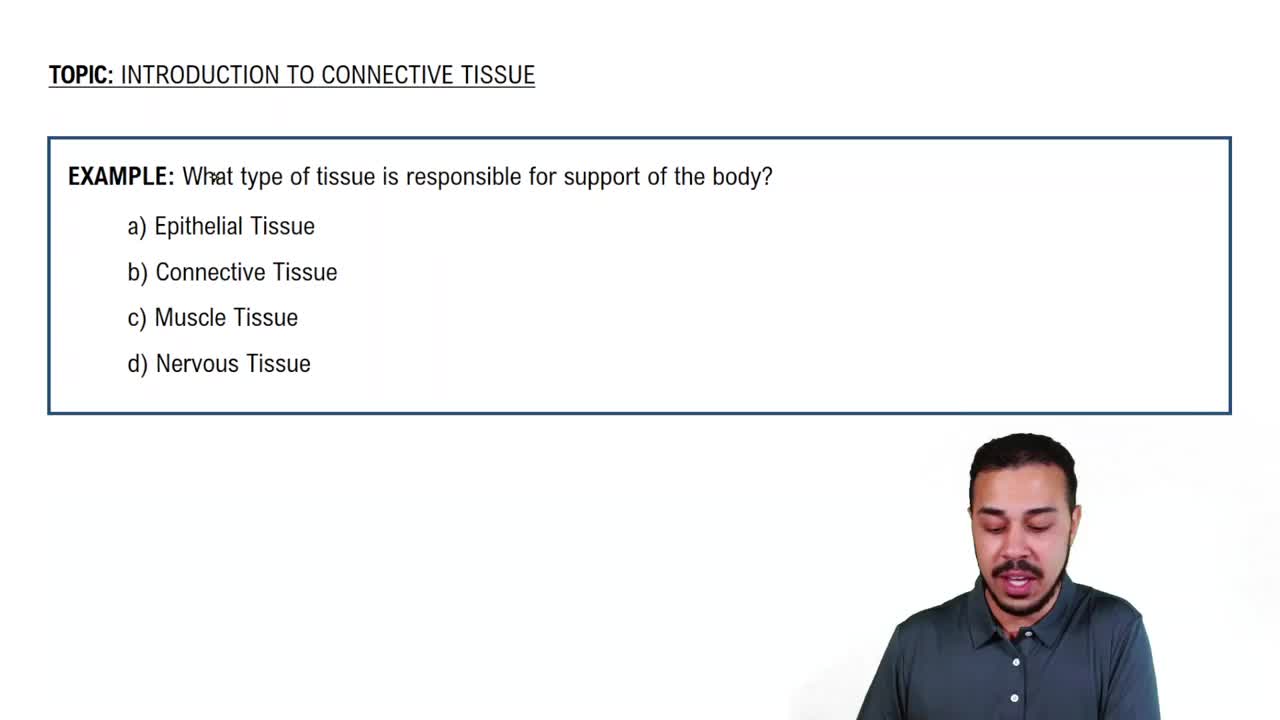
Provides support, protection, mineral storage, and site for blood cell formation.
What makes muscle and neural tissues excitable?
Their cells can generate and propagate electrical signals called action potentials.
What is an action potential?
A rapid, temporary change in membrane voltage that travels along the cell membrane.
What are gap junctions and their importance in muscle and neural tissues?
Channels between neighboring cells allowing ions and electrical signals to pass rapidly for coordinated responses.
Name the three types of muscle tissue and one key feature of each.
Cardiac: heart muscle, coordinated contraction; Smooth: walls of organs, controls diameter; Skeletal: attached to bones, voluntary movement.
What is the primary function of neural tissue?
Rapid communication and information processing through electrical and chemical signals.
What are the two major cell types in neural tissue?
Neurons (signal transmission) and Glial cells (support and maintenance).
Compare muscle and neural tissue in terms of primary function and electrical signaling.
Muscle tissue generates force through contraction; neural tissue communicates and processes information. Both are excitable and generate action potentials.
 Indietro
 06:37