 Indietro
Digestive System Anatomy & Physiology - Chapter 24
 4:06

Termini in questo insieme (28)
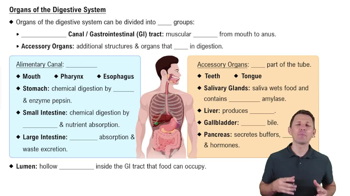
Mucosa, submucosa, muscularis, and serosa.
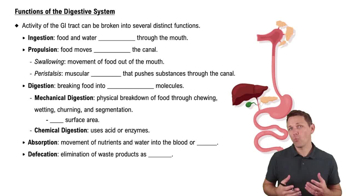
It enables mechanical digestion through muscle contractions like peristalsis and segmentation.
It changes from stratified squamous in the mouth and esophagus for protection to simple columnar in the stomach and intestines for secretion and absorption.
Peristalsis is wave-like muscle contractions moving food along the tract; impairment would cause slowed or blocked food movement.
They are serous membranes that reduce friction and support digestive organs with peritoneal fluid.
Initiates digestion mechanically via teeth and tongue, and chemically via salivary enzymes.
Saliva contains enzymes (e.g., amylase), buffers, antibodies, and mucins to lubricate and begin digestion.
Buccal (voluntary), pharyngeal (reflexive airway protection), and esophageal (peristalsis to stomach).
It prevents stomach acid and contents from refluxing into the esophagus.
Cardia (entry), fundus (storage), body (mixing), and pylorus (controls chyme exit).
They allow churning and mixing of food with gastric secretions for mechanical digestion.
Mucous cells secrete mucus, parietal cells secrete HCl, chief cells secrete pepsinogen, and G-cells secrete gastrin.
By secreting a thick mucus layer and maintaining tight junctions in the epithelium.
It activates pepsinogen to pepsin and kills pathogens.
Cephalic (brain), gastric (stomach), and intestinal (intestine) phases regulate secretion and motility.
Fats slow gastric emptying more than carbohydrates or proteins.
Amylase digests carbs, lipase digests fats, nucleases digest nucleic acids, and proteases digest proteins.
To prevent autodigestion of the pancreas; they are activated in the small intestine.
Secretin stimulates bicarbonate release; CCK stimulates enzyme and bile secretion.
Circular folds, villi, and microvilli greatly increase absorptive surface area.
They complete the final digestion of carbohydrates and proteins at the intestinal surface.
Emulsification by bile, micelle formation, and absorption via lacteals into lymph.
Malabsorption occurs, leading to nutrient deficiencies and digestive issues.
Cecum, colon segments (ascending, transverse, descending, sigmoid), rectum, and anal canal.
Taenia coli are muscle bands that create haustra, pouches aiding in segmentation and motility.
They synthesize vitamins K, biotin, and B12.
The reflex triggers stool expulsion; the internal sphincter is involuntary, the external sphincter is voluntary.
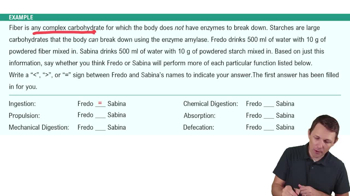
Fiber increases bulk and stimulates motility, aiding fecal formation and regularity.