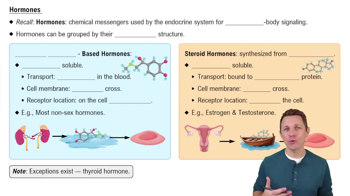
What are the two main pathways linking the hypothalamus to the pituitary gland?
The anterior pituitary pathway uses the hypophyseal portal system (primary plexus, portal veins, secondary plexus), and the posterior pituitary pathway uses the hypothalamo-hypophyseal tract with direct axonal projections.
Which hormones are released by the anterior pituitary and what are their primary functions?
How does growth hormone (GH) affect blood glucose levels?
GH antagonizes insulin, leading to increased blood glucose by promoting glycogenolysis and reducing glucose uptake.
What is the role of thyroid hormones T3 and T4 in metabolism?
T3 and T4 increase basal metabolic rate by upregulating Na+/K+ ATPase, enhancing glucose oxidation, lipolysis, protein synthesis, and amplifying catecholamine effects.
How do parathyroid hormone (PTH) and calcitonin regulate blood calcium levels?
PTH raises blood calcium by stimulating osteoclasts, increasing renal reabsorption, and activating vitamin D. Calcitonin lowers calcium by inhibiting osteoclasts and reducing bone resorption.
What are the three layers of the adrenal cortex and their secretions?
Zona glomerulosa secretes aldosterone (regulates Na+/K+ and blood pressure), zona fasciculata secretes cortisol (gluconeogenesis, lipolysis, immune suppression), and zona reticularis secretes DHEA (androgens).
What hormones does the adrenal medulla secrete and what triggers their release?
The adrenal medulla secretes epinephrine (80%) and norepinephrine (20%) in response to direct neural stimulation from preganglionic sympathetic fibers.
What are the functions of pancreatic alpha and beta cells in glucose regulation?
Alpha cells secrete glucagon during low blood glucose to promote glycogenolysis and gluconeogenesis. Beta cells secrete insulin during high blood glucose to promote glucose uptake and storage.
Describe the metabolic state during the absorptive (fed) phase.
Insulin dominates, promoting glucose utilization, glycogenesis, lipogenesis, and protein synthesis to store nutrients after a meal.
Describe the metabolic state during the postabsorptive (fasting) phase.
Glucagon, epinephrine, and cortisol mobilize energy reserves by promoting glycogenolysis, gluconeogenesis, and fatty acid usage to maintain blood glucose.
What is the primary mechanism maintaining hormonal concentration within physiological limits?
Negative feedback inhibits hormone secretion at higher levels of the hormone to prevent hypersecretion and maintain homeostasis.
What causes Type 1 and Type 2 diabetes mellitus respectively?
Type 1 diabetes is caused by absolute insulin deficiency due to autoimmune beta-cell destruction. Type 2 diabetes involves insulin resistance at target tissues and secretory failure.
What are the clinical features of pituitary gigantism and acromegaly?
Pituitary gigantism results from GH hypersecretion before epiphyseal plate closure causing excessive height. Acromegaly occurs after closure causing thickened bones in face, hands, and feet.
How does hypothyroidism differ from hyperthyroidism in symptoms?
Hypothyroidism causes low BMR, cold intolerance, weight gain, and mental sluggishness. Hyperthyroidism causes heat intolerance, weight loss, tachycardia, and exophthalmos.
Outline the sequence of the hypothalamic-pituitary-thyroid axis response to cold exposure.
Hypothalamus secretes TRH → anterior pituitary releases TSH → thyroid follicular cells produce T3/T4 → target cells increase Na+/K+ ATPase activity and basal metabolic rate.
What is the role of the hypothalamus in endocrine regulation?
The hypothalamus integrates neural inputs, secretes releasing/inhibiting hormones, and regulates the pituitary gland to control endocrine axes.
How does insulin lower blood glucose levels?
Insulin promotes glucose uptake via GLUT4 transporters, stimulates glycogenesis, and enhances fat and protein synthesis in muscle, liver, and adipose tissue.
What triggers the release of parathyroid hormone (PTH)?
Low blood calcium levels stimulate chief cells in the parathyroid glands to release PTH.
What is the function of aldosterone secreted by the adrenal cortex?
Aldosterone regulates sodium and potassium balance and blood pressure by promoting renal sodium reabsorption and potassium excretion.
How do catecholamines affect the body during stress?
Epinephrine and norepinephrine increase heart rate, dilate airways, promote glycogen breakdown, and cause selective vasoconstriction for emergency adaptation.
 Indietro
 7:06