 Indietro
Endocrine System - Anatomy & Physiology
 7:06

Termini in questo insieme (28)
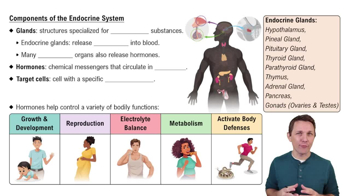
The endocrine system regulates body functions by secreting hormones that control metabolism, growth, reproduction, and homeostasis.
Hormone: chemical messenger secreted into blood.
Endocrine gland: organ that secretes hormones.
Endocrine tissue: hormone-secreting cells in organs.
Target cell: cell with receptors for a specific hormone.
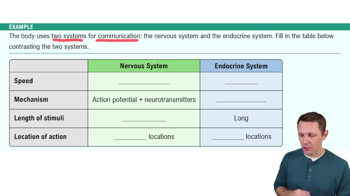
Nervous system uses electrical signals via neurons for fast, short responses; endocrine uses hormones via blood for slower, longer-lasting effects. Target specificity depends on receptor presence.
Classic hormones are secreted by endocrine glands; neurohormones are secreted by neurons into the blood.
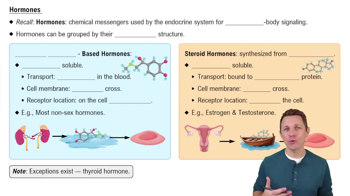
Steroid hormones, peptide hormones, and amino acid-derived (amine) hormones.
Steroid hormones are synthesized on demand from cholesterol and not stored; peptide hormones are synthesized as precursors, stored in vesicles, and released by exocytosis.
Steroid hormones are transported bound to carrier proteins; peptide hormones travel freely dissolved in plasma.
Steroid hormone receptors are intracellular (cytoplasm or nucleus); peptide hormone receptors are on the plasma membrane.
Plasma membrane receptors activate second messenger pathways for rapid responses; intracellular receptors alter gene transcription for slower, longer-lasting effects.
Hormone secretion is triggered by monitored variables, direct neural stimulation, neurohormones, or other hormones.
Example: Parathyroid hormone secretion increases blood calcium; rising calcium levels inhibit further secretion (negative feedback).
The hypothalamus lies above the pituitary; the anterior pituitary connects via the hypothalamic-hypophyseal portal system; the posterior pituitary is neural tissue continuous with the hypothalamus.
Hormones from peripheral glands inhibit hypothalamus and anterior pituitary hormone release, maintaining homeostasis.
Examples: Growth hormone (targets body tissues), thyroid-stimulating hormone (thyroid gland), adrenocorticotropic hormone (adrenal cortex), luteinizing hormone and follicle-stimulating hormone (gonads).
Hypothalamic neurohormones regulate anterior pituitary hormone release by stimulating or inhibiting secretion.
Oxytocin (targets uterus and mammary glands) and antidiuretic hormone (targets kidneys to conserve water).
Hypothalamic neurons synthesize hormones transported to and released from the posterior pituitary into the blood.
The thyroid gland is located in the neck; it secretes thyroid hormones (T3, T4) regulating metabolism and calcitonin which lowers blood calcium.
Four small glands on the thyroid's posterior surface; secrete parathyroid hormone (PTH) which raises blood calcium levels.
Outer adrenal gland layer; secretes corticosteroids like cortisol (stress response) and aldosterone (regulates sodium and potassium).
Located behind the stomach; secretes insulin (lowers blood glucose) and glucagon (raises blood glucose).
Paracrine: chemical signals act on nearby cells.
Autocrine: chemical signals act on the same cell that secreted them.
Prostaglandins (mediate inflammation and pain) and leukotrienes (involved in immune responses).
Body's response to stress in three stages: alarm, resistance, and exhaustion, involving hormonal changes to maintain homeostasis.
Adrenaline and noradrenaline from adrenal medulla increase heart rate, blood pressure, and energy availability.
Cortisol and aldosterone from adrenal cortex promote energy mobilization and fluid retention to sustain stress response.
Lack of iodine reduces thyroid hormone production, causing goiter and hypothyroidism symptoms.
Possible causes include iodine deficiency, autoimmune destruction of thyroid, or pituitary dysfunction.