Skip to main content
Anatomy & Physiology
Il mio corso
Impara
Preparazione agli esami
AI Tutor
Guide di studio
Soluzioni per libri di testo
Flashcard
Esplora
Prova l'app
Il mio corso
Impara
Preparazione agli esami
AI Tutor
Guide di studio
Soluzioni per libri di testo
Flashcard
Esplora
Prova l'app
Indietro
Endocrine System: Key Glands and Hormones
Puoi toccare per girare la carta.
Main function of the thymus
Puoi toccare per girare la carta.
👆
Main function of the thymus
The thymus is primarily responsible for the maturation of T lymphocytes (T cells), which are essential for adaptive immunity.
Avanzamenti del tracciato
I pulsanti di controllo sono stati cambiati in modalità "navigazione".
1/18
Video consigliati
7:06
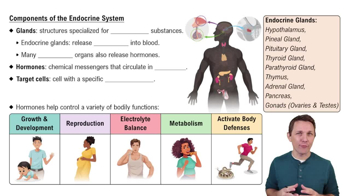
Components of the Endocrine System
15229
views
458
rank
6:20
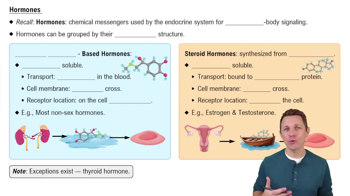
Hormones
11611
views
284
rank
3:33
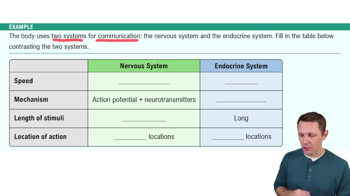
Introduction to the Endocrine System Example 1
16393
views
490
rank
1
comments
Termini in questo insieme (18)
Nascondere definizioni
Main function of the thymus
The thymus is primarily responsible for the maturation of T lymphocytes (T cells), which are essential for adaptive immunity.
Two hormones produced by the thymus
The thymus produces thymosin and thymopoietin, which stimulate T cell development and differentiation.
Male and female gonads
Male gonads are the testes; female gonads are the ovaries.
Role of FSH and LH in males
FSH stimulates sperm production; LH stimulates testosterone production in males.
Role of FSH and LH in females
FSH stimulates ovarian follicle development; LH triggers ovulation and corpus luteum formation.
Definition of gametes
Gametes are reproductive cells: sperm in males and eggs (ova) in females.
Meaning of anabolic effect
Anabolic effect refers to the promotion of tissue building and growth, such as muscle mass increase.
Meaning of androgenic effect
Androgenic effect refers to the development of male secondary sexual characteristics like facial hair and deep voice.
Function of progesterone
Progesterone prepares the uterus for pregnancy and maintains the uterine lining during gestation.
Location of the pineal gland
The pineal gland is located in the brain, near the center between the two hemispheres.
Hormone produced by the pineal gland
The pineal gland produces melatonin.
Function of melatonin
Melatonin regulates circadian rhythms and sleep-wake cycles.
Leptin: source and function
Leptin is secreted by adipose tissue and regulates appetite and energy balance by signaling satiety.
What is ANP?
Atrial Natriuretic Peptide (ANP) is a hormone that reduces blood volume and pressure by promoting sodium excretion.
Source of ANP secretion
ANP is secreted by the atria of the heart.
Stimulus for ANP production
ANP production is stimulated by atrial stretch due to increased blood volume.
Definition of natriuresis
Natriuresis is the excretion of sodium in the urine, which helps reduce blood volume and pressure.
Endocrine roles of the kidneys
Kidneys produce hormones like erythropoietin for red blood cell production and renin for blood pressure regulation.
 IndietroIndietro
 7:06