 Indietro
Glycolysis and Glucose Metabolism - Anatomy & Physiology
 06:20

Termini in questo insieme (20)
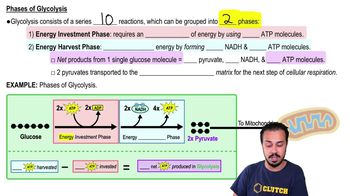
Glycolysis is the metabolic pathway that converts glucose into 2 pyruvate molecules, producing ATP and NADH. It occurs in the cytosol and can generate energy without oxygen.
Glycolysis occurs in the cytosol of the cell's cytoplasm.
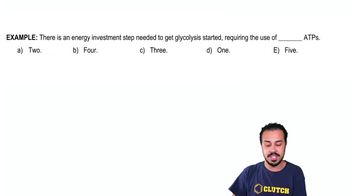
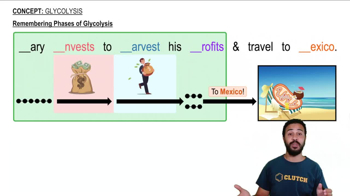
The energy investment phase consumes 2 ATP to phosphorylate glucose, and the energy generation phase produces 4 ATP and 2 NADH, resulting in a net gain of 2 ATP per glucose.
Net yield is 2 ATP: 4 ATP produced in the payoff phase minus 2 ATP used in the investment phase.
The end product is pyruvate. Under anaerobic conditions, pyruvate is converted to lactate.
Glucose enters cells via glucose transporters: Sodium-Glucose Linked Transporters (SGLTs), Facilitated Diffusion Glucose Transporters (GLUTs), and SWEET transporters.
SGLTs are symporters using Na+ gradient for active transport; GLUTs are uniporters that facilitate passive diffusion of glucose down its concentration gradient.
Hexokinase catalyzes the phosphorylation of glucose to glucose-6-phosphate, trapping glucose inside the cell and committing it to metabolism.
Hexokinase is inhibited by its product glucose-6-phosphate via feedback inhibition to prevent unnecessary glucose metabolism.
Glucokinase is found in liver and pancreatic β-cells, has a high Km for glucose, is not inhibited by glucose-6-phosphate, and is regulated hormonally.
Hexokinase, Phosphofructokinase-1 (PFK-1), and Pyruvate kinase catalyze irreversible steps and are major control points.
High ATP levels allosterically inhibit PFK-1 and pyruvate kinase, slowing glycolysis when energy is abundant.
AMP activates PFK-1 by overcoming ATP inhibition, signaling low energy and promoting glycolysis.
PFK-2 produces fructose 2,6-bisphosphate, an allosteric activator of PFK-1, enhancing glycolysis and inhibiting gluconeogenesis.
Fructose 1,6-bisphosphate activates pyruvate kinase, ensuring forward flow of glycolysis by linking early and late steps.
Glucagon increases cAMP, activating protein kinase A which phosphorylates and inactivates pyruvate kinase, reducing glycolysis during fasting.
Pyruvate is transported into mitochondria and converted to acetyl-CoA to enter the TCA cycle.
Pyruvate crosses the inner mitochondrial membrane via the mitochondrial pyruvate carrier (MPC) complex composed of MPC1 and MPC2.
Acetylation of MPC1 or MPC2 reduces pyruvate transport; deacetylation by SIRT3 increases transport activity.
Under aerobic conditions, NADH is oxidized by the electron transport chain to regenerate NAD+. Under anaerobic conditions, NADH reduces pyruvate to lactate to regenerate NAD+.