Skip to main content
Anatomy & Physiology
Il mio corso
Impara
Preparazione agli esami
AI Tutor
Guide di studio
Soluzioni per libri di testo
Flashcard
Esplora
Prova l'app
Il mio corso
Impara
Preparazione agli esami
AI Tutor
Guide di studio
Soluzioni per libri di testo
Flashcard
Esplora
Prova l'app
Indietro
Histology and Integumentary System - Anatomy & Physiology
Puoi toccare per girare la carta.
What are the two main components of the extracellular matrix in connective tissue?
Puoi toccare per girare la carta.
👆
What are the two main components of the extracellular matrix in connective tissue?
Protein fibers
and
ground substance
.
Avanzamenti del tracciato
I pulsanti di controllo sono stati cambiati in modalità "navigazione".
1/23
Video consigliati
06:37
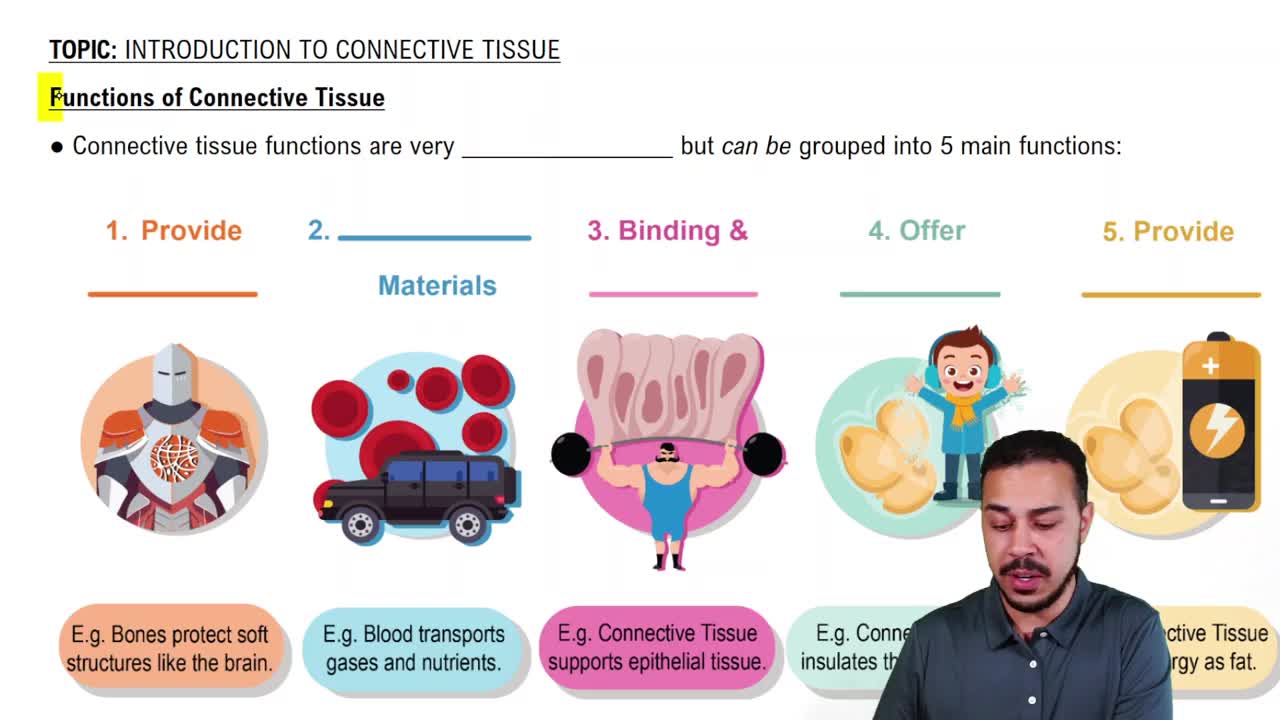
Functions of Connective Tissue
8150
views
137
rank
08:54
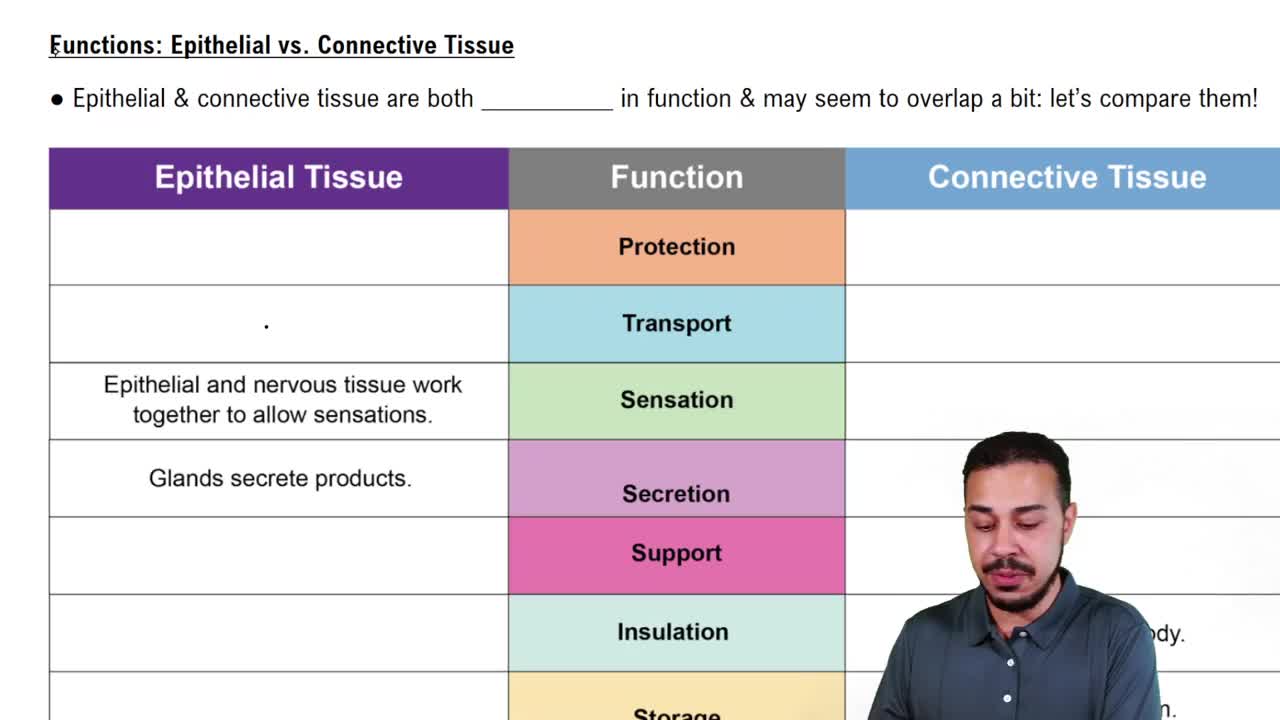
Functions: Epithelial vs. Connective Tissue
7697
views
120
rank
3
comments
01:32
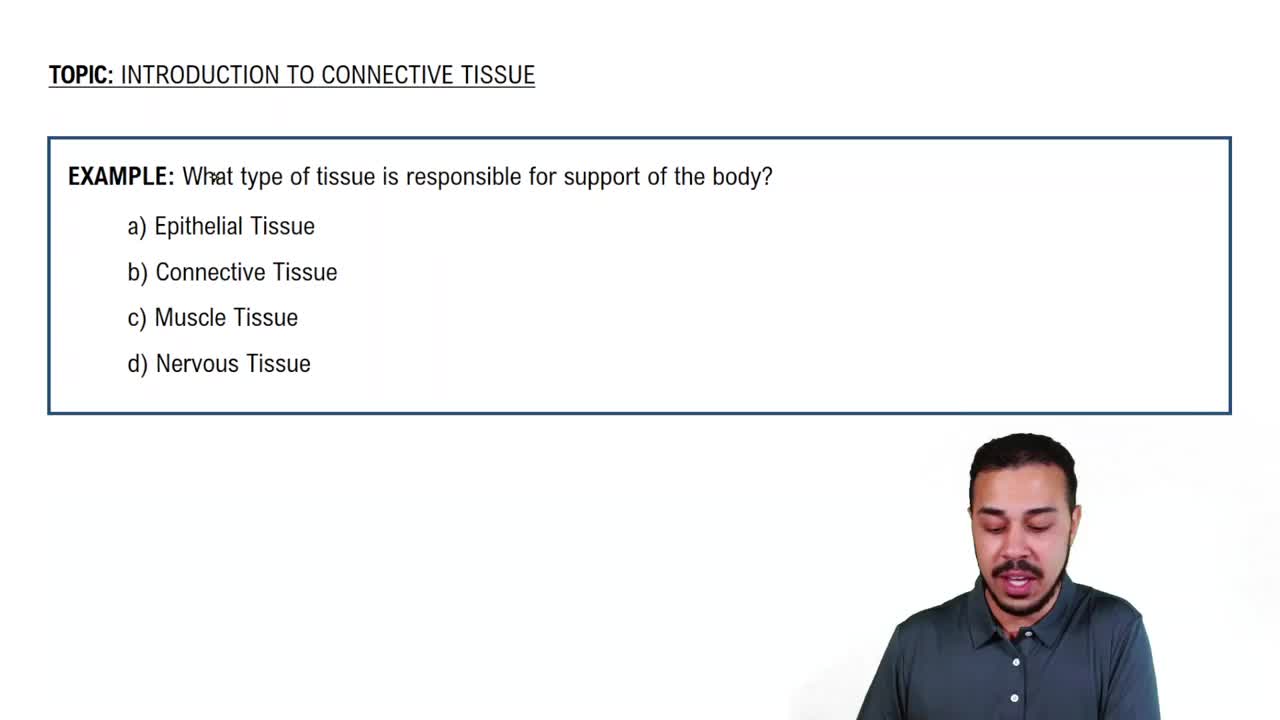
Introduction to Connective Tissue Example 1
6451
views
65
rank
1
comments
Termini in questo insieme (23)
Nascondere definizioni
What are the two main components of the extracellular matrix in connective tissue?
Protein fibers
and
ground substance
.
Name the three types of protein fibers found in connective tissue.
Reticular fibers
,
collagen fibers
, and
elastic fibers
.
What is the primary function of fibroblasts in connective tissue?
Fibroblasts are responsible for producing the
extracellular matrix
.
Differentiate between loose and dense connective tissue proper.
Loose connective tissue has
fewer fibers widely spaced
, while dense connective tissue has
numerous tightly packed fibers
.
Where is areolar connective tissue commonly found?
Between muscles, surrounding blood vessels and nerves, and within the dermis.
What characterizes reticular connective tissue?
A 3-D interlocking network of
reticular fibers
forming a stroma framework for support.
What is the main function of adipose connective tissue?
Storage of
lipid molecules
in specialized cells called adipocytes.
Where is dense regular connective tissue found?
In tendons, aponeuroses, and most ligaments.
How does dense irregular connective tissue differ from dense regular connective tissue?
Dense irregular connective tissue has collagen fibers arranged
irregularly
to withstand forces from many directions.
What is a key feature of hyaline cartilage connective tissue?
Dense network of collagen fibers in a gel-like matrix with chondrocytes in lacunae.
Where is elastic cartilage found?
Auricle of the ear and epiglottis.
What gives fibrocartilage its tensile strength?
Numerous bundles of
collagen fibers
within the matrix.
What is the structural unit of dense bone connective tissue?
The
osteon
or Haversian system.
What are the three formed elements of blood connective tissue?
Leukocytes
(white blood cells),
erythrocytes
(red blood cells), and
platelets
.
Name the three main components of a neuron.
Perikaryon (cell body), axons, and dendrites.
What are the two main layers of the skin?
The
epidermis
(keratinized stratified squamous epithelium) and the
dermis
(connective tissue).
What is the hypodermis composed of?
Adipose and areolar connective tissues.
Name two types of tactile receptors in the skin.
Lamellated (Pacinian) corpuscles
and
Tactile (Meissner’s) corpuscles
.
What are the two types of sweat glands in the integumentary system?
Apocrine
and
eccrine sweat glands
.
List the layers of the epidermis from superficial to deep.
Stratum corneum, stratum lucidum, stratum granulosum, stratum spinosum, stratum basale.
What is the function of the arrector pili muscle?
To contract and cause hair to stand up, producing 'goosebumps'.
What structures are found in the hair follicle?
Hair shaft (cortex, medulla, cuticle), hair root, hair bulb, and hair papilla.
What is the role of sebaceous glands?
To secrete sebum, an oily substance that lubricates hair and skin.
 IndietroIndietro
 06:37