 Indietro
Homeostasis in Anatomy & Physiology
 01:59

Termini in questo insieme (20)
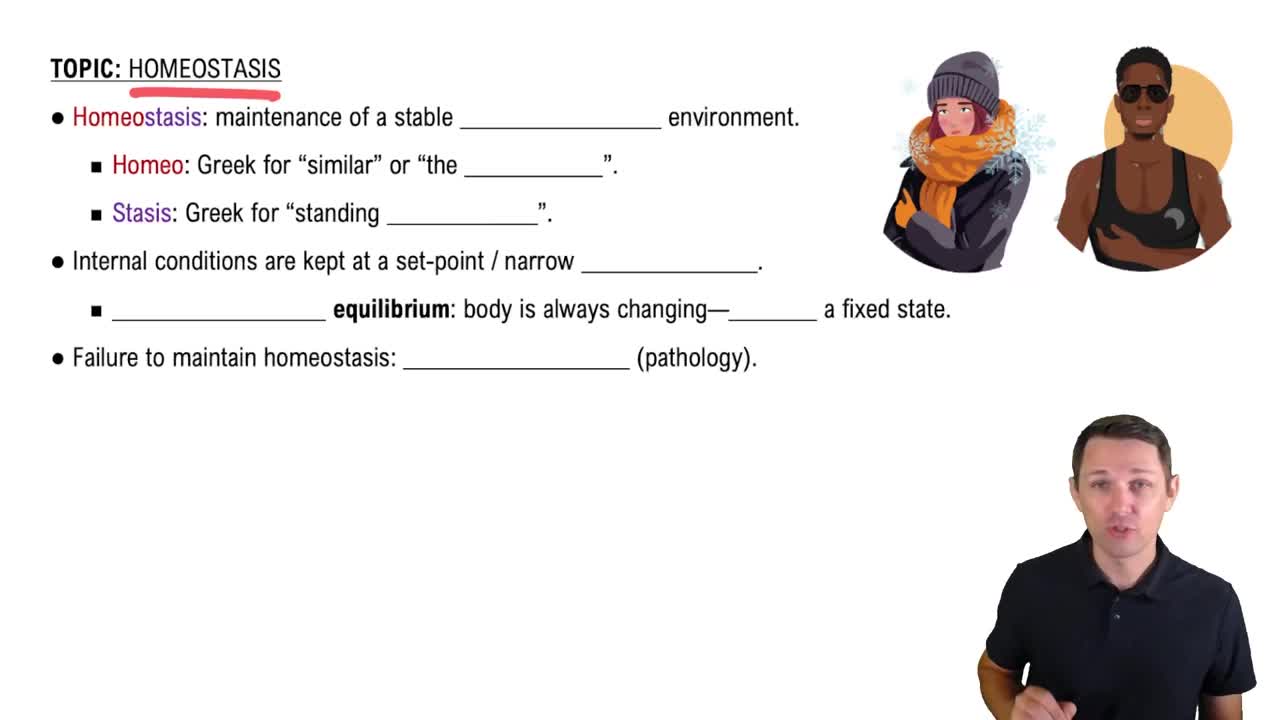
Homeostasis is the body's ability to maintain a stable internal environment despite external changes.
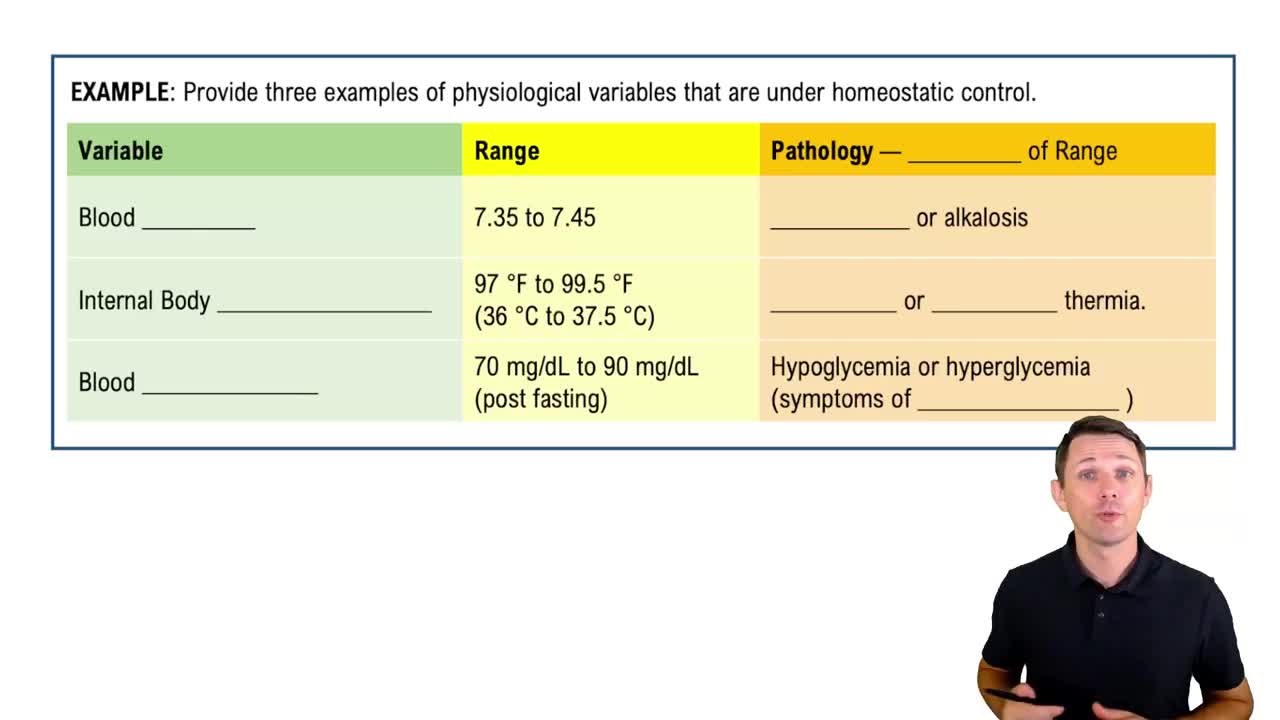
It ensures optimal conditions for cellular function and overall health by regulating factors like temperature, pH, and fluid balance.
Receptor, control center, and effector.
The receptor detects changes in the environment (stimuli) and sends information to the control center.
The control center processes information from the receptor and determines the appropriate response.
The effector carries out the response to restore balance, such as muscles or glands.
A process that reverses a change to return the system to its set point, maintaining stability.
Regulation of body temperature: sweating to cool down or shivering to warm up.
A process that amplifies a change, moving the system further from its starting point temporarily.
Blood clotting and childbirth contractions.
Insulin lowers blood glucose when high; glucagon raises it when low.
The ideal value or range that the body tries to maintain for a particular variable.
Through buffer systems, respiratory control of CO2, and kidney regulation of H+ ions.
The hypothalamus acts as the control center for temperature regulation and other autonomic functions.
By regulating intake and output of water and electrolytes to maintain osmotic balance.
It can lead to disease or death due to the disruption of normal physiological functions.
Intracellular fluid is inside cells; extracellular fluid surrounds cells and includes plasma and interstitial fluid.
By rapidly transmitting signals to coordinate immediate responses to changes.
By releasing hormones that regulate longer-term adjustments in the body.
Diabetes mellitus, where blood glucose regulation is impaired.