Inherited inability to produce melanin; melanocytes present but do not produce pigment.
What is vitiligo?
Partial or complete loss of melanocytes due to immune system attack, causing depigmented skin patches.
What are the two layers of the dermis and their characteristics?
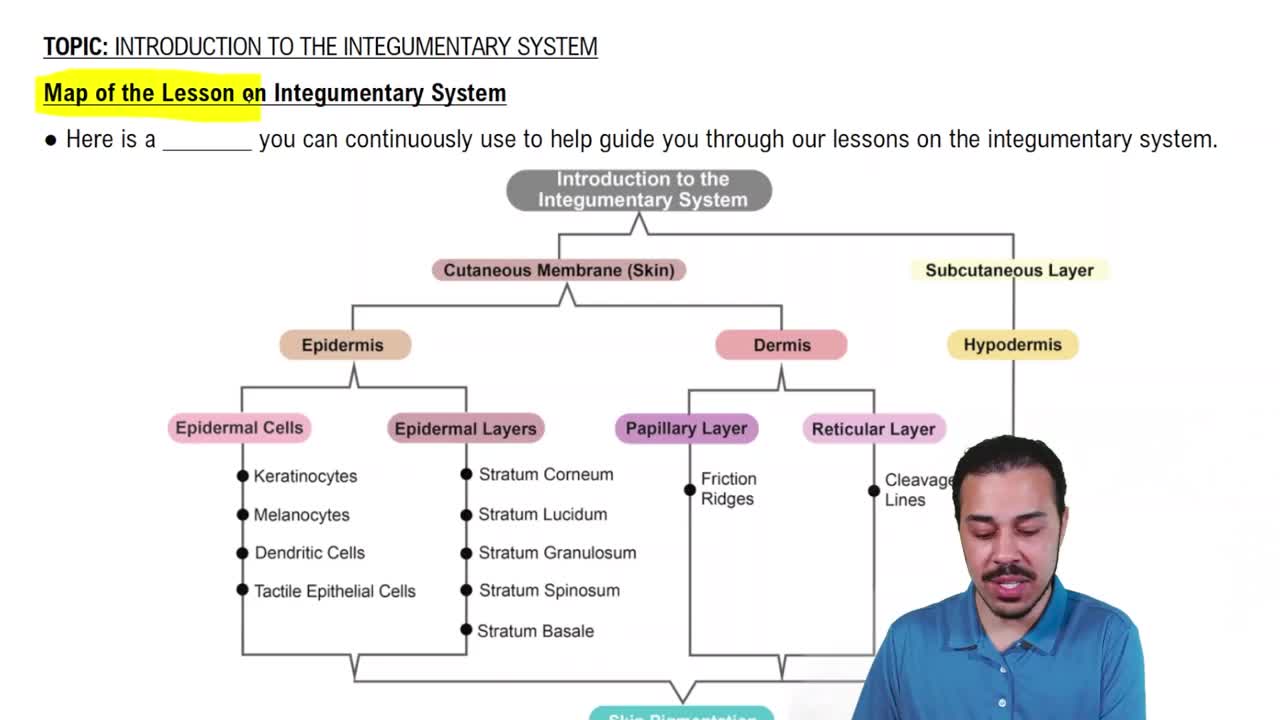
Papillary layer: areolar tissue with dermal papillae containing blood vessels and sensory receptors. Reticular layer: dense irregular connective tissue with collagen and elastic fibers.
What are cleavage lines in the dermis?
Parallel bundles of collagen fibers that resist skin forces; important for surgical incisions to minimize scarring.
What is the hypodermis and its function?
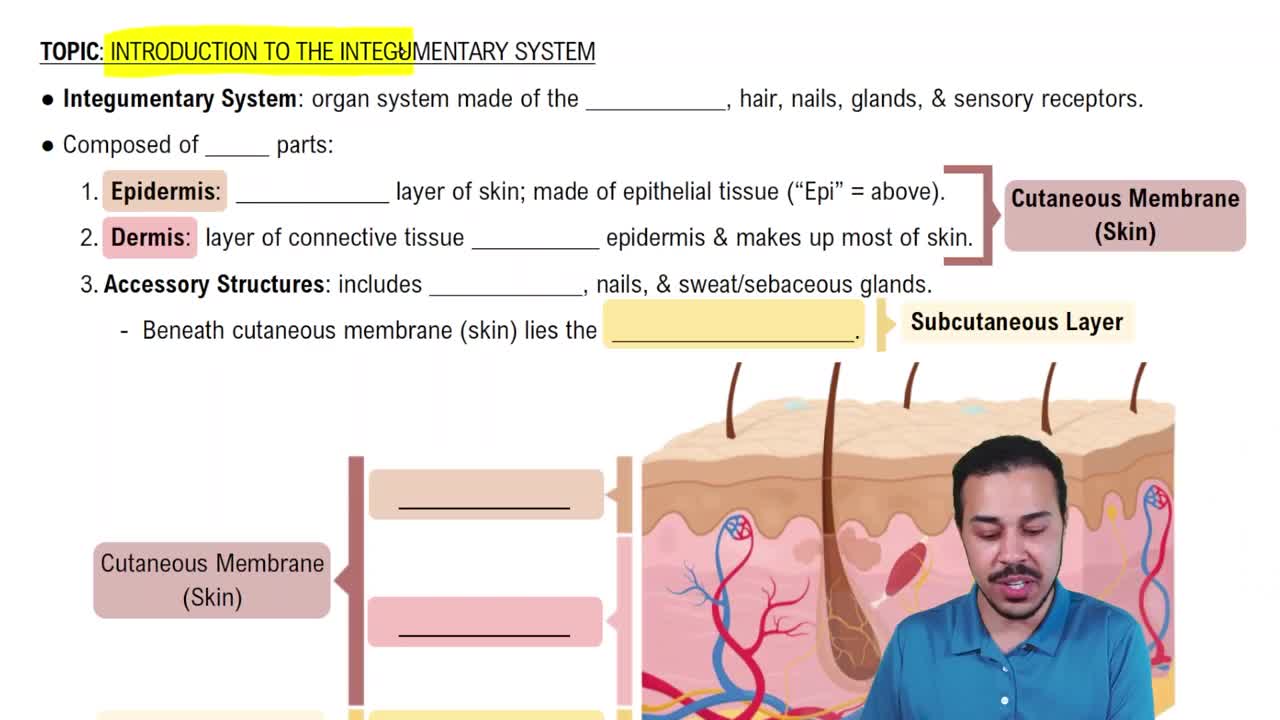
Subcutaneous layer of adipose and areolar tissue; stabilizes skin, stores fat (~80% of body fat), and is a site for injections.
What are the main functions of hair?
Protects and insulates scalp, guards openings against debris, and acts as a sensory receptor.
Describe the structure of a hair follicle.
Extends from epidermis into dermis; includes hair bulb, arrector pili muscle, and sensory neurons.
What are the types of hair and their characteristics?
Vellus hairs: fine, pale body hair. Terminal hairs: coarse, pigmented hair on scalp, eyebrows, axillary, and pubic regions.
What do sebaceous glands secrete and their function?
Secrete sebum (oil) that inhibits bacterial growth, lubricates skin and hair.
What are the two types of sweat glands and their differences?
Apocrine glands: secrete into hair follicles, found in axillary and pubic regions, produce odorous secretions. Eccrine glands: secrete onto skin surface, widely distributed, regulate body temperature.
What are nails composed of and their main parts?
Dead keratinized cells; main parts are nail body, free edge, and nail root.
How are burns classified by depth?
First-degree: epidermis only. Second-degree: epidermis and dermis. Third-degree: epidermis, dermis, and subcutaneous layer.
 Indietro
 06:54