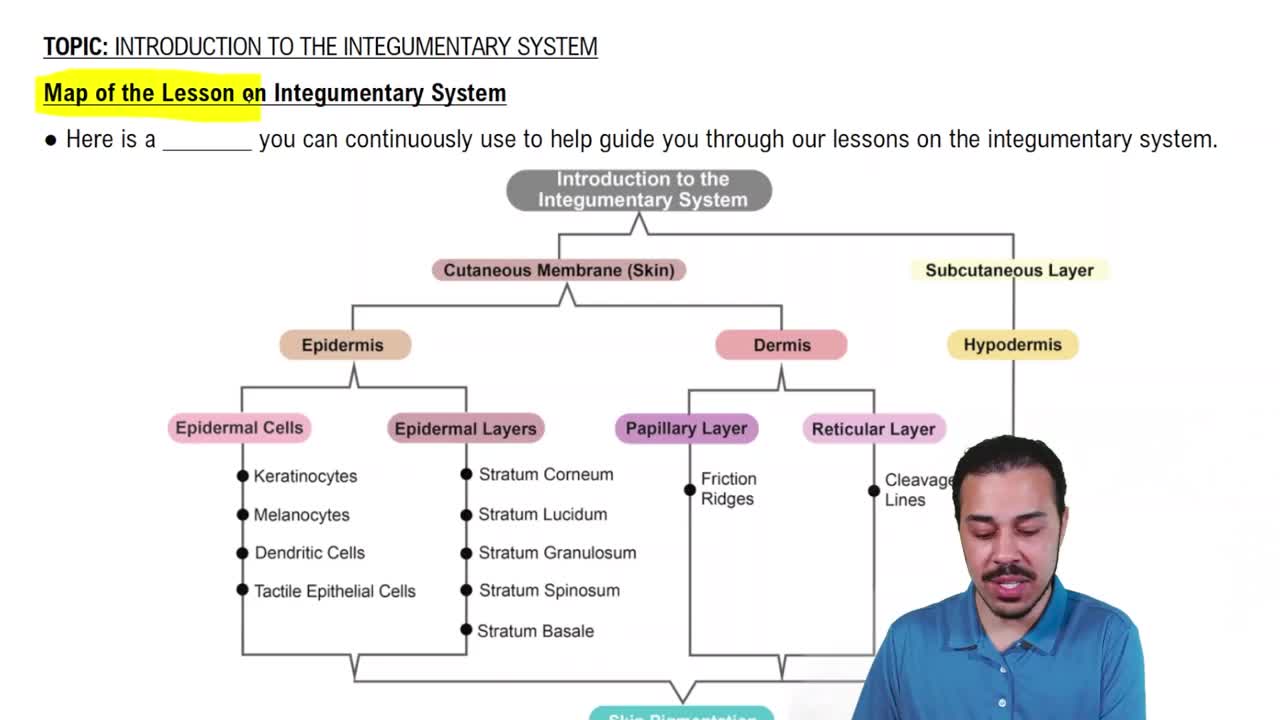
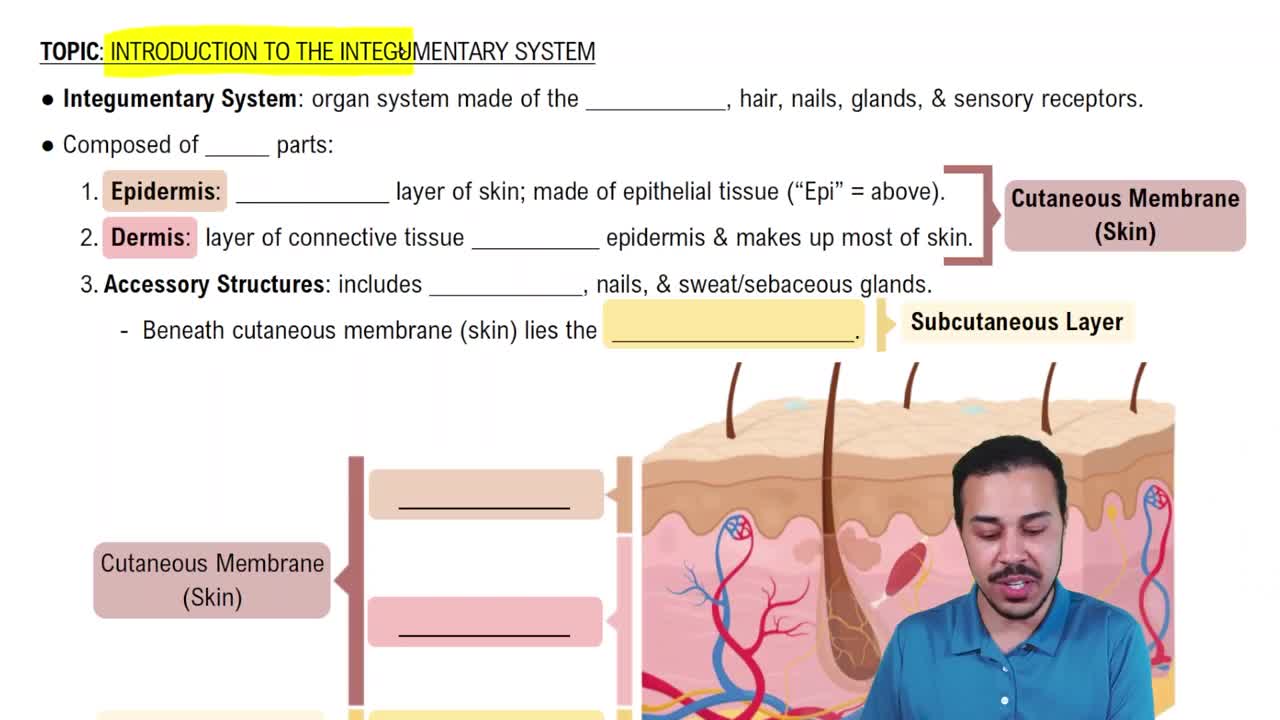
The skin consists of the superficial epidermis made of keratinized stratified squamous epithelium and the deep dermis composed of loose and dense irregular connective tissue.
What accessory structures are included in the integumentary system?
Accessory structures include hair, nails, sweat glands, and sebaceous (oil) glands.
What is the hypodermis and is it part of the skin?
The hypodermis, or superficial fascia, lies below the dermis, contains loose connective and adipose tissue, is highly vascularized, and is not part of the skin.
List the primary functions of the integumentary system.
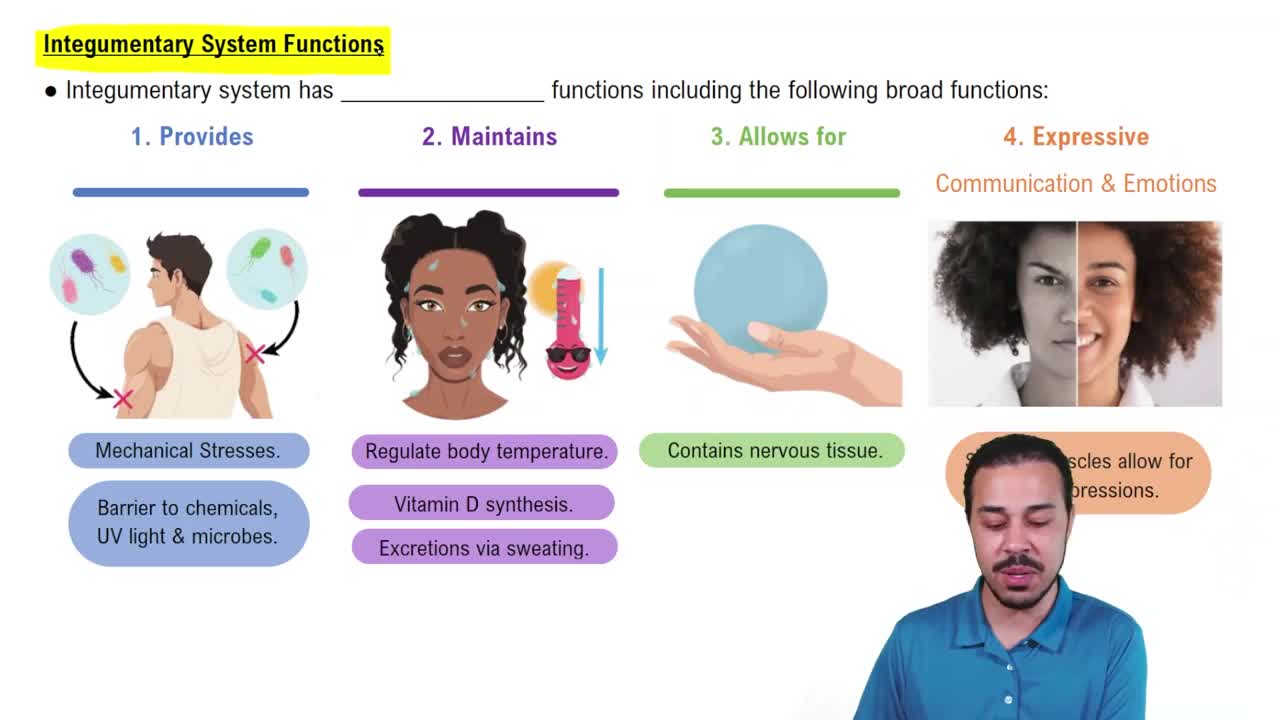
Functions include protection, sensation, thermoregulation, excretion, and synthesis of vitamin D.
How does the skin protect against pathogens?
The skin forms a continuous barrier, contains immune cells that destroy pathogens, and secretes antimicrobial substances creating an acidic pH called the acid mantle.
Describe the negative feedback loop for thermoregulation when body temperature rises.
Stimulus: increased body temperature detected by brain thermoreceptors; Control center: hypothalamus activates heat-loss center; Effector: sweating and vasodilation release heat; Response stops when normal temperature returns.
What are the five layers (strata) of the epidermis from deep to superficial?
Stratum basale, stratum spinosum, stratum granulosum, stratum lucidum (only in thick skin), and stratum corneum.
What is the main function of keratinocytes in the epidermis?
Keratinocytes produce keratin, a fibrous protein that strengthens the epidermis and makes it resistant to mechanical stress.
What is the role of melanocytes in the skin?
Melanocytes produce melanin, a pigment that protects keratinocyte DNA from UV radiation by shading the nucleus.
What distinguishes thick skin from thin skin?
Thick skin has all five epidermal strata including a thick stratum corneum, lacks hair follicles, and is found on palms and soles; thin skin lacks stratum lucidum, has hair follicles, and covers most of the body.
What are dermal papillae and their function?
Dermal papillae are projections of the papillary dermis that provide blood supply to the epidermis and house tactile (Meissner) corpuscles for light touch sensation.
What causes the dimpled appearance of cellulite?
Cellulite results from collagen bands forming around adipose tissue in the hypodermis, causing a dimpled or 'orange peel' skin texture.
What are the three types of skin cancer and their origins?
Basal cell carcinoma arises from stratum basale keratinocytes; squamous cell carcinoma from stratum spinosum keratinocytes; malignant melanoma from melanocytes.
What is the ABCDE rule for identifying malignant melanoma?
A: Asymmetry; B: Border irregularity; C: Color variation; D: Diameter >6 mm; E: Evolving shape or size.
Describe the structure of a hair shaft.
The hair shaft has three layers: medulla (soft keratin core), cortex (layers of hard keratin), and cuticle (single layer of hard keratin cells).
What is the function of sebaceous glands?
Sebaceous glands produce sebum, an oily lipid mixture that lubricates and waterproofs skin and hair, released by holocrine secretion.
What are the differences between eccrine and apocrine sweat glands?
Eccrine glands are widespread, produce watery sweat for thermoregulation; apocrine glands are in axillae and genital areas, produce thicker, protein-rich sweat that bacteria metabolize to cause odor.
What is the Rule of Nines in burn treatment?
A method dividing the body into 11 areas each representing 9% of total surface area to estimate burn extent and fluid replacement needs.
What layers are affected in first, second, and third-degree burns?
First-degree: epidermis only; second-degree: epidermis and part/all of dermis; third-degree: epidermis, dermis, hypodermis, and possibly deeper tissues.
What cells in the epidermis function as immune defenders?
Dendritic (Langerhans) cells in the stratum spinosum act as phagocytes protecting skin and deeper tissues.
 Indietro
 06:54