 Indietro
Integumentary System - Anatomy & Physiology
 06:54

Termini in questo insieme (20)
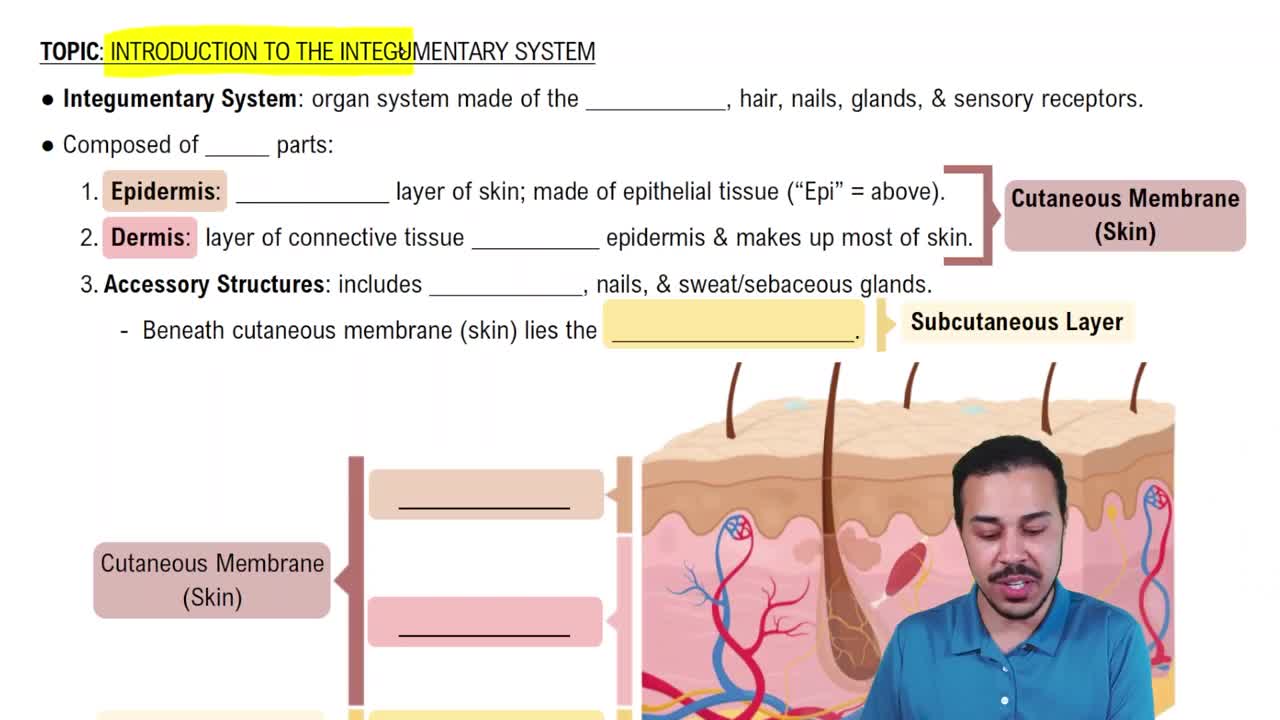
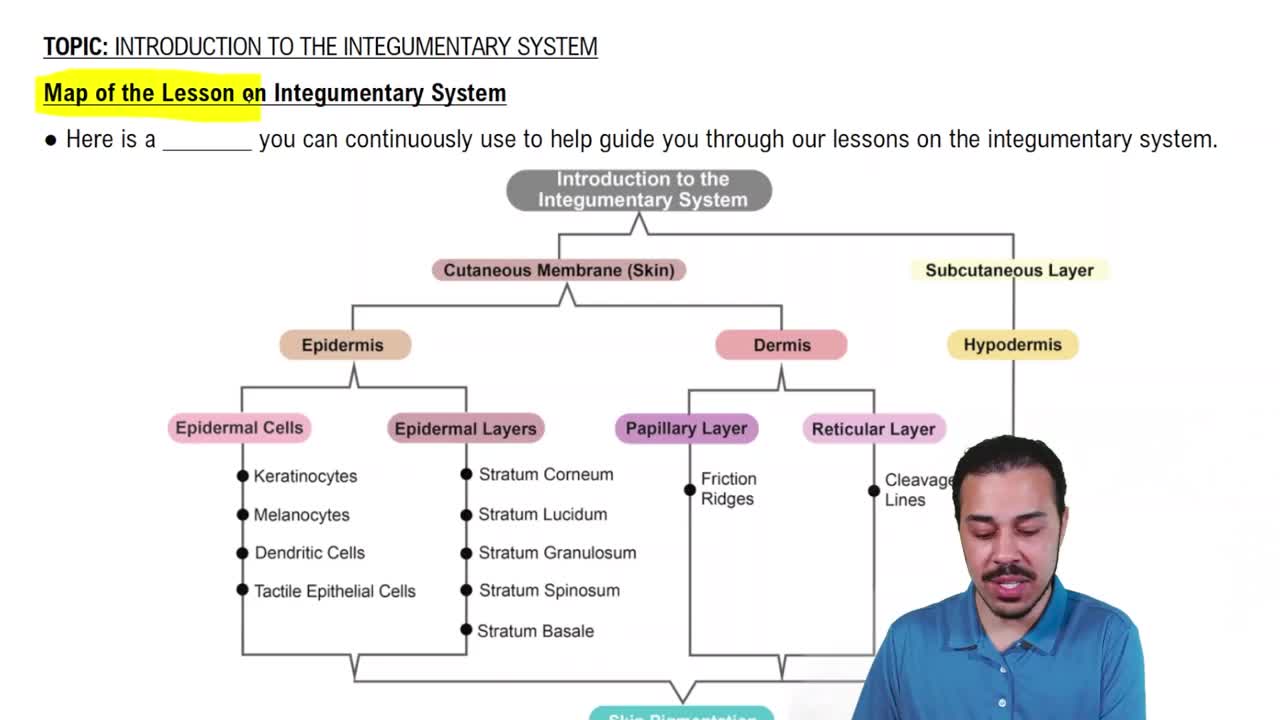
The skin consists of three main layers: epidermis, dermis, and subcutaneous tissue (hypodermis), which is not part of the skin.
The dermis contains papillary and reticular layers, blood vessels, sweat glands, sebaceous glands, hair follicles, sensory nerve fibers, and connective tissue.
Friction ridges consist of epidermal ridges that lie on top of dermal ridges and help make fingerprints, improving grip.
Flexure lines are folds in the skin where the dermis is closely attached to underlying structures, commonly found on the palms and joints.
Stretch marks are caused by extreme stretching of the skin that tears the dermis, leaving silvery white scars called striae.
The hair shaft consists of three layers: cuticle (outer), cortex (middle), and medulla (core).
The hair follicle wall includes the peripheral connective tissue sheath, glassy membrane, and epithelial root sheath (external and internal).
The hair matrix contains actively dividing cells that produce hair, while the hair papilla provides blood supply to the matrix.
Main cutaneous glands include eccrine sweat glands, apocrine sweat glands, and sebaceous (oil) glands.
Eccrine sweat glands produce sweat for thermoregulation and are found all over the body.
Acne is caused by infectious inflammation of sebaceous glands, often involving Propionibacterium acne infection, leading to pimples.
Seborrhea is an overactive sebaceous gland condition in infants, causing pink, raised scalp lesions that flake off.
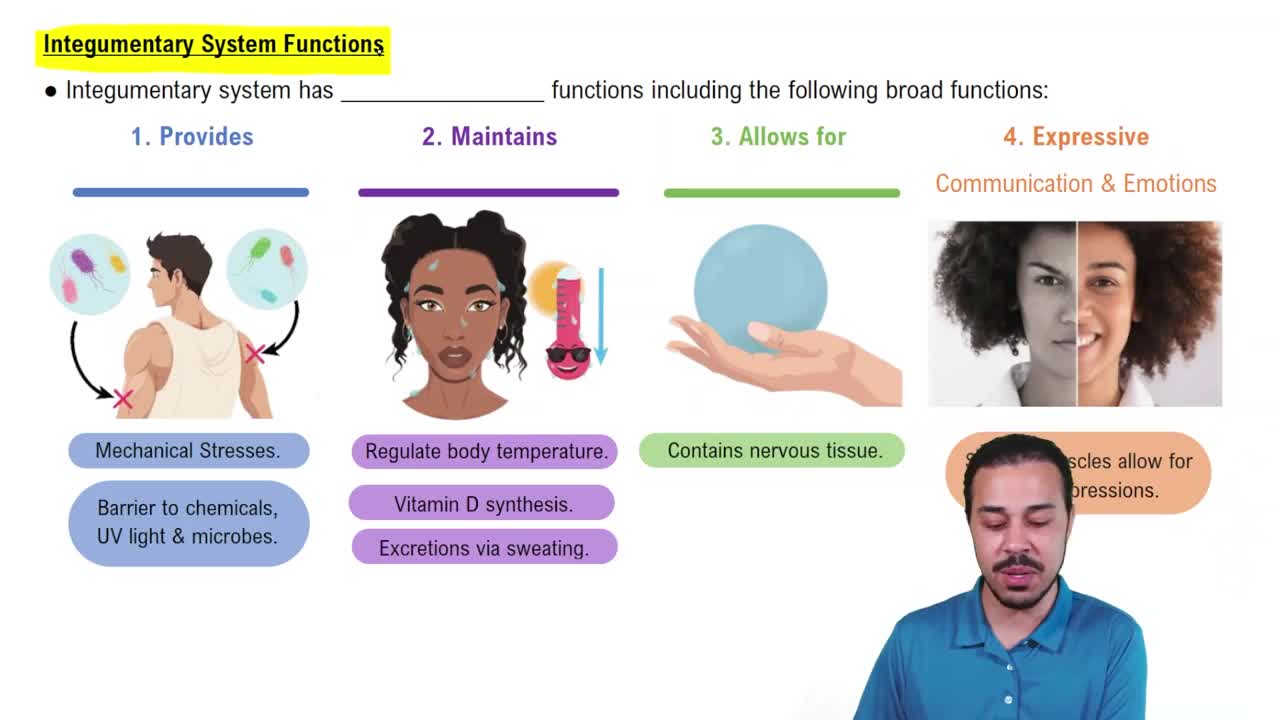
The skin acts as a barrier against physical, chemical, and biological harm, preventing pathogen entry and water loss.
Cleavage lines are separations between collagen fiber bundles; surgical incisions parallel to these lines heal better.
Excessive UV exposure damages elastic fibers, causes leathery skin, depresses the immune system, and can lead to skin cancer.
Photosensitivity is an increased skin reaction to sunlight, caused by some drugs like antibiotics and perfumes, leading to rashes.
The skin contains sensory nerve fibers with free nerve endings, lamellar corpuscles, and hair follicle receptors for sensation.
The dermal vascular plexus supplies blood to the dermis and epidermis, aiding in thermoregulation and nutrient delivery.
The subcutaneous tissue (hypodermis) is composed mainly of adipose tissue, providing insulation, cushioning, and energy storage.
1st-degree burns affect only the epidermis, 2nd-degree burns affect epidermis and part of dermis, and 3rd-degree burns destroy full thickness of skin.