 Indietro
Integumentary System - Anatomy & Physiology

 01:07


Termini in questo insieme (20)
The skin consists of three main layers: epidermis, dermis, and subcutaneous tissue (hypodermis), which is not part of the skin.
The dermis contains the papillary layer and reticular layer, blood vessels, nerve fibers, hair follicles, sweat glands, sebaceous glands, and connective tissue.
Friction ridges consist of epidermal ridges that lie on top of dermal ridges and help make fingerprints, improving grip.
Flexure lines form where the dermis is closely attached to underlying structures, commonly found on the palms and joints.
Extreme stretching of skin causes dermal tears, resulting in silvery white scars called striae or stretch marks.
The epidermis layers are: stratum basale, stratum spinosum, stratum granulosum, stratum lucidum (only in thick skin), and stratum corneum.
The stratum basale is the deepest epidermal layer where keratinocytes are produced by mitosis and melanocytes provide pigment.
Melanocytes produce melanin pigment, which protects against UV radiation and contributes to skin color.
A hair follicle includes the peripheral connective tissue sheath, glassy membrane, epithelial root sheath, and the hair root with cuticle, cortex, and medulla.
The hair matrix is the growth zone at the base of the hair follicle where cells divide to produce new hair.
The two main sweat glands are eccrine glands, which regulate temperature, and apocrine glands, which are associated with hair follicles in specific areas.
Sebaceous glands secrete oily sebum that lubricates and waterproofs the skin and hair.
Acne is an inflammation of sebaceous glands often caused by bacterial infection and blocked ducts.
The skin acts as a physical barrier against pathogens, UV radiation, and chemical damage, and prevents water loss.
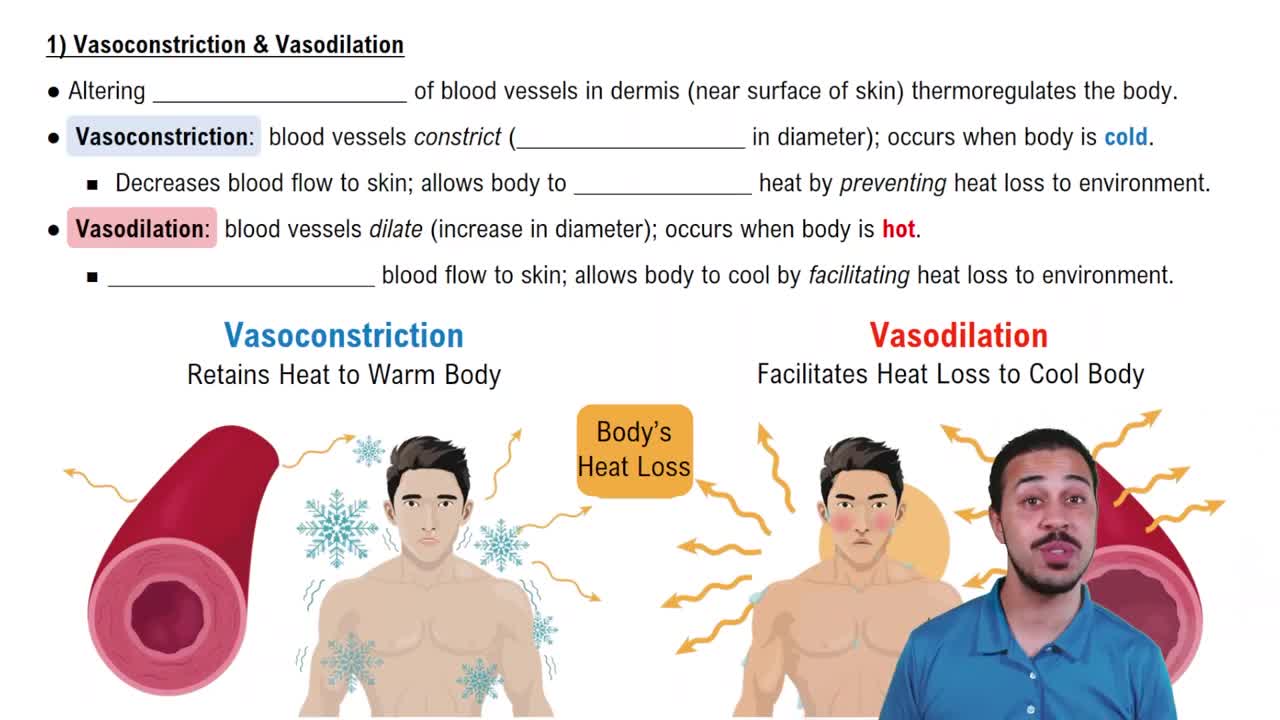
The skin regulates temperature through sweat gland secretion and blood vessel dilation or constriction.
The skin contains sensory receptors for touch, pressure, pain, and temperature.
The Rule of Nines estimates the percentage of body surface area affected by burns to guide treatment.
1st-degree burns affect only the epidermis, 2nd-degree burns affect epidermis and part of dermis, and 3rd-degree burns destroy full thickness of skin.
The dermal vascular plexus is a network of blood vessels in the dermis that supplies nutrients and regulates temperature.
The hypodermis (subcutaneous tissue) is a layer of adipose tissue that insulates, cushions, and anchors the skin to underlying structures.