Indietro

Integumentary System - Anatomy & Physiology

I pulsanti di controllo sono stati cambiati in modalità "navigazione".
1/27
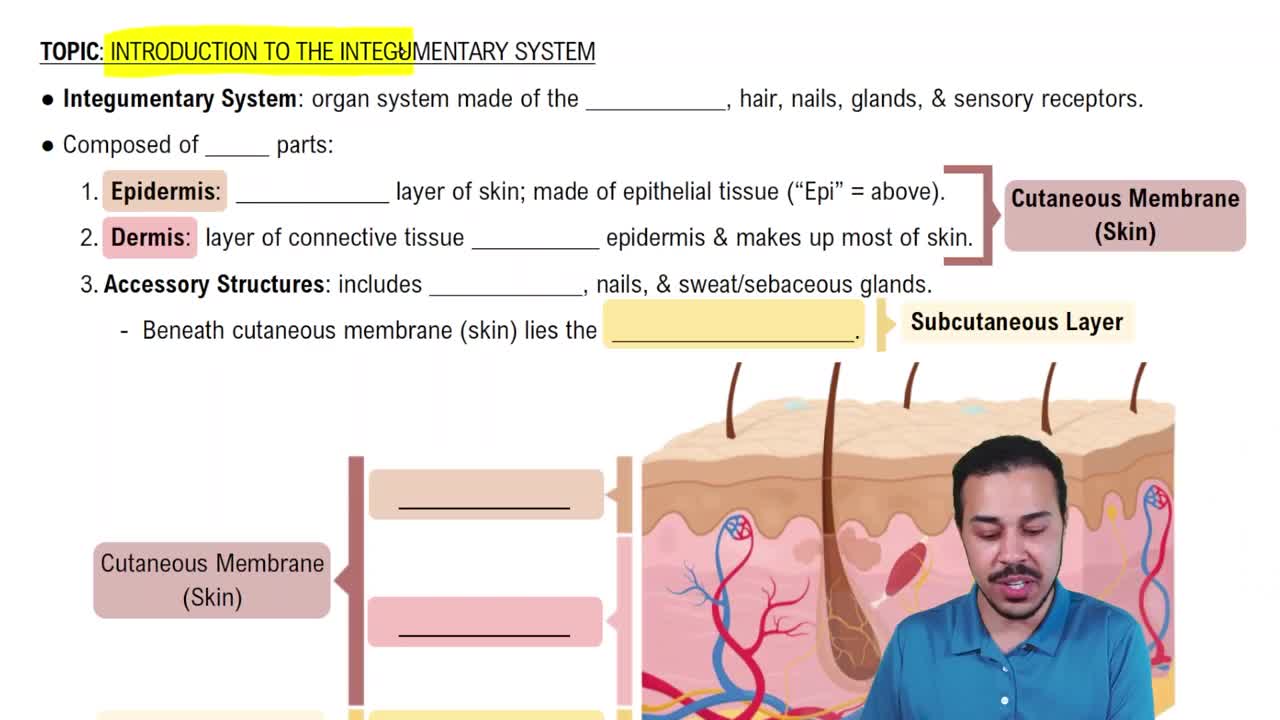
  • What are the two main components of the skin?

    Epidermis (keratinized stratified squamous epithelium) and Dermis (loose and dense irregular connective tissue).
  • What is the hypodermis and its function?

    Also called superficial fascia; anchors skin to deeper structures; made of loose connective and adipose tissue with abundant blood supply.
  • Why is the epidermis avascular and how does it get nutrients?

    Epidermis lacks blood vessels; relies on diffusion of oxygen and nutrients from blood vessels in the dermis.
  • What is cellulite and what factors influence it?

    Dimpled skin appearance caused by collagen bands around adipose tissue in hypodermis; influenced by genetics, gender, adipose distribution, and age.
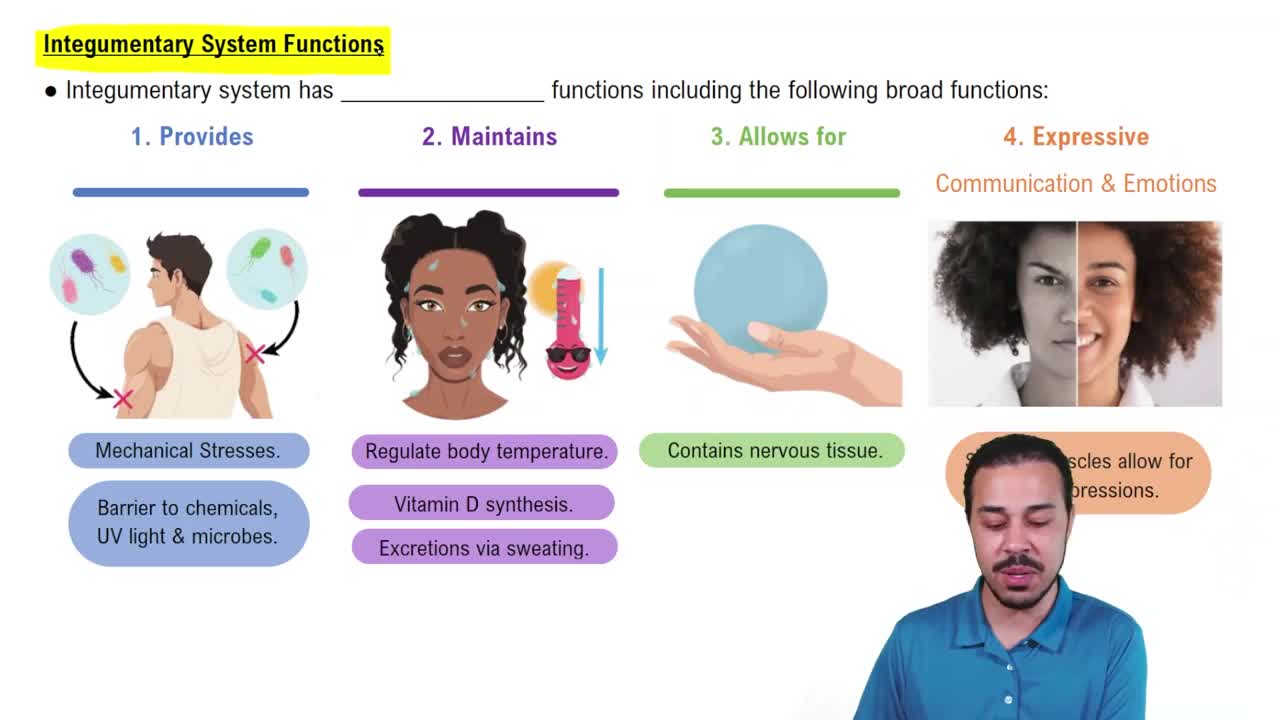
  • List key functions of the integumentary system.

    Protection, sensation, thermoregulation, excretion, and vitamin D synthesis.
  • How does the integumentary system regulate body temperature when it rises?

    Thermoreceptors detect heat; hypothalamus triggers sweating and cutaneous vasodilation to release heat.
  • How does the integumentary system respond to cold temperatures?

    Thermoreceptors detect cold; hypothalamus causes vasoconstriction to reduce blood flow and conserve heat.
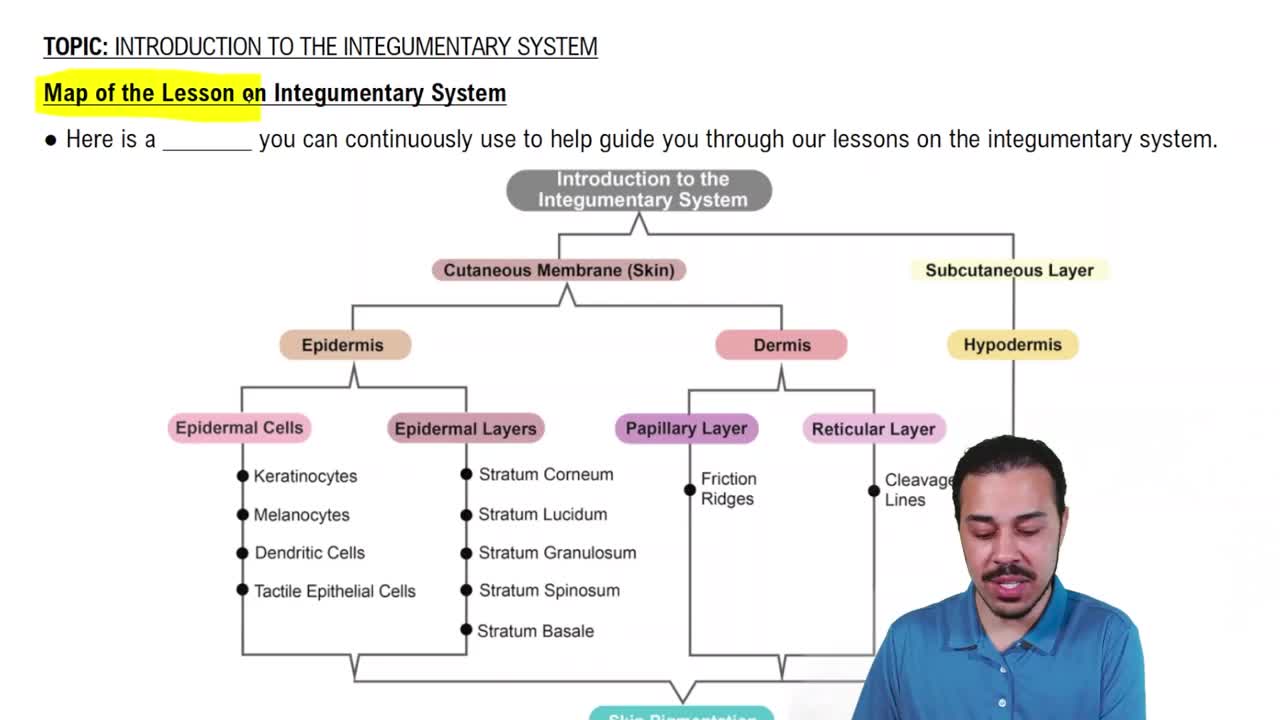
  • What is the role of keratinocytes in the epidermis?

    Make up 95% of epidermis; produce keratin for strength and mechanical protection; linked by desmosomes.
  • Describe the keratinocyte life cycle.

    Keratinocytes form in stratum basale/spinosum, migrate upward through epidermal layers, and shed from stratum corneum over 40-50 days.
  • Name other important cell types in the epidermis and their functions.

    Dendritic cells: immune defense; Merkel cells: touch receptors; Melanocytes: produce melanin pigment.
  • What distinguishes thick skin from thin skin?

    Thick skin has all five epidermal layers including stratum lucidum, thick stratum corneum, no hair follicles; thin skin lacks stratum lucidum and has hair.
  • What is the dermis composed of and its main functions?

    Two layers of connective tissue; provides blood supply, sensory receptors, and anchors epidermis.
  • What are epidermal and dermal ridges and their significance?

    Dermal ridges indent epidermis forming epidermal ridges; enhance grip and create unique fingerprint patterns.
  • What causes skin wrinkles and how can their appearance be minimized?

    Aging reduces collagen, elastic fibers, and hydration; minimized by Botox, fillers, sun protection, hydration, and avoiding smoking.
  • How is melanin produced and what is its primary function?

    Produced by melanocytes in stratum basale; protects keratinocyte DNA from UV radiation damage.
  • What is albinism?

    Genetic condition where melanocytes fail to produce tyrosinase, resulting in lack of melanin and increased UV damage risk.
  • Why is there no such thing as a healthy tan?

    Both UVA and UVB rays damage DNA and skin; tanning increases skin aging and cancer risk.
  • What minor pigments affect skin color besides melanin?

    Carotene (yellow-orange pigment from diet) and hemoglobin (red oxygen-carrying protein in blood).
  • What are the main parts of a hair and their characteristics?

    Hair shaft (dead keratinized cells above skin) and root (embedded in follicle with living cells).
  • What is the function of arrector pili muscles?

    Smooth muscles that contract to cause hair to stand (goosebumps) and create dimpling of skin.
  • What are the types of hair and where are they found?

    Lanugo (fetal hair), terminal hair (thick, pigmented, on scalp and eyebrows), and vellus hair (thin, nonpigmented, on most body).
  • Describe the structure and function of nails.

    Nails are keratinized plates protecting fingertips; grow from nail matrix; aid in precise gripping.
  • What are the two main types of skin glands?

    Sweat (sudoriferous) glands and sebaceous (oil) glands.
  • Differentiate eccrine and apocrine sweat glands.

    Eccrine glands produce watery sweat for cooling; apocrine glands produce protein-rich sweat in specific areas, active after puberty.
  • What is sebum and its role?

    Oily secretion from sebaceous glands; coats hair, prevents water loss, and inhibits bacterial growth.
  • What causes acne vulgaris?

    Sebum and dead cells clog sebaceous glands; bacterial infection causes inflammation and pimples.
  • What is cancer and what causes skin cancer?

    Uncontrolled cell division forming tumors; caused by DNA mutations from UV radiation, chemicals, and toxins.