What are the two major parts of the integumentary system?
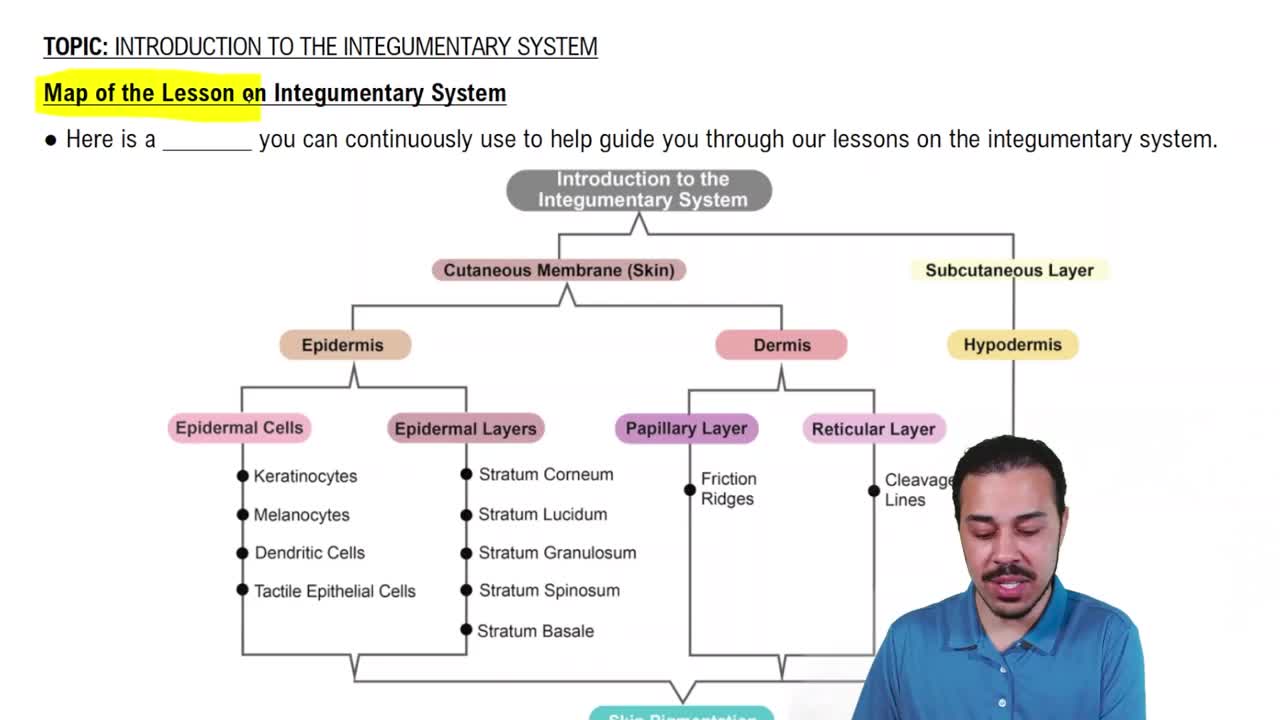
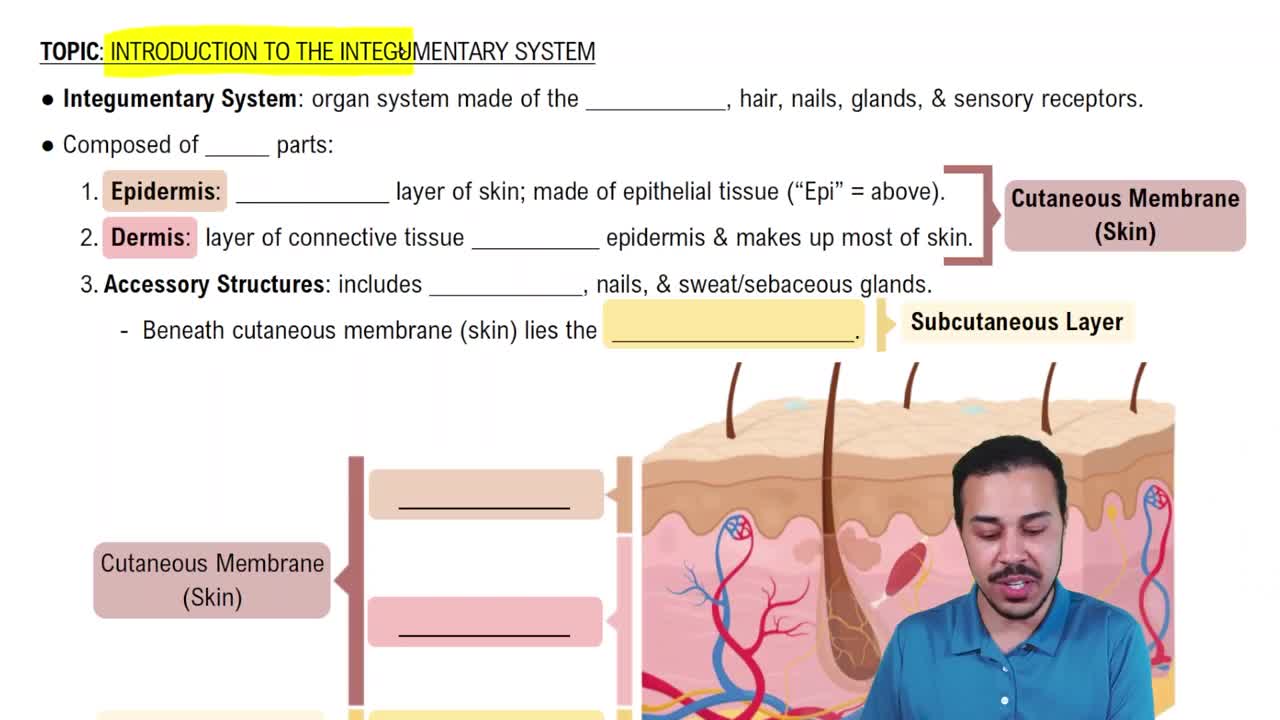
The integumentary system consists of the cutaneous membrane (skin) and accessory structures such as hair, nails, and exocrine glands.
What layers compose the cutaneous membrane?
The cutaneous membrane is composed of two layers: the epidermis (superficial epithelium) and the dermis (deep connective tissue).
What is the subcutaneous layer (hypodermis) and its function?
The hypodermis is a loose connective tissue layer deep to the dermis that separates the skin from underlying organs and stabilizes skin position.
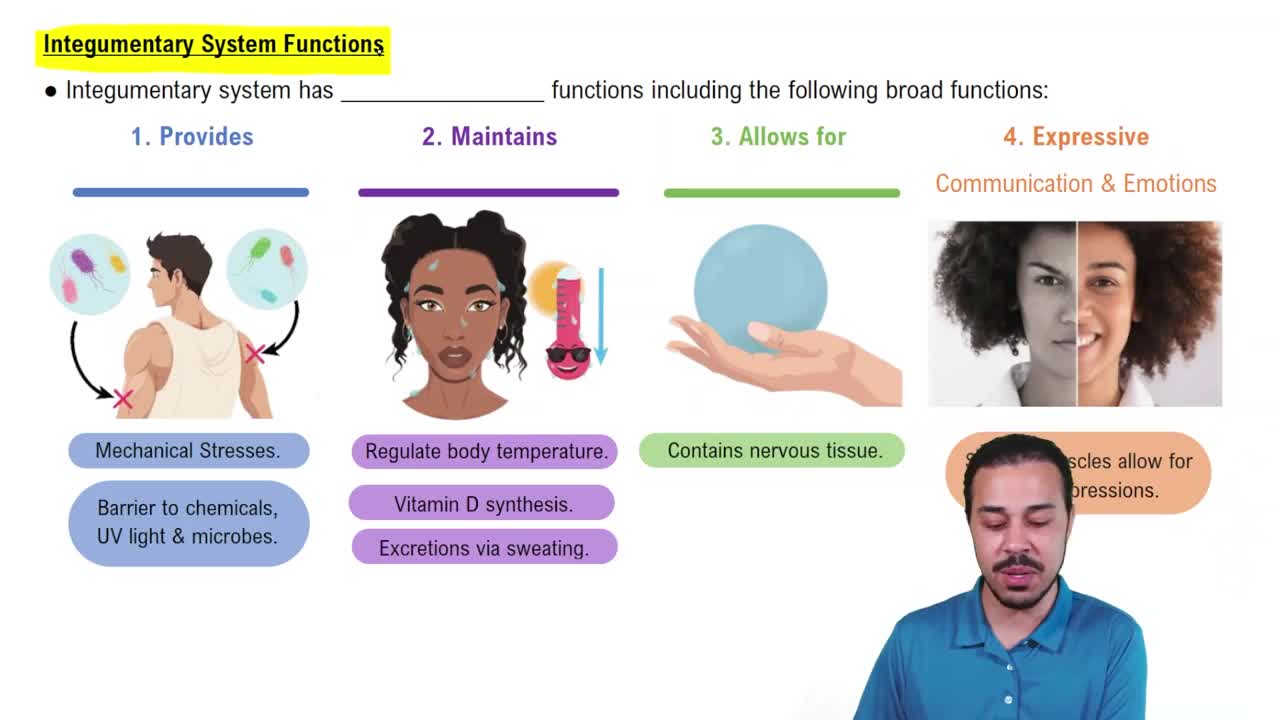
List key functions of the integumentary system.
Functions include protection against impact and microorganisms, excretion of salts and wastes, temperature regulation, melanin production, keratin production, and vitamin D3 synthesis.
What type of epithelium composes the epidermis?
The epidermis is made of keratinized, stratified squamous epithelium and is avascular, relying on diffusion from the dermis.
What is the main cell type in the epidermis?
The main cell type is the keratinocyte, which produces large amounts of the tough, fibrous protein keratin.
Difference between thin and thick skin?
Thin skin covers most of the body with four epidermal layers; thick skin is found on palms and soles and has five layers including the stratum lucidum.
Name the five strata of the epidermis from deep to superficial.
Stratum basale, stratum spinosum, stratum granulosum, stratum lucidum (only in thick skin), and stratum corneum.
What is the role of the stratum basale?
It is the deepest epidermal layer containing basal stem cells that divide to produce new keratinocytes and contains melanocytes and Merkel cells.
What are epidermal ridges and their function?
Epidermal ridges are folds in the stratum basale that interlock with dermal papillae, increasing surface area for dermis-epidermis attachment.
What cells are found in the stratum spinosum and their function?
Contains 8-10 layers of keratinocytes bound by desmosomes and immune dendritic (Langerhans) cells that defend against microorganisms.
What happens in the stratum granulosum?
Keratinocytes produce keratin and keratohyalin, become thinner and flatter, plasma membranes thicken, and cells begin to die.
Describe the stratum lucidum.
A clear, glassy layer of flat, densely packed keratin-filled cells found only in thick skin, superficial to the stratum granulosum.
What characterizes the stratum corneum?
The outermost layer with 15-30 layers of dead, keratinized cells that provide a tough, water-resistant surface.
How long does keratinocyte migration from stratum basale to stratum corneum take?
Approximately 7 to 10 days to reach the stratum corneum, then cells remain there about 2 weeks before shedding.
What are the two main layers of the dermis?
The papillary layer (superficial, areolar tissue with capillaries and sensory neurons) and the reticular layer (deep, dense irregular connective tissue).
What are tension lines in the dermis and their clinical significance?
Tension lines are parallel collagen and elastic fiber bundles that resist skin forces; incisions parallel to them heal better with less scarring.
What is the primary composition and function of the hypodermis?
Primarily composed of adipose tissue, it stabilizes skin position and is the site for subcutaneous injections.
What pigments contribute to skin color?
Melanin (primary determinant) produced by melanocytes and carotene (orange-yellow pigment from diet) both contribute to skin color.
How does melanin protect the skin?
Melanin absorbs ultraviolet (UV) radiation, protecting DNA from damage and reducing skin cancer risk.
Describe the synthesis pathway of vitamin D3 in the skin.
UV radiation converts 7-dehydrocholesterol in epidermal cells to vitamin D3 (cholecalciferol), which is then converted in the liver and kidneys to active calcitriol.
What is the role of calcitriol?
Calcitriol is a hormone essential for calcium and phosphate absorption in the small intestine, critical for bone maintenance and growth.
What are hair follicles and their function?
Hair follicles are organs in the dermis that produce hairs, which protect the scalp, guard body openings, and provide sensory input.
What are the three layers of hair?
Medulla (central core), cortex (intermediate layer), and cuticle (surface layer), each with variable keratin characteristics.
What is the function of sebaceous glands?
Sebaceous glands secrete sebum, an oily lipid that lubricates hair and skin, inhibits bacterial growth, and conditions the skin.
Difference between apocrine and eccrine sweat glands?
Apocrine glands secrete thick, odorous sweat into hair follicles in specific areas and activate at puberty; eccrine glands secrete watery sweat directly onto skin for cooling.
What are nails composed of and their function?
Nails are made of dead, keratinized epidermal cells that protect finger and toe tips and assist in mechanical tasks.
What is the lunula of the nail?
The lunula is the pale crescent near the nail root where blood vessels are obscured.
 Indietro
 06:54