Skip to main content
Anatomy & Physiology
Il mio corso
Impara
Preparazione agli esami
AI Tutor
Guide di studio
Soluzioni per libri di testo
Flashcard
Esplora
Prova l'app
Il mio corso
Impara
Preparazione agli esami
AI Tutor
Guide di studio
Soluzioni per libri di testo
Flashcard
Esplora
Prova l'app
Indietro
Musculoskeletal System - Medical Terminology Unit2(chapter6)
Puoi toccare per girare la carta.
What are the main components of the musculoskeletal system?
Puoi toccare per girare la carta.
👆
What are the main components of the musculoskeletal system?
The musculoskeletal system consists of
bones, muscles, and joints
.
Avanzamenti del tracciato
I pulsanti di controllo sono stati cambiati in modalità "navigazione".
1/28
Video consigliati
VideoThumbView.guidedCourse
6:31
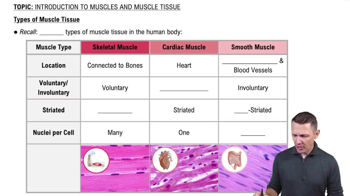
Types of Muscle Tissue
18739
views
494
rank
1
comments
VideoThumbView.guidedCourse
2:00
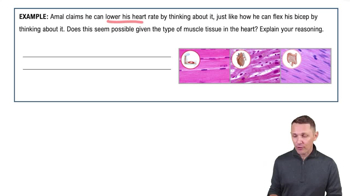
Introduction to Muscles and Muscle Tissue Example 1
16666
views
324
rank
VideoThumbView.guidedCourse
4:36
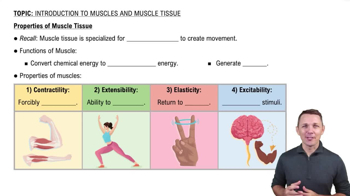
Properties of Muscle Tissue
25650
views
741
rank
2
comments
Termini in questo insieme (28)
Nascondere definizioni
What are the main components of the musculoskeletal system?
The musculoskeletal system consists of
bones, muscles, and joints
.
What connects bones to form the skeleton?
Ligaments
join bones to form the skeleton.
What is the function of joints in the musculoskeletal system?
Joints provide
flexibility for movement
by allowing two bones to meet and move.
How are muscles attached to bones and what is their role?
Muscles are attached to bones by
tendons
and contract to move bones at joints.
List four major functions of the musculoskeletal system.
Support the body, furnish movement, store minerals (calcium and phosphorus), and protect vital organs.
What does the root word 'oste/' mean?
The root word
oste/
means
bone
.
Define 'flexion' in terms of muscle movement.
Flexion
is closing a joint by decreasing the angle between two bones.
Define 'extension' in muscle movement.
Extension
is opening a joint by increasing the angle between two bones.
What is 'abduction' movement?
Abduction
is moving limbs away from the body's midline.
What is 'adduction' movement?
Adduction
is moving limbs toward the body's midline.
Explain 'supination' and 'pronation' of the forearm.
Supination
rotates the forearm so the palm faces upward;
pronation
rotates it so the palm faces downward.
What is muscle atrophy?
Muscle
atrophy
is the
loss or lack of muscle mass or development
.
What is muscle hypertrophy?
Muscle
hypertrophy
is the
excessive development of muscle mass
.
What causes carpal tunnel syndrome?
Carpal tunnel syndrome is caused by
pressure on tendons and nerves
passing through the carpal tunnel of the wrist.
What is fibromyalgia?
Fibromyalgia is
widespread aching and pain
in muscles and fibrous soft tissue.
Describe gout and its common site.
Gout is a disease causing
pain, swelling, and redness
in joints, especially the big toe, due to uric acid buildup.
What is osteoarthritis?
Osteoarthritis is the
loss of cartilage cushion
covering bones in joints, causing inflammation and bone rubbing.
What is rheumatoid arthritis?
Rheumatoid arthritis is a
chronic autoimmune inflammatory disease
causing joint pain, stiffness, and swelling.
Define osteoporosis.
Osteoporosis is an
abnormal decrease in bone mass
making bones porous and fragile.
What is osteomalacia?
Osteomalacia is the
softening of the bone
due to defective bone mineralization.
Name three abnormal spinal curvatures.
Kyphosis
(excessive thoracic curvature),
lordosis
(excessive lumbar curvature), and
scoliosis
(lateral S-shaped curvature).
What is muscular dystrophy?
Muscular dystrophy is an
inherited progressive muscle wasting disease
where muscle tissue is replaced by fatty tissue.
What is electromyography used for?
Electromyography records the
electrical activity in muscles
to diagnose muscle disorders.
What is an arthroscope?
An arthroscope is an
instrument used to view a joint
during arthroscopy.
What is arthroplasty?
Arthroplasty is the
surgical repair of a joint
.
What does ORIF stand for and what does it involve?
ORIF stands for
Open Reduction and Internal Fixation
, a surgery to realign and stabilize fractured bones with hardware.
Name common pharmacological treatments for musculoskeletal conditions.
Muscle relaxers, NSAIDs, antibiotics, antispasmodics, and corticosteroids.
What does the abbreviation NSAID mean?
NSAID means
nonsteroidal anti-inflammatory drug
, used to treat pain and inflammation.
 IndietroIndietro
 6:31