 Indietro
Organic Molecules and Macromolecules in Anatomy & Physiology
 03:35

Termini in questo insieme (24)
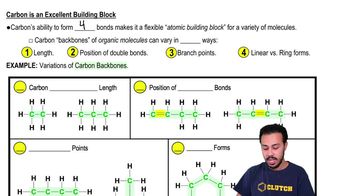
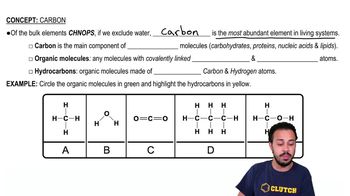
Organic molecules are carbon-based, formed by living organisms, and contain functional groups.
Hydroxyl in carbohydrates, Carbonyl in lipids, Carboxyl and Amino in proteins, Phosphate in DNA and ATP.
Macromolecules are mostly polymers built from monomers.
Carbohydrates, Lipids, Proteins, Nucleic acids.
Carbohydrates contain C, H, O with a hydrogen to oxygen ratio of 2:1.
Monosaccharides, Disaccharides, Polysaccharides.
Simple sugars like glucose, fructose, galactose; they are isomers with the same formula but different structures.
Compounds with the same molecular formula but different structural arrangements.
Dehydration synthesis joins two monosaccharides; hydrolysis breaks them apart.
Maltose, sucrose, lactose.
Polymers of many monosaccharides; examples include glycogen, starch, cellulose, and chitin.
Lipids contain C, H, O with a hydrogen to oxygen ratio greater than 2:1.
One glycerol molecule bonded to three fatty acids.
Fats with only single C-C bonds, typically solid at room temperature, e.g., animal fat.
Fats with one C=C double bond, e.g., olive oil.
Fats with multiple C=C double bonds, e.g., sunflower oil.
Energy storage (9 cal/g), insulation, and padding.
Phospholipids, waxes, sterols, lipoproteins, eicosanoids, carotenoids, and fat-soluble vitamins (A, D, E, K).
Proteins contain C, H, O, N, and S.
Structural, enzymatic, regulatory, contractile, immunological, transport, and energy functions.
Proteins are made of 20 different amino acids.
Central alpha carbon bonded to an amino group (NH2), carboxyl group (COOH), hydrogen, and an R side chain.
A covalent bond linking amino acids in a polypeptide chain, formed by dehydration synthesis.
Dipeptides, oligopeptides, polypeptides, and proteins.