Skip to main content
Anatomy & Physiology
Il mio corso
Impara
Preparazione agli esami
AI Tutor
Guide di studio
Soluzioni per libri di testo
Flashcard
Esplora
Prova l'app
Il mio corso
Impara
Preparazione agli esami
AI Tutor
Guide di studio
Soluzioni per libri di testo
Flashcard
Esplora
Prova l'app
Indietro
Pancreas and Glucose Regulation in Anatomy & Physiology
Puoi toccare per girare la carta.
Where is the pancreas located?
Puoi toccare per girare la carta.
👆
Where is the pancreas located?
The pancreas is located behind the stomach in the upper abdomen.
Avanzamenti del tracciato
I pulsanti di controllo sono stati cambiati in modalità "navigazione".
1/21
Video consigliati
5:08
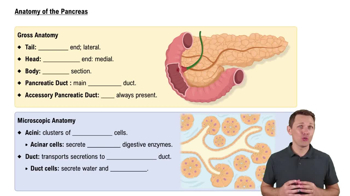
Anatomy of the Pancreas
4319
views
70
rank
5:16
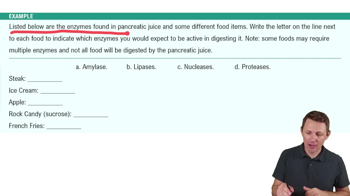
Pancreas Example 1
3658
views
66
rank
4:46
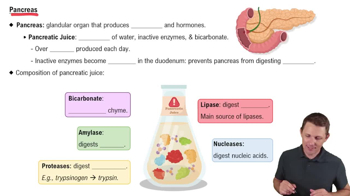
Pancreas
4697
views
84
rank
Termini in questo insieme (21)
Nascondere definizioni
Where is the pancreas located?
The pancreas is located behind the stomach in the upper abdomen.
Is the pancreas both endocrine and exocrine?
Yes, the pancreas has both endocrine and exocrine functions.
What are the cells called in the exocrine part of the pancreas?
The exocrine pancreas contains acinar cells that secrete digestive enzymes.
What are the cells called in the endocrine pancreas?
The endocrine pancreas contains islets of Langerhans.
What are the certain cells and their secretions of the endocrine pancreas?
Alpha cells secrete glucagon, beta cells secrete insulin, and delta cells secrete somatostatin.
What are the effects of insulin?
Insulin lowers blood glucose by promoting cellular glucose uptake and storage as glycogen.
What are the effects of glucagon?
Glucagon raises blood glucose by stimulating glycogen breakdown and glucose release from the liver.
What are the effects of somatostatin?
Somatostatin inhibits the release of both insulin and glucagon.
Does somatostatin inhibit or promote insulin?
Somatostatin inhibits insulin secretion.
What are the 5 steps in the glucose homeostasis pathway for both glucagon and insulin?
1. Blood glucose changes detected 2. Hormone secretion (insulin or glucagon) 3. Hormone binds target cells 4. Cellular response (glucose uptake or release) 5. Blood glucose returns to normal.
What are ketone bodies and when are they created?
Ketone bodies are energy molecules produced during fasting or low carbohydrate states.
What is ketoacidosis?
Ketoacidosis is a dangerous buildup of ketones causing blood acidity, often in uncontrolled diabetes.
What is hypoglycemia?
Hypoglycemia is abnormally low blood glucose levels.
What is hyperglycemia?
Hyperglycemia is abnormally high blood glucose levels.
What is glucosuria?
Glucosuria is the presence of glucose in urine, indicating high blood glucose.
What is the difference between type 1 and type 2 diabetes mellitus?
Type 1 is autoimmune destruction of beta cells causing insulin deficiency; type 2 is insulin resistance with relative insulin deficiency.
What is diabetic ketoacidosis?
A severe complication of diabetes with high ketones, acidosis, and high blood glucose.
What is one symptom related to the urinary system seen in Type 1 Diabetes?
Polyuria, or excessive urination, is common due to high blood glucose causing glucosuria.
What is peripheral neuropathy?
Peripheral neuropathy is nerve damage causing numbness or pain, often in diabetes.
What are other terms used for Type 2 diabetes mellitus?
Type 2 diabetes is also called adult-onset diabetes or non-insulin-dependent diabetes mellitus.
How do oral hypoglycemics treat type 2 diabetes mellitus?
They improve insulin sensitivity, increase insulin secretion, or reduce glucose production to lower blood sugar.
 IndietroIndietro
 5:08