Skip to main content
Anatomy & Physiology
Il mio corso
Impara
Preparazione agli esami
AI Tutor
Guide di studio
Soluzioni per libri di testo
Flashcard
Esplora
Prova l'app
Il mio corso
Impara
Preparazione agli esami
AI Tutor
Guide di studio
Soluzioni per libri di testo
Flashcard
Esplora
Prova l'app
Indietro
Physiology Exam 2 Key Concepts
Puoi toccare per girare la carta.
Receptors blocked to treat persistent tachycardia and dilated pupils
Puoi toccare per girare la carta.
👆
Receptors blocked to treat persistent tachycardia and dilated pupils
Adrenergic receptors are blocked to inhibit sympathetic effects causing tachycardia and pupil dilation.
Avanzamenti del tracciato
I pulsanti di controllo sono stati cambiati in modalità "navigazione".
1/36
Video consigliati
6:31
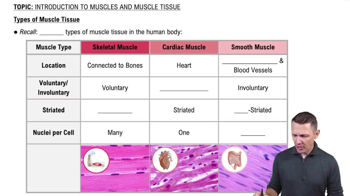
Types of Muscle Tissue
17646
views
472
rank
1
comments
2:00
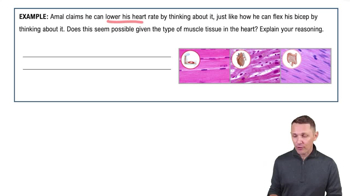
Introduction to Muscles and Muscle Tissue Example 1
15586
views
304
rank
4:36
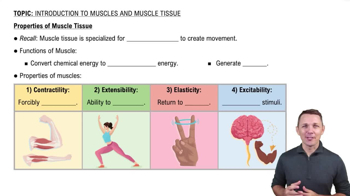
Properties of Muscle Tissue
24212
views
701
rank
2
comments
Termini in questo insieme (36)
Nascondere definizioni
Receptors blocked to treat persistent tachycardia and dilated pupils
Adrenergic receptors are blocked to inhibit sympathetic effects causing tachycardia and pupil dilation.
Contractile units responsible for muscle shortening
Sarcomeres are the contractile units responsible for muscle fiber shortening during contraction.
Ion channels implicated in arrhythmias with abnormal pacemaker activation
Unstable Na+ channels cause abnormal activation of pacemaker cells leading to arrhythmias.
Compensatory response to acute blood loss maintaining blood pressure
Sympathetic vasoconstriction increases vascular resistance to maintain blood pressure.
Somatic nervous system controls which muscle type?
The somatic nervous system controls skeletal muscle under conscious control.
Neurotransmitter deficit causing weak skeletal muscle contraction
A deficit of acetylcholine (ACh) results in weak or absent skeletal muscle contraction.
Receptors affected in myasthenia gravis
Nicotinic receptors at the neuromuscular junction are affected, reducing ACh binding and weakening contraction.
Number and type of motor neurons from CNS to somatic effectors
One myelinated motor neuron extends from the CNS to the skeletal muscle effector.
Definition of reciprocal inhibition
One muscle contracts while the antagonist muscle on the same side relaxes to allow smooth movement.
Crossed extensor reflex characteristics
It is polysynaptic, involves divergent processing, flexes one limb while extending the opposite, and balances the body.
Neurotransmitter release mechanism at neuromuscular junction
Voltage-gated Ca++ channels open in the bouton, allowing Ca++ influx that triggers ACh vesicle fusion and release.
Functional unit of muscle composed of which filaments?
The sarcomere contains thin filaments (actin) and thick filaments (myosin).
Bands within a sarcomere: H-band, I-band, A-band
H-band contains only myosin, I-band contains only actin, and A-band includes the entire length of myosin including overlap.
Causes of muscle fatigue
Accumulation of lactic acid, increased inorganic phosphate, increased H+ ions, and glycogen depletion contribute to fatigue.
Sequence of events in muscle contraction initiation
ACh release → ACh binds nicotinic receptors → action potential in sarcolemma → Ca++ release from SR → crossbridge formation.
Role of troponin and tropomyosin in contraction
Ca++ binds troponin causing tropomyosin to move, exposing actin binding sites for myosin to attach and contract.
Mechanisms to stop muscle contraction
ACh is broken down by acetylcholinesterase, Ca++ is pumped back into the SR, and ATP binds myosin to detach it from actin.
Characteristic of myoglobin in muscle fibers
Myoglobin carries O2, is a red pigment, abundant in slow fibers, and supports aerobic respiration.
Mechanism of asynchronous recruitment
Different motor units activate at different times to prevent muscle fatigue during sustained contractions.
Primary muscle responsible for forearm flexion
The biceps brachii is the primary flexor moving the hand and forearm toward the shoulder.
Difference between arteries and veins
Arteries carry blood away from the heart; veins carry blood toward the heart.
Function of the fibroskeleton in the heart
It prevents the apex and base from being pulled together and supports valve openings.
Percentage of autorhythmic myocardiocytes in the heart
Approximately 1% of cardiac cells are autorhythmic pacemaker cells.
Source of Ca++ for cardiac muscle contraction
About 25% of Ca++ comes from the sarcoplasmic reticulum; the rest enters from extracellular fluid.
Ion responsible for depolarization in myocardial contractile cells
Na+ influx causes the depolarization phase in myocardial contractile cells.
Sequence of cardiac conduction system
SA node → AV node → Bundle of His → Right and left bundle branches → Purkinje fibers.
Valves open when atria and ventricles relax
Atrioventricular (AV) valves are open during relaxation to allow ventricular filling.
Heart sound caused by valve closure
The first heart sound is caused by AV valves closing.
Definition of stroke volume
Stroke volume is the amount of blood pumped by one ventricle in a single contraction.
Effect of parasympathetic stimulation on heart rate
Parasympathetic stimulation decreases heart rate by releasing ACh on muscarinic receptors.
Effect of sympathetic stimulation on heart rate during exercise
Sympathetic stimulation increases heart rate by releasing norepinephrine on beta1 receptors.
Factors affecting oxygen binding to hemoglobin
Blood pH, gas concentration gradients, and cooperativity influence oxygen binding to hemoglobin.
Definition of cardiac output
Cardiac output is the volume of blood pumped by one ventricle per minute.
Relationship between blood flow and pressure gradient
Liquids and gases flow from areas of higher pressure to areas of lower pressure.
Effect of vessel radius on blood flow resistance
Doubling the radius of a blood vessel significantly decreases resistance to blood flow.
Definition of total peripheral resistance
Total peripheral resistance is the friction blood encounters during flow through blood vessels.
 IndietroIndietro
 6:31