 Indietro
Skeletal and Muscular Systems Overview - Anatomy & Physiology
 3:56

Termini in questo insieme (20)
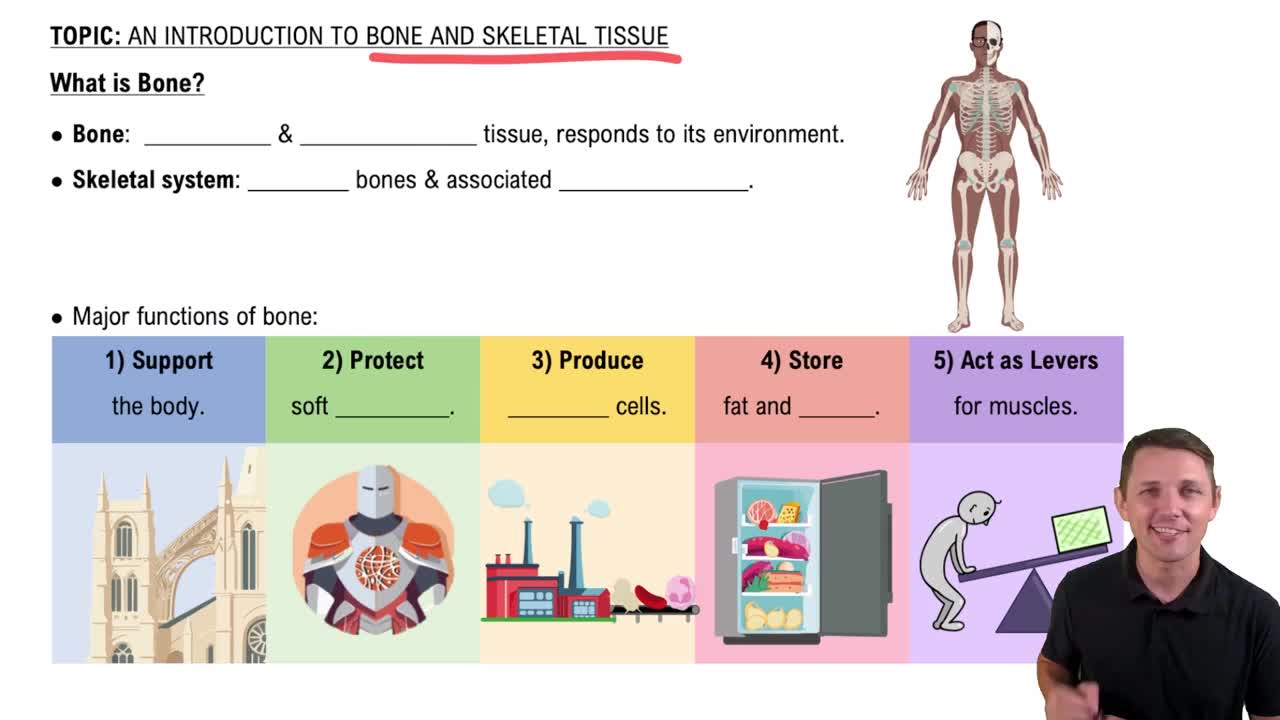
The skeletal system provides support, movement, protection, storage of minerals, and hematopoiesis (blood cell formation).
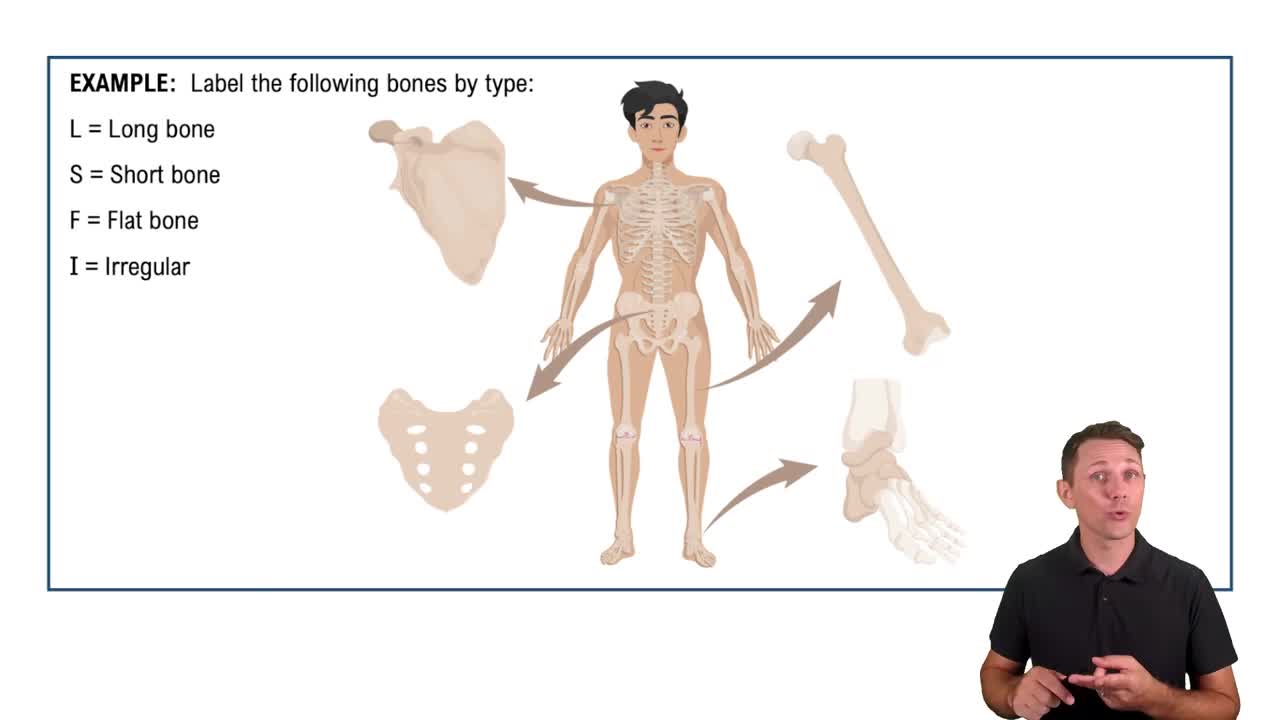
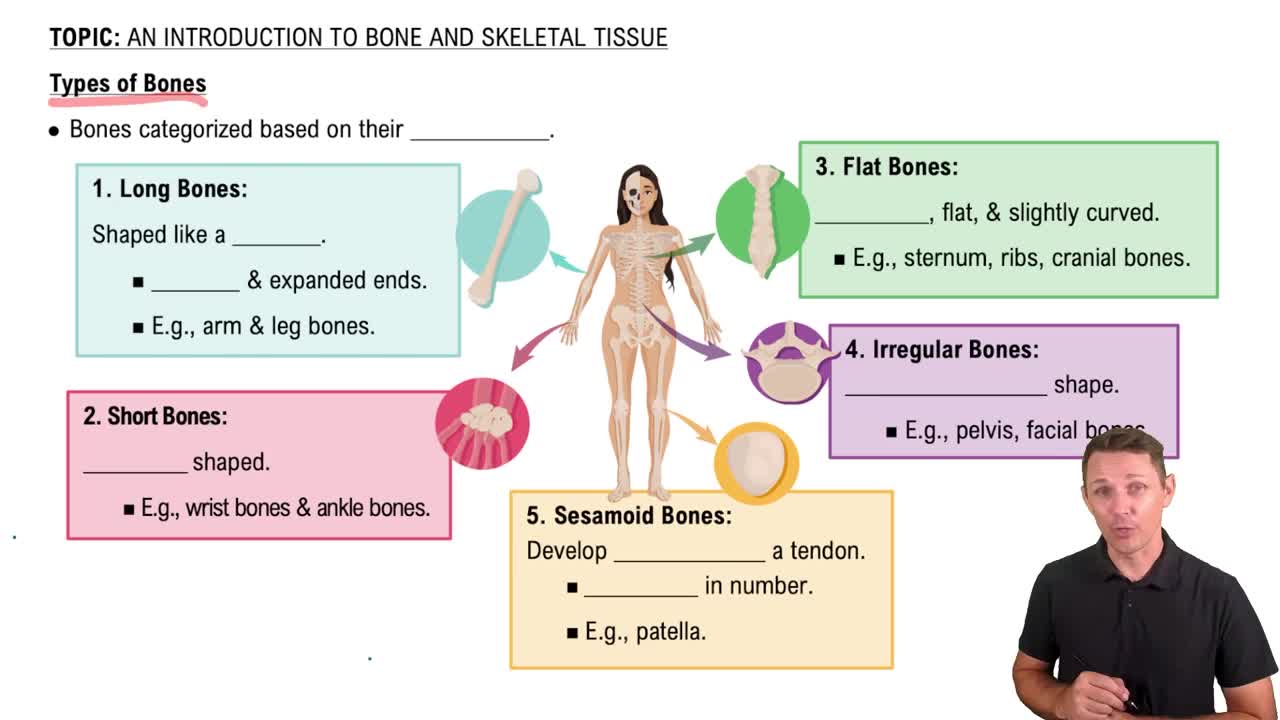
Long, short, flat, and irregular bones are the four groups classified by their general shape.
Bones are composed of compact bone and spongy bone, which vary in proportion depending on the bone type.
Compact bone provides dense, strong support and protection, forming the outer layer of bones.
Spongy bone contains trabeculae and spaces that house bone marrow, aiding in hematopoiesis and reducing bone weight.
Features such as the diaphysis (shaft), epiphyses (ends), medullary cavity, periosteum, and articular cartilage.
Bone remodeling is a continuous process where old bone is resorbed and new bone is formed to maintain strength and mineral balance.
Ossification is the process of bone tissue formation during fetal development and growth.
Calcium and vitamin D are essential for bone strength and proper mineralization.
Fractures include simple, compound, comminuted, and greenstick, each requiring specific medical treatment for healing.
The axial skeleton includes the skull, vertebral column, and rib cage; the appendicular skeleton includes limbs and girdles.
Projections serve as attachment points for muscles and ligaments; depressions allow passage of nerves and blood vessels.
Joints are classified as fibrous, cartilaginous, or synovial based on the type of connective tissue binding the bones.
Joints are classified as synarthrosis (immovable), amphiarthrosis (slightly movable), or diarthrosis (freely movable).
Synovial joints have a fluid-filled cavity, articular cartilage, and a joint capsule allowing free movement.
Disorders include arthritis types such as osteoarthritis and rheumatoid arthritis causing joint pain and inflammation.
The fetal skeleton has more cartilage and fewer ossified bones, allowing flexibility during birth and growth.
Hematopoiesis is the production of blood cells occurring in the red bone marrow within certain bones.
The periosteum is a dense membrane covering bones, containing nerves and blood vessels essential for growth and repair.
The medullary cavity contains yellow bone marrow, primarily composed of fat cells for energy storage.