Indietro

Skeletal System - Anatomy & Physiology

I pulsanti di controllo sono stati cambiati in modalità "navigazione".
1/23
  • Subdivisions of the skeleton

    The skeleton is divided into the axial skeleton (skull, vertebral column, rib cage) and the appendicular skeleton (limbs and girdles).
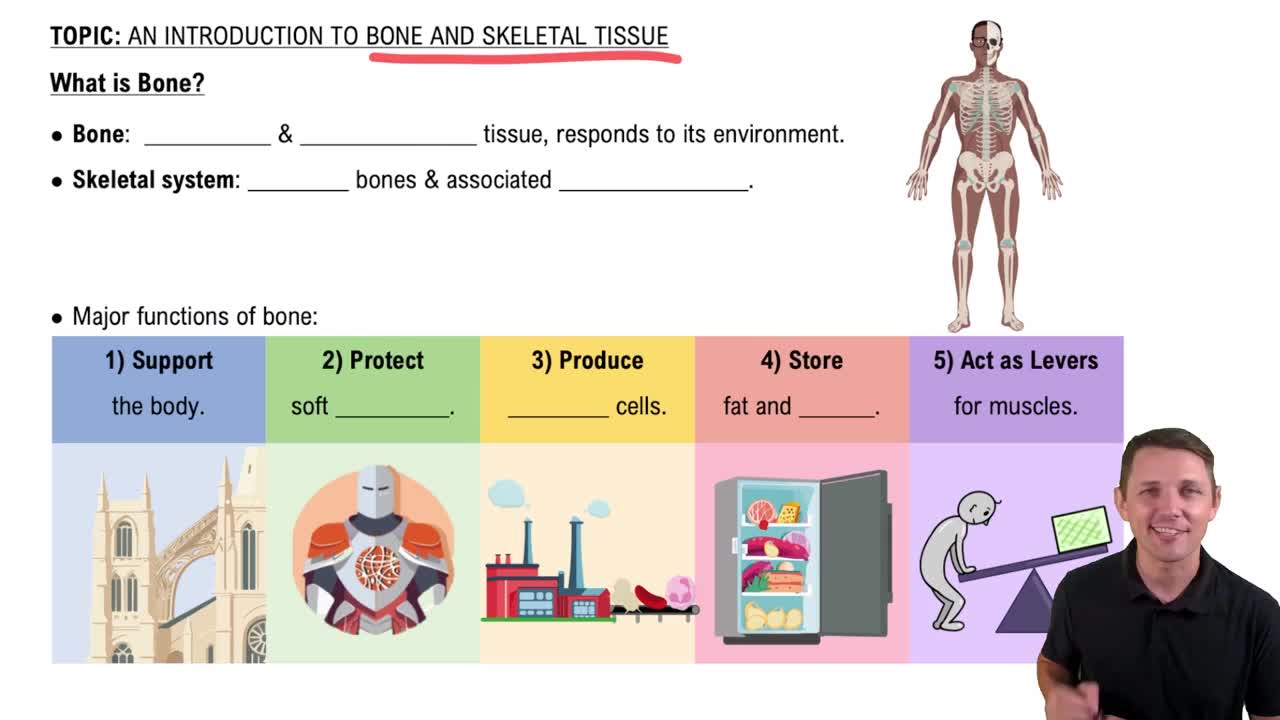
  • Functions of the skeletal system

    Supports the body, protects organs, facilitates movement, stores minerals and fats, and produces blood cells.
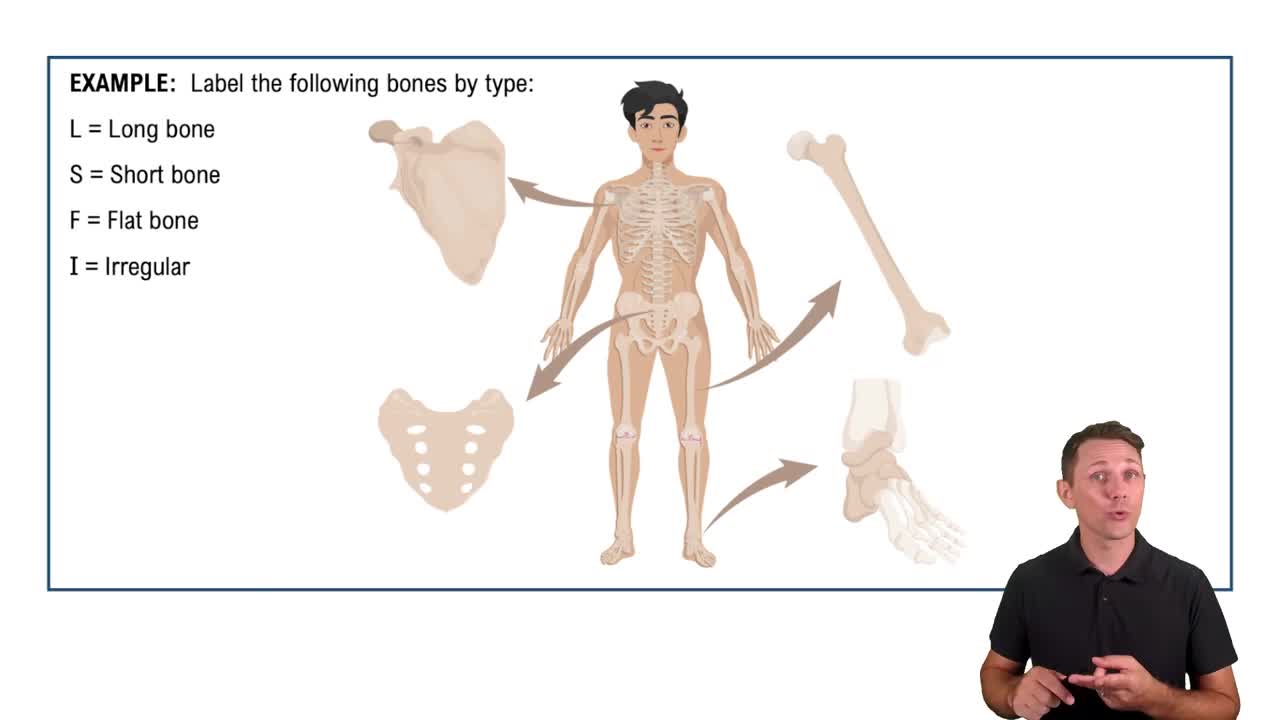
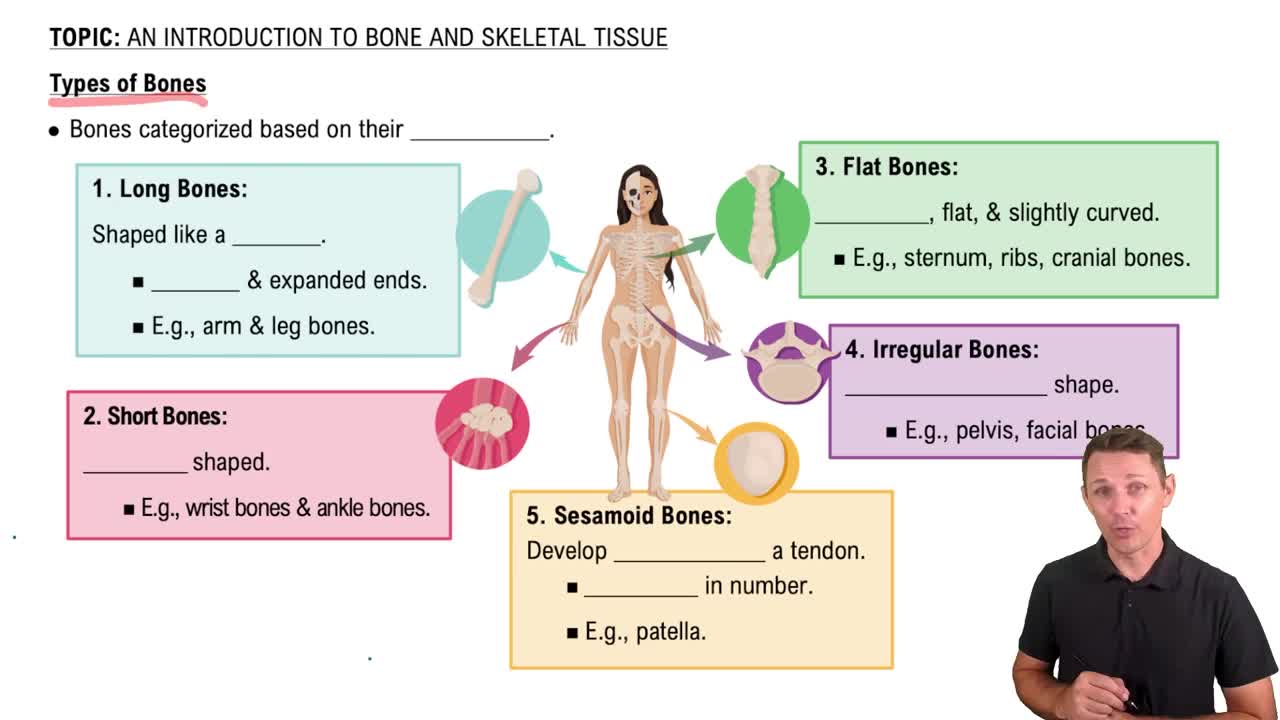
  • Four main classifications of bones

    Long bones, short bones, flat bones, and irregular bones.
  • Major anatomical areas of a long bone

    Diaphysis (shaft), epiphyses (ends), metaphysis (growth plate area), and medullary cavity.
  • Microscopic structure of compact bone

    Composed of osteons or Haversian systems, which include central canals surrounded by concentric lamellae.
  • Role of bone salts and organic matrix

    Bone salts provide hardness, while the organic matrix (collagen) provides flexibility and tensile strength.
  • Bone formation in the fetus

    Begins with ossification, where cartilage is replaced by bone; remodeling continues throughout life.
  • Types of bone fractures

    Include simple (closed), compound (open), comminuted, greenstick, and spiral fractures.
  • Bones of the skull

    Includes the frontal, parietal, temporal, occipital, sphenoid, and ethmoid bones.
  • Four major skull sutures

    Coronal, sagittal, lambdoid, and squamous sutures.
  • Parts of a typical vertebra

    Body, vertebral arch, spinous process, transverse processes, and vertebral foramen.
  • Differences among cervical, thoracic, and lumbar vertebrae

    Cervical vertebrae are smaller with transverse foramina; thoracic have facets for ribs; lumbar are larger and support more weight.
  • Importance of intervertebral discs

    Act as shock absorbers and allow flexibility between vertebrae.
  • Spinal curvatures

    Normal curves include cervical, thoracic, lumbar, and sacral; they help distribute mechanical stress.
  • Abnormal spinal curvatures

    Scoliosis: lateral curve; lordosis: exaggerated lumbar curve; kyphosis: exaggerated thoracic curve.
  • Components of the thoracic cage

    Thoracic vertebrae, ribs, sternum, and costal cartilages.
  • Difference between true and false ribs

    True ribs attach directly to the sternum; false ribs attach indirectly or not at all.
  • Bones of the shoulder and pelvic girdles

    Shoulder girdle: clavicle and scapula; pelvic girdle: two hip bones (ilium, ischium, pubis).
  • Differences between male and female pelvis

    Female pelvis is wider, shallower, and has a larger pelvic inlet for childbirth.
  • Three major structural categories of joints

    Fibrous (immovable), cartilaginous (slightly movable), and synovial (freely movable).
  • Skeletal development changes through life

    Bones grow and ossify from fetal to adult stages; remodeling adapts bone to stress and repairs damage.
  • Causes of bone and joint problems

    Include trauma, arthritis, osteoporosis, infections, and congenital defects.
  • Differences in newborn skull

    Newborn skull has fontanels (soft spots) allowing brain growth and easier birth; these close as bones fuse.