Ch. 14 The Autonomic Nervous System and Homeostasis
Amerman- Human Anatomy & Physiology 3e
Amerman3rd EditionHuman Anatomy & PhysiologyISBN: 9780138247201, 9780138247928, 9780138201814Non è quello che usi tu?Cambia libro di testo
Capitolo 14, Problema L2.3

The drug neostigmine blocks the activity of the enzyme acetylcholinesterase in the synaptic cleft. Predict the effects of this drug.

Guida verificata passo dopo passo
1
Understand the role of acetylcholinesterase: Acetylcholinesterase is an enzyme located in the synaptic cleft that breaks down the neurotransmitter acetylcholine into acetate and choline, terminating its action at the synapse.
Recognize the effect of blocking acetylcholinesterase: If neostigmine inhibits acetylcholinesterase, acetylcholine will not be broken down as efficiently, leading to an accumulation of acetylcholine in the synaptic cleft.
Predict the physiological outcome: The increased concentration of acetylcholine will result in prolonged stimulation of acetylcholine receptors on the postsynaptic membrane, enhancing cholinergic signaling.
Consider the potential effects on the body: Prolonged stimulation of acetylcholine receptors can lead to increased muscle contraction, improved transmission at neuromuscular junctions, and potentially overstimulation of parasympathetic nervous system functions (e.g., increased salivation, slowed heart rate).
Relate to clinical applications: Neostigmine is often used to treat conditions like myasthenia gravis, where it helps improve muscle strength by enhancing neuromuscular transmission, or to reverse the effects of muscle relaxants used during surgery.

Risposta video verificata per un problema simile:

Questa soluzione video è stata consigliata dai nostri tutor come utile per risolvere questo problema.

Concetti chiave

Ecco i concetti essenziali che devi comprendere per rispondere correttamente alla domanda.

Acetylcholinesterase Function

Acetylcholinesterase is an enzyme that breaks down the neurotransmitter acetylcholine in the synaptic cleft, which is the space between nerve cells. By hydrolyzing acetylcholine, it terminates the signal transmission between neurons and muscle cells, allowing for muscle relaxation and preventing continuous stimulation.
Video consigliato:
Percorso guidato
06:04
Functional Groups

Neostigmine Mechanism of Action

Neostigmine is a reversible inhibitor of acetylcholinesterase, meaning it binds to the enzyme and prevents it from breaking down acetylcholine. This leads to an accumulation of acetylcholine in the synaptic cleft, resulting in prolonged stimulation of the postsynaptic receptors, which can enhance muscle contraction and improve neuromuscular transmission.
Video consigliato:
03:53
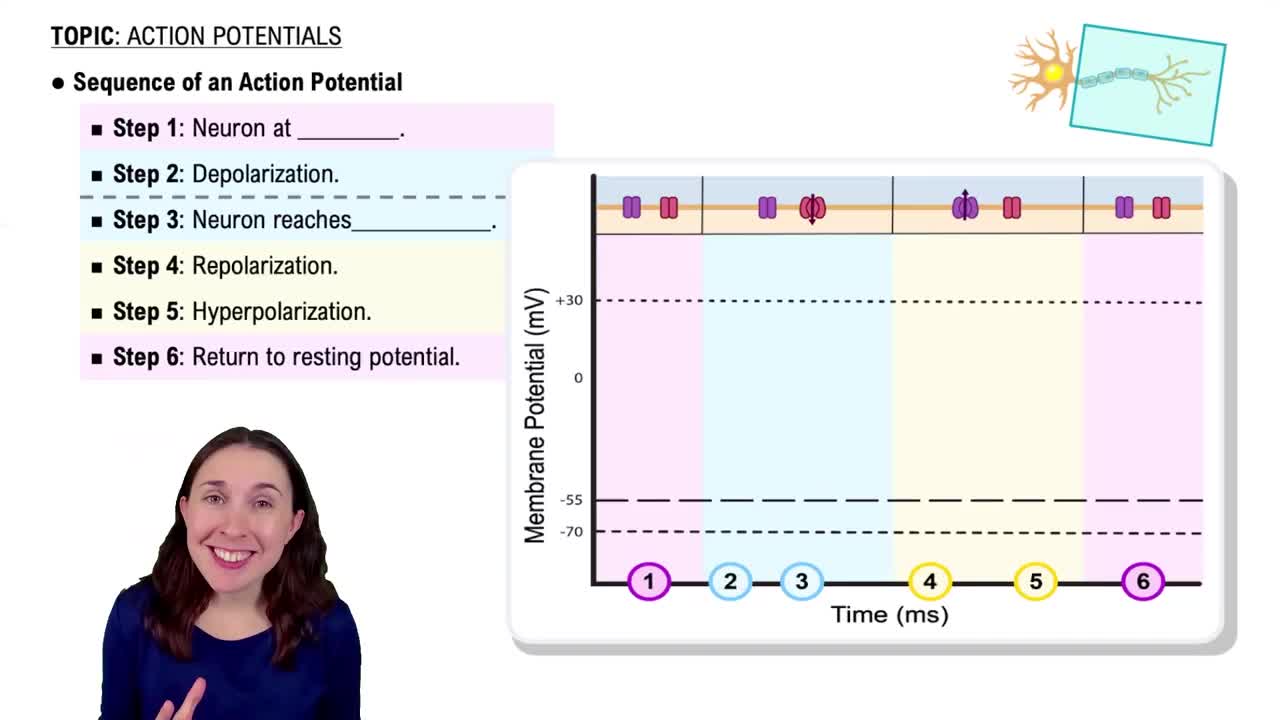
Action Potential

Clinical Implications of Neostigmine

Neostigmine is commonly used in the treatment of myasthenia gravis, a condition characterized by weakness in the skeletal muscles. By increasing acetylcholine levels, neostigmine helps improve muscle strength and function. However, excessive inhibition of acetylcholinesterase can lead to cholinergic crisis, characterized by muscle twitching, respiratory distress, and other symptoms due to overstimulation of the neuromuscular junction.
Video consigliato:
07:53
Resting Membrane Potential