Ch. 21 Blood Vessels and Circulation
Martini - Fundamentals of Anatomy & Physiology 12th Edition
Martini, Nath, Bartholomew12th EditionFundamentals of Anatomy & PhysiologyISBN: 9780137854011Non è quello che usi tu?Cambia libro di testo
Capitolo 21, Problema 15

The vein that drains the dural sinuses of the brain is the 
(a) Cephalic vein
(b) Great saphenous vein
(c) Internal jugular vein
(d) Superior vena cava

Guida verificata passo dopo passo
1
Step 1: Understand the anatomy of the dural sinuses. The dural sinuses are venous channels found between layers of the dura mater in the brain, responsible for draining venous blood from the brain tissue.
Step 2: Identify the main vein that receives blood from the dural sinuses. The blood collected in the dural sinuses eventually drains into a large vein that carries it away from the brain toward the heart.
Step 3: Recall the major veins listed in the options and their general functions: (a) Cephalic vein drains the upper limb, (b) Great saphenous vein drains the lower limb, (c) Internal jugular vein drains blood from the brain, and (d) Superior vena cava collects blood from the upper body to the heart.
Step 4: Connect the function of the internal jugular vein to the drainage of the dural sinuses, as it is the primary vein that collects blood from the brain's venous sinuses and channels it toward the heart.
Step 5: Conclude that the vein draining the dural sinuses of the brain is the internal jugular vein, based on its anatomical role and pathway.

Risposta video verificata per un problema simile:

Questa soluzione video è stata consigliata dai nostri tutor come utile per risolvere questo problema.

Concetti chiave

Ecco i concetti essenziali che devi comprendere per rispondere correttamente alla domanda.

Dural Sinuses

Dural sinuses are venous channels located between layers of the dura mater in the brain. They collect deoxygenated blood from the brain and cerebrospinal fluid, directing it towards larger veins for drainage. Understanding their anatomy is essential to trace the venous outflow from the brain.
Video consigliato:
3:57
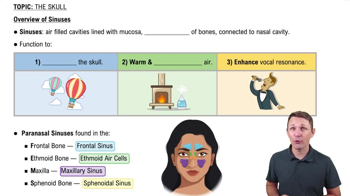
Overview of Sinuses

Internal Jugular Vein

The internal jugular vein is a major vein that drains blood from the brain, face, and neck. It receives blood from the dural sinuses and channels it down towards the heart. Recognizing this vein's role is key to identifying the primary drainage pathway of cerebral venous blood.
Video consigliato:
Percorso guidato
6:24
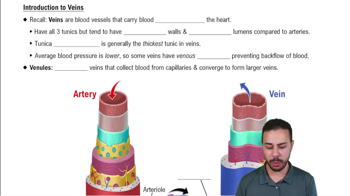
Introduction to Veins

Venous Drainage Pathways of the Head and Neck

Venous drainage of the head and neck involves a network of veins including the cephalic vein, great saphenous vein, internal jugular vein, and superior vena cava. Knowing which veins are involved in brain drainage helps differentiate their functions and select the correct vein associated with dural sinus drainage.
Video consigliato:
04:19
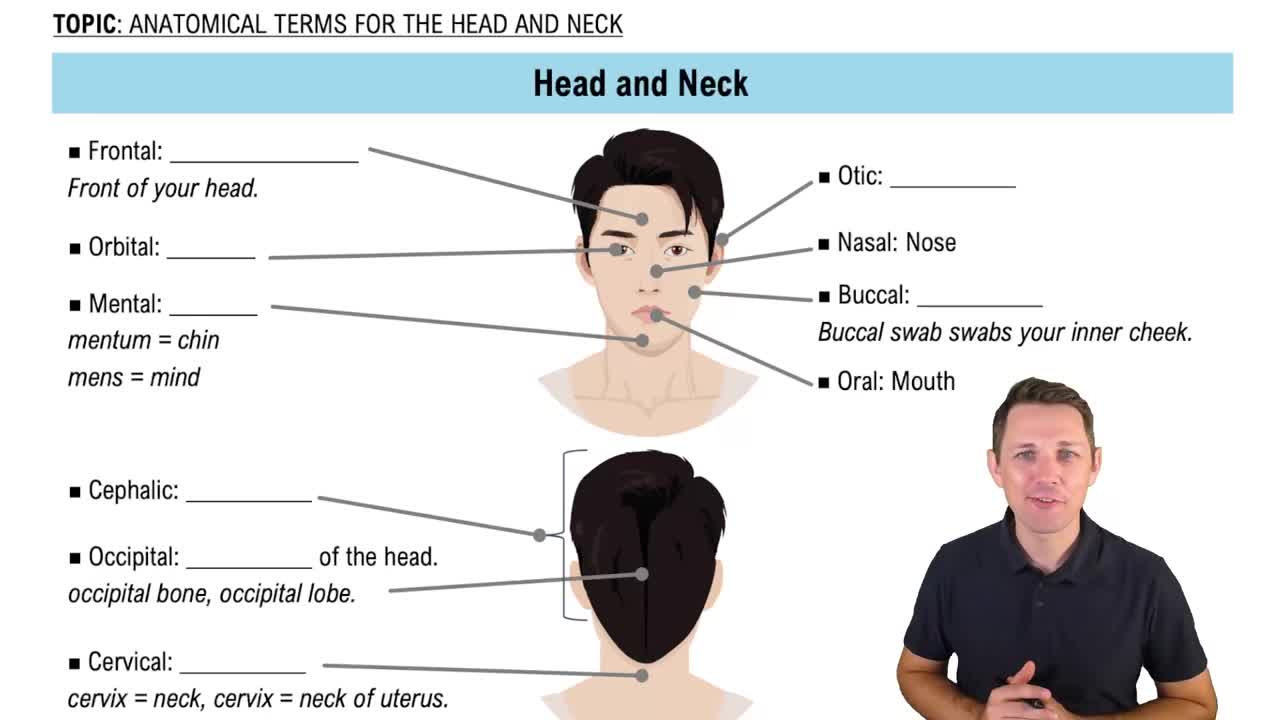
The Head and Neck
Pratica correlata
Domanda del libro di testo

The paired arteries supplying blood to the body wall and other structures outside the abdominopelvic cavity include the:

a) Left gastric, hepatic, splenic, and phrenic arteries

(b) Adrenal, colic, lumbar, and gonadal arteries

(c) Iliac, femoral, and lumbar arteries

(d) Celiac, left gastric, and superior and inferior mesenteric arteries

988
views
Domanda del libro di testo

Which of the following conditions would have the greatest effect on peripheral resistance?

(a) Doubling the length of a vessel

(b) Doubling the diameter of a vessel

(c) Doubling the viscosity of the blood

(d) Doubling the turbulence of the blood

(e) Doubling the number of white cells in the blood

895
views
Domanda del libro di testo

The two arteries formed by the division of the brachiocephalic trunk are the:

(a) Aorta and internal carotid

(b) Axillary and brachial

(c) External and internal carotid

(d) Common carotid and subclavian

1268
views
Domanda del libro di testo

The unpaired arteries supplying blood to the visceral organs include:

(a) The adrenal, renal, and lumbar arteries

(b) The iliac, gonadal, and femoral arteries

(c) The celiac and superior and inferior mesenteric arteries

(d) All of these

1038
views
Domanda del libro di testo

What are the primary forces that cause fluid to move?

(a) Out of a capillary at its arterial end and into the interstitial fluid

(b) Into a capillary at its venous end from the interstitial fluid?

952
views
Domanda del libro di testo

What cardiovascular changes occur at birth?

1030
views
2
rank