 Indietro
Biomolecules: Carbohydrates, Proteins, and Lipids
 01:37

Termini in questo insieme (20)
Carbohydrates are organic molecules made of carbon, hydrogen, and oxygen, primarily serving as energy sources and structural components in cells.
The basic monomer of carbohydrates is a monosaccharide, such as glucose or fructose.
Monosaccharides, disaccharides, and polysaccharides.
Polysaccharides store energy (e.g., glycogen, starch) and provide structural support (e.g., cellulose).
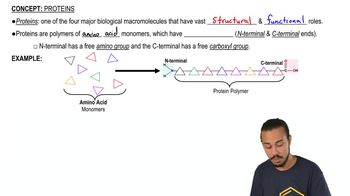
Proteins contain nitrogen in addition to carbon, hydrogen, and oxygen, and are made of amino acid monomers.
Amino acids are the monomers that make up proteins.
There are 20 standard amino acids used to build proteins.
Peptide bonds link amino acids together in proteins.
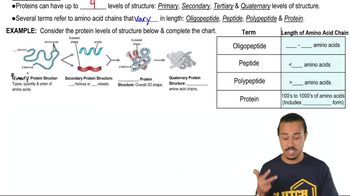
Primary, secondary, tertiary, and quaternary structures.
Lipids are mainly composed of carbon, hydrogen, and oxygen, but have a much lower oxygen ratio than carbohydrates.
Energy storage, cell membrane structure, and signaling molecules.
Triglycerides consist of one glycerol molecule and three fatty acid chains.
Saturated fatty acids have no double bonds; unsaturated fatty acids have one or more double bonds.
Phospholipids form the bilayer structure of cell membranes.
Carbohydrates on cell surfaces act as recognition sites for cell-cell communication.
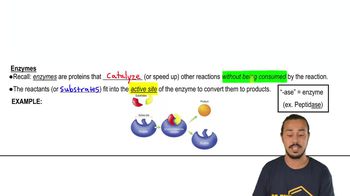
Proteins act as enzymes by lowering activation energy to speed up biochemical reactions.
Lipid bilayers create a semi-permeable membrane that controls substance entry and exit in cells.
Glycogen is a polysaccharide that stores energy in animals.
Cellulose is a polysaccharide that provides structural support in plant cell walls.
The 3D structure of a protein, determined by its amino acid sequence, dictates its function.