 Indietro
Bio October 16th (Unit 4 con't)
 03:16

Termini in questo insieme (22)
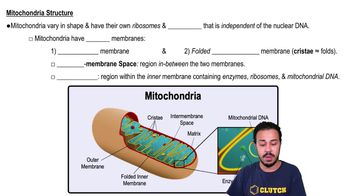
what does Mitochondria do and what is it's structure?
carries out cellular respiration in EUKARYOTIC CELLS.
Enclosed by 2 phospholipid bilayer membranes; inner membrane folded into cristae to increase surface area for ATP production.
what is the space between membranes? what does the mitochondria matrix consist of?
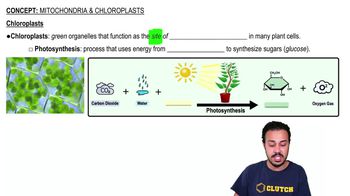
Chloroplast function?
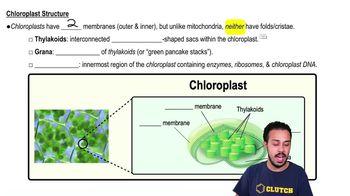
Chloroplast structure?
2 membranes with intermembrane space; stroma contains DNA, ribosomes, and enzymes; AND thylakoids which are membranous sacs where chlorophyll traps solar energy.
Thylakoid and granum?
Endosymbiont theory?
Mitochondria and chloroplasts once were small prokaryotes living inside larger cells, leading to eukaryotic cells with these organelles.
Benefits of endosymbiosis?
Host cell gains high ATP production; small cell gains protection and nutrients.
what does Cytoskeleton do? what is it made of?
Three types of cytoskeletal fibers?
what is Microtubules structure and function?
Centrosome?
Intermediate filaments structure and function?
found most in animal cells. they are Fibrous proteins supercoiled into cables; reinforce cell shape and anchor organelles; permanent fixtures in cells.
Microfilaments structure and role?
Cilia characteristics and functions?
short, hair-like projections on the cell surface that move back and fourth propelling cells, clear mucus in trachea, or act as non-motile antennae.
Flagella characteristics and functions?
Long, whip-like appendages; propel cells and are common in sperm and motile prokaryotes.
Extracellular matrix functions?
Extracellular matrix structure?
Integrins in extracellular matrix?
Tight junctions?
Plasma membranes of adjacent cells knit tightly together to prevent fluid leakage between cells.
Anchoring junctions?
Gap junctions?
Plant cell wall?