Skip to main content
General Biology
Il mio corso
Impara
Preparazione agli esami
AI Tutor
Guide di studio
Soluzioni per libri di testo
Flashcard
Esplora
Prova l'app
Il mio corso
Impara
Preparazione agli esami
AI Tutor
Guide di studio
Soluzioni per libri di testo
Flashcard
Esplora
Prova l'app
Indietro
Breast Cancer - General Biology
Puoi toccare per girare la carta.
What is the most common type of breast cancer?
Puoi toccare per girare la carta.
👆
What is the most common type of breast cancer?
Ductal carcinoma
, which begins in the lining of milk ducts.
Avanzamenti del tracciato
I pulsanti di controllo sono stati cambiati in modalità "navigazione".
1/20
Video consigliati
04:02
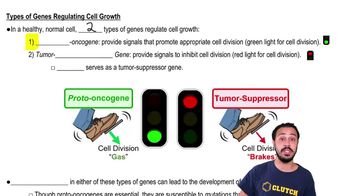
Types of Genes Regulating Cell Growth
10544
views
104
rank
1
comments
03:22
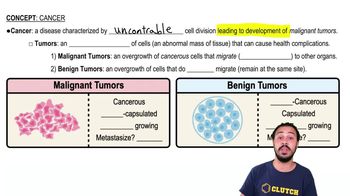
Cancer
11987
views
149
rank
1
comments
Termini in questo insieme (20)
Nascondere definizioni
What is the most common type of breast cancer?
Ductal carcinoma
, which begins in the lining of milk ducts.
What are the two subtypes of ductal carcinoma?
Ductal carcinoma in situ (DCIS)
- noninvasive;
Invasive ductal carcinoma
- cancer spreads outside the duct.
Where does lobular carcinoma begin?
In the
lobules
of the breast.
What is lobular carcinoma in situ (LCIS)?
A
noninvasive
subtype with abnormal cells in lobules, rarely becoming invasive.
What characterizes inflammatory breast cancer?
Breast looks
red, swollen, and warm
due to lymph vessel blockage; skin may show 'peau d’orange' texture.
What defines triple negative breast cancer?
Cancer cells lack
estrogen, progesterone receptors
and
HER2/neu protein
.
Name three risk factors for breast cancer.
Early menstruation, family history, and inherited BRCA1 or BRCA2 gene mutations.
What percentage of breast cancers are hereditary due to BRCA mutations?
About
5% to 10%
of breast cancers.
What is the role of BRCA1 and BRCA2 genes?
They repair cell damage and keep normal cell growth in breasts.
How does having a mutation in BRCA genes affect breast cancer risk?
Risk can increase up to
80%
during lifetime.
How does breast cancer risk differ in men with BRCA mutations?
BRCA2 mutation increases breast cancer risk; BRCA1 mutation increases prostate cancer risk.
What is a mammogram used for?
A screening tool to detect breast cancer by imaging breast tissue.
What is the function of lymph nodes in relation to breast cancer?
Filter substances in lymph; cancer can spread through lymph nodes.
What is the significance of breast tissue density on mammograms?
Dense breast tissue can make cancer harder to detect.
What is the typical appearance of breast cancer skin in inflammatory breast cancer?
Skin may have a
pitted, orange peel
appearance called 'peau d’orange'.
What is the difference between invasive and noninvasive breast cancer?
Invasive cancer spreads beyond original tissue; noninvasive remains confined.
How does family history influence breast cancer risk?
Having close relatives with breast cancer increases personal risk.
What lifestyle factors can increase breast cancer risk?
Obesity, alcohol consumption, and hormone treatments.
What is the role of estrogen and progesterone in breast cancer?
Hormones can promote growth of some breast cancer cells.
What is the clinical importance of identifying triple negative breast cancer?
It lacks hormone receptors, so hormone therapies are ineffective.
 IndietroIndietro
 04:02